


Table of Contents
If you’re considering a mountain bike adventure in Cusco, prepare yourself for a challenge that will begin from the first pedal stroke. This Andean region, located at over 3,300 meters (10,827 feet) above sea level, demands conscious preparation: progressive acclimatization, constant hydration, and detailed planning are essential requirements before heading out to ride. The routes combine pre-Inca and Inca trails, ancestral dirt roads, and direct access to active archaeological complexes, so it’s wise to manage your trip in advance and verify that all your gear—bicycle, helmet, protective equipment (whether owned or rented)—is in optimal condition.
Wondering how to organize transfers and where to stay to optimize your outings? What’s the minimum technical level required for each route? What to do if weather conditions change abruptly during the ride? This guide addresses all those essential aspects: access, safety protocols, booking management, and cost estimates so you can plan with informed judgment. Keep reading and review each section before making your final decision.

Cusco, a Unique Destination for Mountain Biking
Cusco, ancient capital of Tahuantinsuyo and today a UNESCO World Heritage site, is globally recognized as the gateway to Machu Picchu. However, beyond its exceptional archaeological legacy, this region is emerging as one of the epicenters of high-altitude mountain biking in South America. Its complex Andean geography, culturally active Quechua communities, and extensive network of historic trails make it an unparalleled destination for those seeking an experience that integrates intense physical activity, deep cultural immersion, and landscapes of extreme visual impact.
You won’t find artificial structures or prefabricated circuits. What you will find is authentic territory, tangible history beneath your wheels, and communities that keep these paths alive generation after generation. This fusion of extreme sport and living culture explains the exponential growth of the activity in the Peruvian Andes.
Emblematic Mountain Bike Routes in Cusco
The vast Andean territory surrounding Cusco offers an impressive diversity of routes that fuse extreme landscapes, authentic cultural immersion, and international-level technical challenges. Below, we present a detailed analysis of the most representative circuits sought after by experienced cyclists, both local and international:
Lamay MTB Trail
High in the Sacred Valley summits, this legendary route begins near 4,300 meters (14,100 feet) altitude and descends vertiginously more than 2,100 vertical meters (6,890 feet). The route traverses a mosaic of ecosystems: high-altitude glacial lakes, dense aromatic eucalyptus forests, and Andean irrigation channels that have functioned uninterruptedly for centuries. The trail combines natural rock gardens demanding precise technical reading, perfectly preserved Inca stone staircases, and extensive natural flow sections that accelerate the pulse of intermediate and advanced cyclists alike.

During the descent, you’ll cross the Sapacto community, where it’s common to observe herds of llamas grazing freely, and you’ll have the opportunity to learn about ancestral water management systems in still-operational agricultural terraces. The arrival in Lamay village, beside the Vilcanota River with panoramic valley views, represents a perfect finish for those seeking to combine technical demands with deep landscape immersion.
- Estimated duration: 3 to 4 hours of active descent
- Difficulty level: Advanced (prior experience in technical descents required)
- Altitude range: 9,678 ft / 14,100 ft
- Accumulated elevation loss: Over 6,890 feet of descent
- Approximate distance: 20+ kilometers
Perolniyoc & The Other Side Trails
This full-day adventure represents one of the most complete experiences available in the Sacred Valley, fusing two of the region’s most emblematic descents into a single epic outing. The day begins with “The Other Side,” starting from approximately 4,061 meters (13,323 feet) in the highlands and descending along ancient trails that wind between spectacular rock formations.
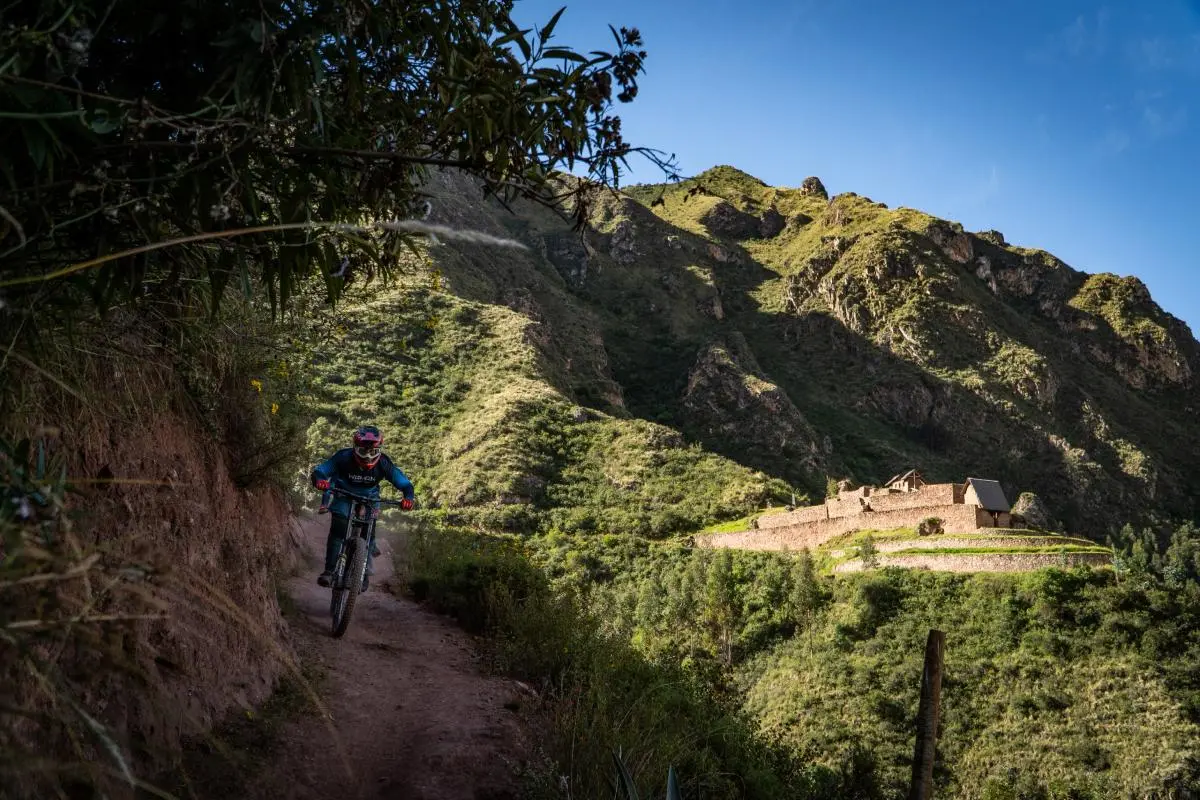
Subsequently, the Perolniyoc circuit takes you pedaling literally alongside roaring waterfalls, facing stone Inca staircases that challenge your braking technique, natural terrain jumps, and narrow sections that brush the stone walls of traditional villages where time seems to have stopped. The day ends beside the Huarocondo River, in the lower valley zone, with a ceremonial toast celebrating the athletic achievement and paying tribute to the Andean nature you’ve just traversed.
- Estimated duration: 4 to 5 hours of effective pedaling
- Difficulty level: Intermediate – Advanced
- Altitude range: 9,186 ft / 13,780 ft
- Featured characteristics: Combination of two legendary routes, waterfalls, Inca staircases
Yuncaypata & Huayllarcocha
Strategically located very close to Cusco’s historic center, this route represents the ideal introduction for those just arriving in the region. The circuit allows a controlled descent toward the Huayllarcocha area along well-defined rural roads, crossing fragrant eucalyptus forests and enjoying broad, flowing curves. The route combines sections of compact dirt offering excellent traction with spectacular panoramic views over Cusco city and its surrounding mountains.
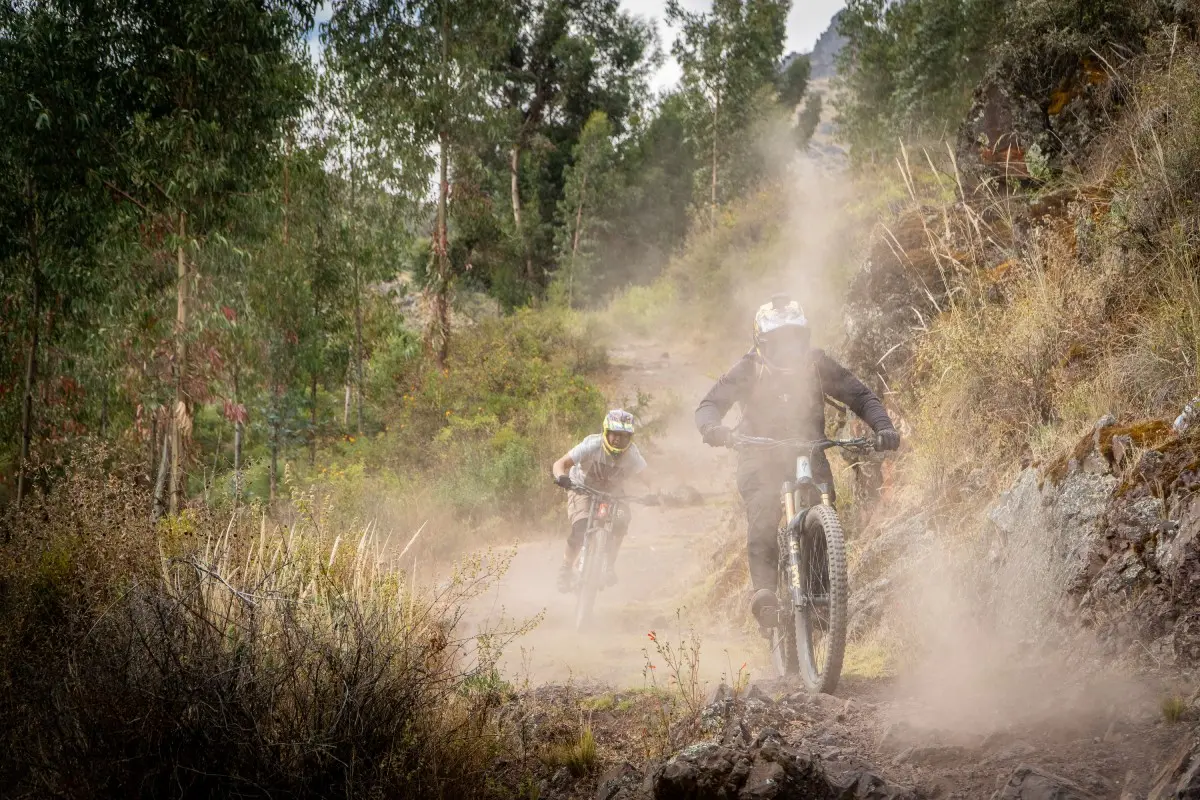
This route is especially recommended for your first day of high-altitude activity, before tackling the more demanding and technical descents the Andean terrain offers. It allows you to assess your altitude response in a context of lower physical and technical demand.
- Estimated duration: 2 to 3 hours
- Difficulty level: Beginner – Intermediate
- Altitude range: 10,827 ft / 12,795 ft
- Key advantage: Proximity to city, ideal for progressive acclimatization
Maras Downhill MTB
This route is specifically designed for cyclists who want to fuse cultural heritage with technical challenge, offering two complementary descents totaling approximately 1,780 meters (5,840 feet) of accumulated elevation loss. The first section crosses natural viewpoints located at 3,770 meters (12,370 feet), from where you can appreciate the legendary circular terraces of Moray, continues through perfectly preserved Inca terraces, and culminates at the ancient Maras salt mines, where more than 3,000 salt pools continue operating with pre-Columbian technology.
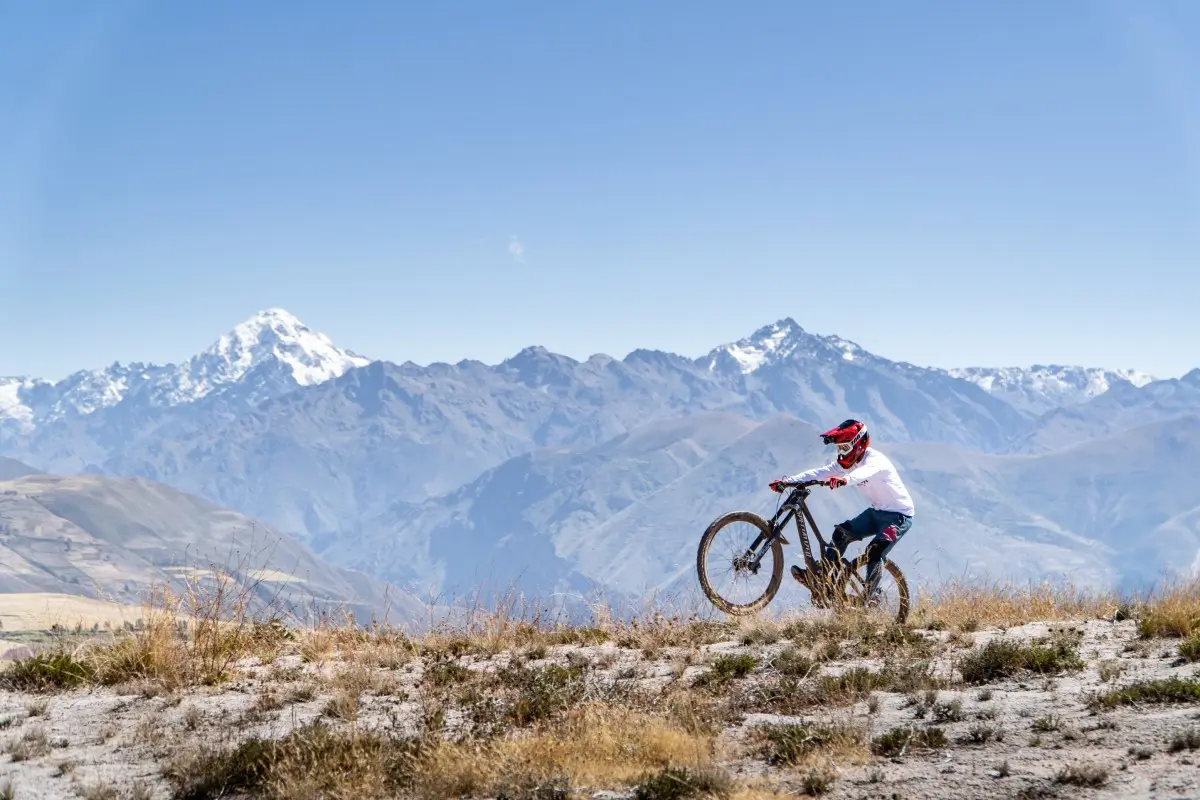
The second descent challenges your technique with loose rock surfaces demanding anticipatory reading, natural berms sculpted by water over centuries, and crossings of active irrigation channels. Constant views of the Maras salt complex and the deep Urubamba canyon accompany every pedal stroke of this route. Although categorized as intermediate level, it’s not without passages demanding sustained technical concentration.
- Estimated duration: 3 hours
- Difficulty level: Intermediate
- Altitude range: 9,350 ft / 12,467 ft
- Cultural attractions: Maras salt mines, Moray terraces, Sacred Valley views
Lamay Enduro MTB Tour
This specialized variant of the Lamay descent is oriented specifically toward the “gravity ride” style and represents one of the region’s most complete technical challenges. The route starts from 4,300 meters (14,100 feet) in the glacial heights and descends vertiginously to 2,950 meters (9,678 feet) in the valley, covering 20.8 kilometers of technical trails including complex rock gardens, Inca staircases demanding total bike control, and eucalyptus forests where speed naturally increases.

This route is designed specifically for cyclists with proven experience seeking total immersion that fuses sustained speed, contact with living culture, and high-Andean landscape of maximum spectacularity. The final Huama to Lamay section is especially recognized for its “continuous descent” sensation that culminates dramatically at the valley floor beside the river.
- Estimated duration: 4 hours of intense descent
- Difficulty level: Advanced
- Altitude range: 9,514 ft / 13,780 ft
- Total distance: 20.8 kilometers
- Recommended profile: Cyclists with enduro and extended technical descent experience
Lomo Fino & El Brujo
This full-day tour is configured as the ideal epic finale for your mountain bike trip through Cusco. The circuit represents a dramatic transition from high mountain zones to temperate valleys in a single extensive outing, combining technical drops demanding millimetric precision, high-speed lines that accelerate your adrenaline, open viewpoints with 360-degree views, and extensive forest sections where the sensation of “infinite flow” becomes addictive.
This route is specifically designed for cyclists who’ve already completed their acclimatization process and want to close their Andean experience with maximum physical and technical intensity.
- Estimated duration: 6 to 7 hours (Full day)
- Difficulty level: Intermediate – Advanced
- Altitude range: 9,350 ft / 13,451 ft
- Characteristics: Technical drops, speed lines, ecosystem transitions
Lares Inca Trail MTB
A route designed specifically for cyclists who love mountains in their purest expression, tangible history, and extreme physical challenges. This circuit crosses high mountain passes exceeding 4,400 meters (14,436 feet), Quechua communities where Spanish is a secondary language, and glacial-origin Andean lakes surrounded by herds of alpacas and llamas. The trails you’ll ride are millennia-old and continue being connection routes between remote communities.
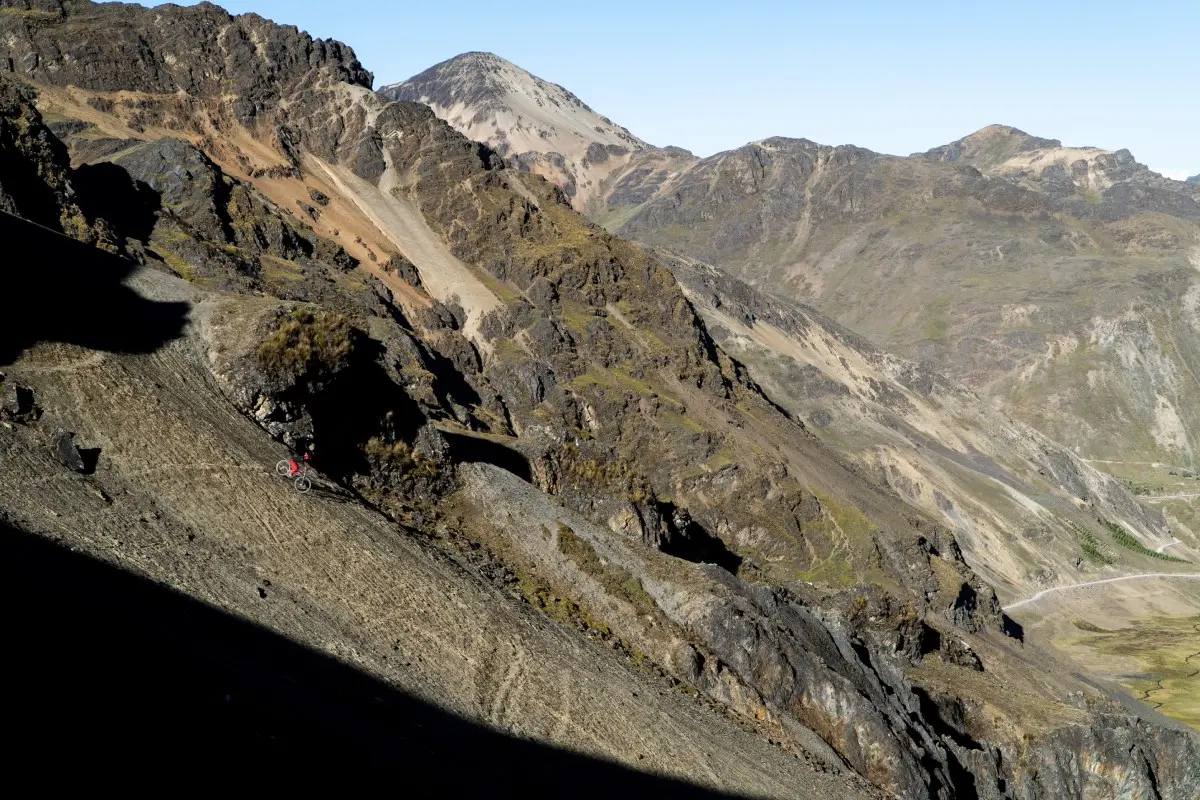
From 4,400 meters (14,436 feet) at its maximum point to the more temperate valleys near 2,800 meters (9,186 feet), this experience demands excellent cardiovascular physical condition, consolidated descent technique, and deep environmental and cultural awareness. It’s a setting where mountain sport transforms into genuine connection with Andean geography and the cultures that have inhabited it since time immemorial.
- Estimated duration: Approximately 6 hours
- Difficulty level: Advanced (excellent physical condition required)
- Altitude range: 9,186 ft / 14,436 ft
- Special characteristics: Maximum cultural immersion, glacial lakes, remote communities
Understanding Andean Climate
Cusco, located at 3,350 meters (10,990 feet) altitude, presents two clearly differentiated seasons: the dry season and the rainy season. Understanding these climatic variations is fundamental for planning your mountain bike experience with maximum guarantees of safety and enjoyment. Below, you’ll find a detailed analysis of climatic behavior throughout the year:
Annual Climate Calendar
| Period | Climate Characteristics | Average Temperature |
|---|---|---|
| May – October | Dry season. Predominantly sunny days, cold early mornings, minimal or no precipitation. | Min. 37°F / Max. 70°F |
| November – April | Rainy season. Wet terrain, muddy sections, abrupt and frequent weather changes. | Min. 43°F / Max. 66°F |
Additional Climate Considerations
Within the dry season, the months of July and August present the lowest temperatures, especially during early morning hours, but offer the greatest climatic stability of the year. They’re ideal months for cyclists who prioritize predictable conditions over warmer temperatures. On the other hand, May, June, and September offer an optimal balance between pleasant weather and trails in excellent condition.

During the rainy season, outings are frequently modified, rescheduled, or canceled for safety reasons. Responsible operators always prioritize terrain conditions and cyclist safety over any established schedule.
Planning Your MTB Adventure in Cusco
Acclimatization
Cusco sits at approximately 3,399 meters (11,150 feet) above sea level, an altitude that significantly impacts the physical performance of anyone arriving from zones near sea level. To guarantee a safe and enjoyable experience, it’s emphatically recommended to reserve at least two complete days of gradual acclimatization before undertaking intense physical activities like mountain biking.

Emerald lake on the Kinsa Cocha route.
The most common symptoms of altitude sickness (soroche) include headache of variable intensity, general fatigue, sensation of breathlessness, rapid breathing even at rest, occasional nausea, and difficulty achieving deep sleep. If you experience these symptoms, the most effective response is absolute rest and, in cases of persistence or worsening, immediately descending to lower altitude.
High-Altitude Safety Protocols
Safety on high mountain bike routes requires specific precautions beyond conventional cycling considerations:
- Never ride alone on routes far from urban centers or in zones with limited or nonexistent communication signal.
- Use a full-face helmet if doing technical descents with steep slopes, jumps, or loose rock sections.
- Constant and strategic hydration: drink water regularly before feeling thirsty and consider electrolyte supplements to compensate for accelerated loss from altitude and effort.
- Pre-departure technical check: meticulously verify brakes (power and pad condition), tire pressure (adjusted to terrain type), suspension function, and chain tension before each outing.
- Weather protocols: absolutely avoid riding during electrical storms (frequent at altitude) or heavy rain compromising visibility or traction.
- Mandatory communication: always notify your guide, tour operator, or accommodation of your specific route and estimated return time. Establish a communication protocol in case of delay.
- First aid kit: verify your group has a basic kit including wound treatment materials, altitude sickness medication, and emergency communication means.

Best Time to Visit Cusco
The dry season, officially extending from May to October, concentrates approximately 80% of tourism and mountain bike activity in Cusco. Within this period, July and August stand out as the coldest months (especially in early mornings, with temperatures that can drop to 0°C/32°F or below), but simultaneously offer the most stable and predictable weather of the year for riding with confidence.
During the rainy season (November to April), outings experience frequent modifications. Responsible operators reschedule or cancel routes according to terrain conditions and weather forecasts, always prioritizing safety over any other factor. Trails become muddy, slippery, and potentially dangerous, especially in sections with steep slopes or exposed rock surfaces.
Monthly Guide for Cyclists
| Months | Weather Conditions | MTB Recommendation | Visitor Volume |
| May – June | Transition to dry season, pleasant temperatures | Excellent: trails in optimal condition, balanced weather | Moderate |
| July – August | Intense cold in early mornings, sunny midday, very stable weather | Ideal: maximum weather predictability, dry trails | High (peak season) |
| September – October | Warmer temperatures, end of dry season | Excellent: optimal balance between weather and conditions | Moderate-High |
| November – April | Rainy, slippery terrain, unpredictable weather changes | Discouraged: elevated risk on technical descents | Low |
How to Get to Cusco?
The vast majority of international travelers arriving in Cusco do so through Lima, Peru’s capital. Lima’s Jorge Chávez International Airport operates as the main South American connection hub, receiving direct flights from North America, Europe, and multiple Latin American cities.
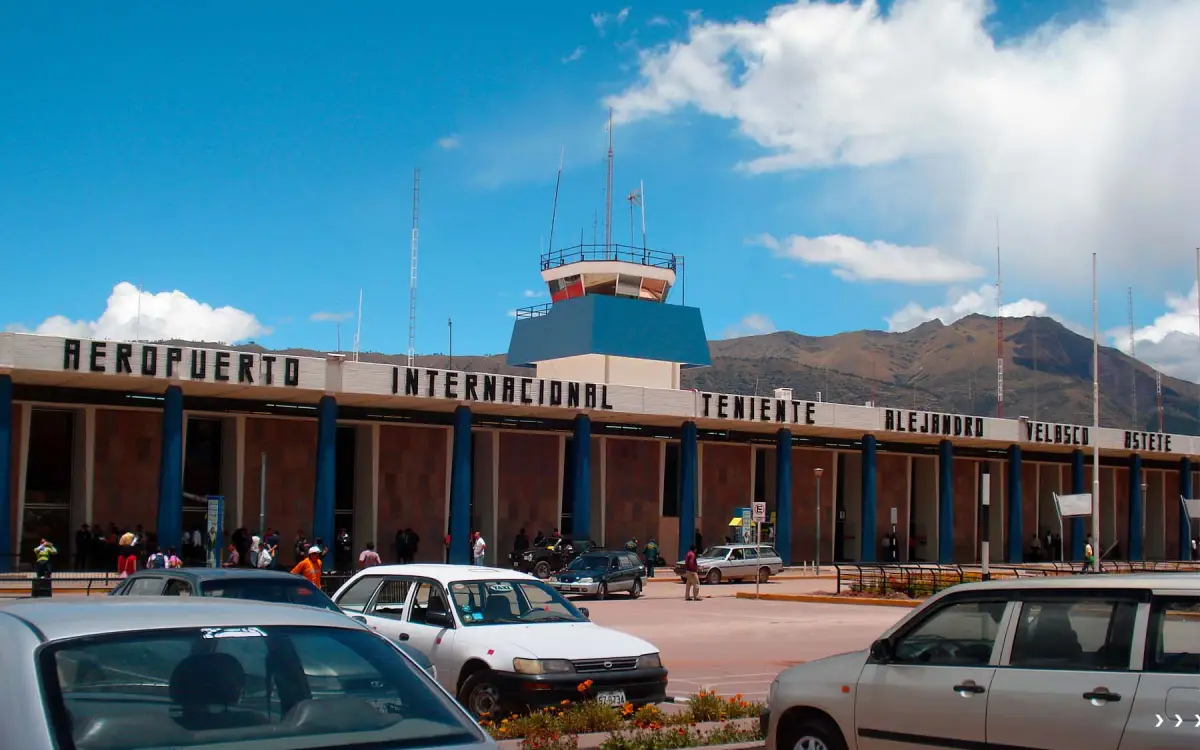
From Lima, you must take a domestic flight lasting approximately 1 hour and 20 minutes to Cusco’s Alejandro Velasco Astete International Airport. This airport has the particularity of being located within the city’s urban limits, just 10-15 minutes by taxi from the historic center, which greatly facilitates arrival logistics and allows you to quickly settle into your accommodation or head directly to meet with tour operators.
Important Considerations About Flights to Cusco
It’s fundamental to understand that Cusco’s airport operates under particular conditions: it’s situated at over 3,300 meters (10,827 feet) altitude and is completely surrounded by high-elevation mountains. This geographic configuration generates significant dependence on weather conditions. Morning fog, crosswinds, or cloud formations can cause delays, rescheduling, or, in extreme cases, flight cancellations.
For this reason, it’s emphatically recommended to:
- Consider flights arriving early in the day (between 6:00 AM and 10:00 AM), when weather conditions are usually more stable.
- Plan at least one full buffer night in Cusco before your first scheduled mountain bike activity.
- If your trip includes an international departure flight from Lima, book at least 4-6 hours margin between your Cusco-Lima flight and your international connection.
- Contract travel insurance covering rescheduling or cancellations due to weather causes.
From the Airport to MTB Routes
Once settled in Cusco, the starting point for mountain bike routes will vary according to the chosen circuit. Access can be between 30 minutes and 2 hours of road travel from the city center, depending on whether your route develops in Cusco’s immediate surroundings (like Yuncaypata) or in more distant Sacred Valley zones (like Lamay, Lares, or Maras-Moray).
Essential Equipment
To guarantee a smooth and safe experience from your first day on the bike, it’s fundamental to prepare your luggage thinking specifically about Andean mountain conditions, high altitude, and extreme climatic variability.
The Bicycle (Do You Need to Bring Your Own?)
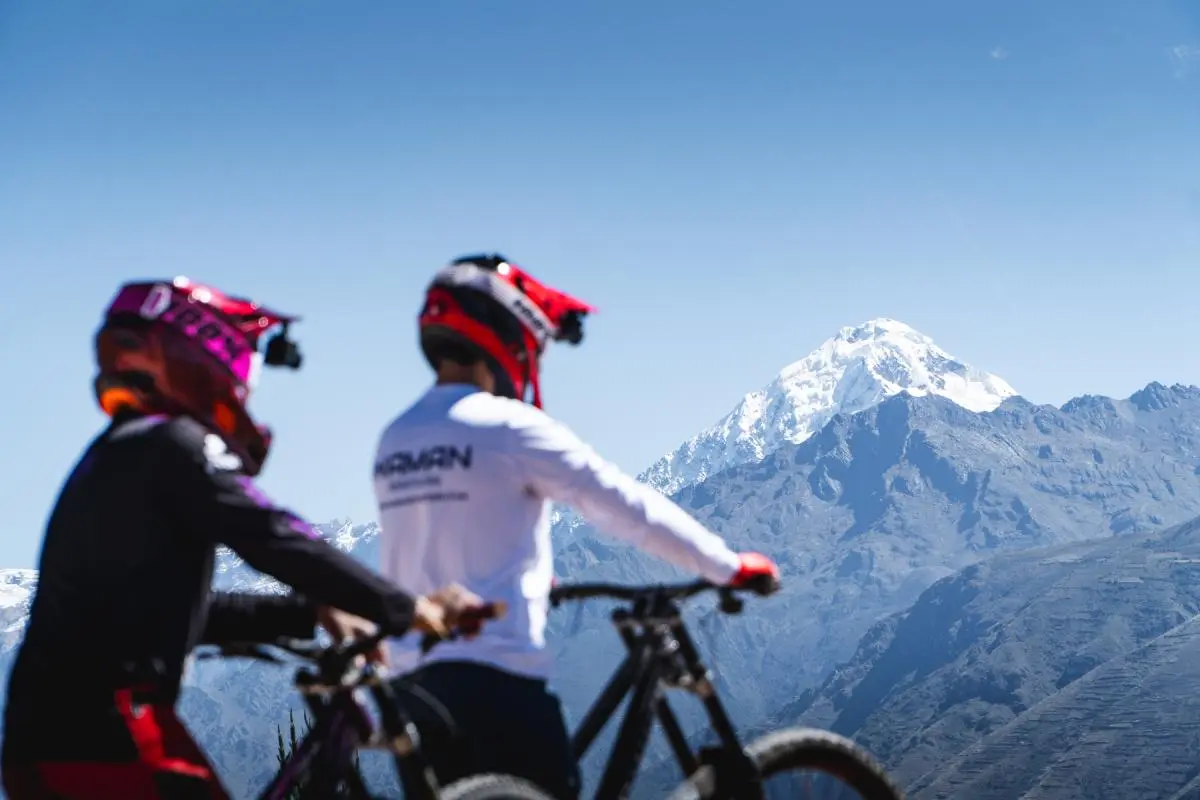
One of the great advantages of doing mountain bike in Cusco is that you don’t need to transport your own bicycle. Specialized operators in the region have fleets of full-suspension bikes from recognized brands that receive constant professional maintenance. These bicycles are specifically configured for the demands of Andean terrain and altitude.
Beyond the rolling equipment, professional operators include helmet, knee pads, elbow pads, gloves, and in some cases, back protectors. This allows you to travel significantly lighter and focus on enjoying the experience instead of managing equipment logistics. Even so, those who prefer bringing their own bike can do so, though they must consider additional expenses for transport, mechanical adjustments, and insurance, as costs often differ between those who rent equipment and those who travel with their own.
Layering System for Clothing
The key to successfully adapting to Cusco’s variable weather conditions is adopting a clothing layering system you can easily adjust throughout the day:
- Base layer (skin contact): Technical thermal garment that efficiently evacuates moisture. Absolutely avoid cotton, which retains moisture and generates rapid body heat loss. Recommended materials: merino, technical polyester, or specialized synthetic blends.
- Middle layer (insulation): Lightweight but effective warm garment. A technical fleece or garment with synthetic insulation like PrimaLoft are ideal options. You’ll use this layer especially in early morning hours, when temperatures at altitude can be near 0°C (32°F).
- Outer layer (protection): Quality waterproof and windproof jacket. Look for garments with breathable technology that avoid internal condensation. This layer is fundamental for protecting yourself from cold winds at altitude and unexpected rain.
- Lower body: Technical cycling pants or shorts with chamois. For early hours of the day, consider thermal tights you can combine or remove according to temperature.
- Extremities: Technical cycling gloves (ideally with knuckle protection), mid or high technical socks that manage moisture, and athletic footwear with good grip sole if not using clipless pedals.
Non-Negotiable Personal Protection
- Helmet: Although operators provide helmets, if you prefer using your own for comfort, ensure it meets current safety standards. For advanced technical descents, consider a full-face helmet.
- Body protections: Knee pads, elbow pads, and gloves with knuckle protection are indispensable on technical routes with rock gardens, Inca staircases, or sections with jumps.
- Eyewear: Eye protection with adequate UV filter. Solar radiation at altitude is significantly more intense than at sea level. Consider glasses with interchangeable lenses to adapt to different light conditions.
- Extreme sun protection: Broad-spectrum SPF 50+ sunscreen, high SPF lip balm, and consider using a buff or bandana to protect neck and face. UV radiation in Cusco is classified as “extreme” during most of the year.
Hydration
The combination of high altitude and intense physical effort generates accelerated dehydration. Consider these options:
- CamelBak-type hydration system: Backpack with water bladder (2-3 liters) allowing you to drink without stopping. Most practical option for technical descents.
- Frame bottle cages: Two bottles of 750ml each minimum. Ensure they’re well secured, as irregular terrain can eject them.
- Hydration salts or electrolytes: Tablets, powders, or concentrated liquids to mix with water. Recommended brands: SIS, Nuun, Hammer Nutrition.
Additional Recommended Items
- 15-20 liter technical backpack with compatible hydration system
- Camera or smartphone with extra battery (cold dramatically reduces autonomy)
- Energy snacks: bars, dried fruits, gels (altitude increases caloric consumption)
- Personal medication and altitude sickness pills (consult with physician)
- Documents in waterproof bag: passport (copy), travel insurance, emergency contacts
Comparison with Other MTB Destinations Worldwide
To adequately contextualize what Cusco offers, it’s useful to compare it with other destinations recognized worldwide for their mountain bike offerings:
Whistler, Canada: Infrastructure vs. Authenticity
Whistler represents the paradigm of professional bike parks: tracks designed specifically for cycling, mechanical lifts, exhaustive signage, constant maintenance, and integrated services. It’s a highly controlled experience optimized for pure sport.
Cusco, in contrast, offers a radically different experience: historic trails existing for centuries, without superimposed tourist infrastructure, where each route implies direct contact with living communities, current cultures, and tangible heritage. There are no mechanical lifts; each descent requires vehicular transport or uphill pedaling. The experience is less “processed” but infinitely more authentic and culturally rich.
Moab, Utah: Desert vs. Andes
Moab is legendary for its slickrock (eroded smooth rock) formations, spectacular desert landscapes, and iconic technical routes. It’s mountain biking in its purest expression of connection with extreme geology.
Cusco shares the technical intensity but adds radical ecosystem diversity: in a single day you can begin in puna ecosystems (high-altitude grasslands) above 4,000 meters (13,123 feet), traverse transitional cloud forests, and finish in temperate valleys. Additionally, each route has layers of human history: pre-Inca agricultural terraces, cobbled roads from Tahuantinsuyo, colonial villages. The experience is simultaneously athletic, scenic, cultural, and historic.
The European Alps: Altitude with Different Impact
The Alps offer high-altitude mountain biking with developed infrastructure, lift technology, and a highly professionalized tourism industry. Altitudes are comparable (many routes operate between 2,000 and 3,500 meters/6,562-11,483 feet), but the physiological impact is different.
Cusco presents a particularity: although maximum altitudes are similar to Alpine routes, here you’re establishing your base of operations at over 3,300 meters (10,827 feet). This means your body never completely “rests” at low altitude, which intensifies acclimatization demands but also accelerates your physiological adaptation if you remain several days.
Elqui Valley, Chile: Regional Comparison
Within South America, Chile’s Elqui Valley offers mountain biking in Andean landscapes with excellent weather and technical routes. However, it lacks the archaeological and cultural component characterizing Cusco.
Cusco adds the dimension of living heritage: you don’t just pedal through spectacular mountains, but do so literally on the same roads used by chasquis (Inca messengers) 500 years ago, traversing terraces that continue producing food, and sharing trails with Quechua communities for whom these paths are part of daily life.
Selecting Your Operator
Choosing the tour operator with whom you’ll undertake your mountain bike experiences in Cusco is probably the most important decision in your planning. A professional, ethical, and experienced operator makes the difference between a memorable positive experience and potential safety, legal, or ethical problems.
1. Permits and legality
Must be registered with DIRCETUR, have communal permits, and Ministry of Culture authorizations if the route passes through archaeological zones.
2. Safety and protocols
Must offer accident insurance, guides certified in first aid, updated first-aid kit, reliable communication system, and a clear evacuation plan.
3. Equipment and maintenance
Uses modern bikes (less than 4 years old), certified helmets, protections in good condition, and regular preventive maintenance, plus tools and spare parts on route.
4. Responsible tourism
Must hire local guides with fair pay, economically contribute to communities, apply low-impact practices, and properly manage waste.
5. Experience and technical knowledge
Must have at least 5 years operating MTB routes in Cusco, guides with recognized certifications, and mastery of local conditions to adjust routes according to group’s actual level.
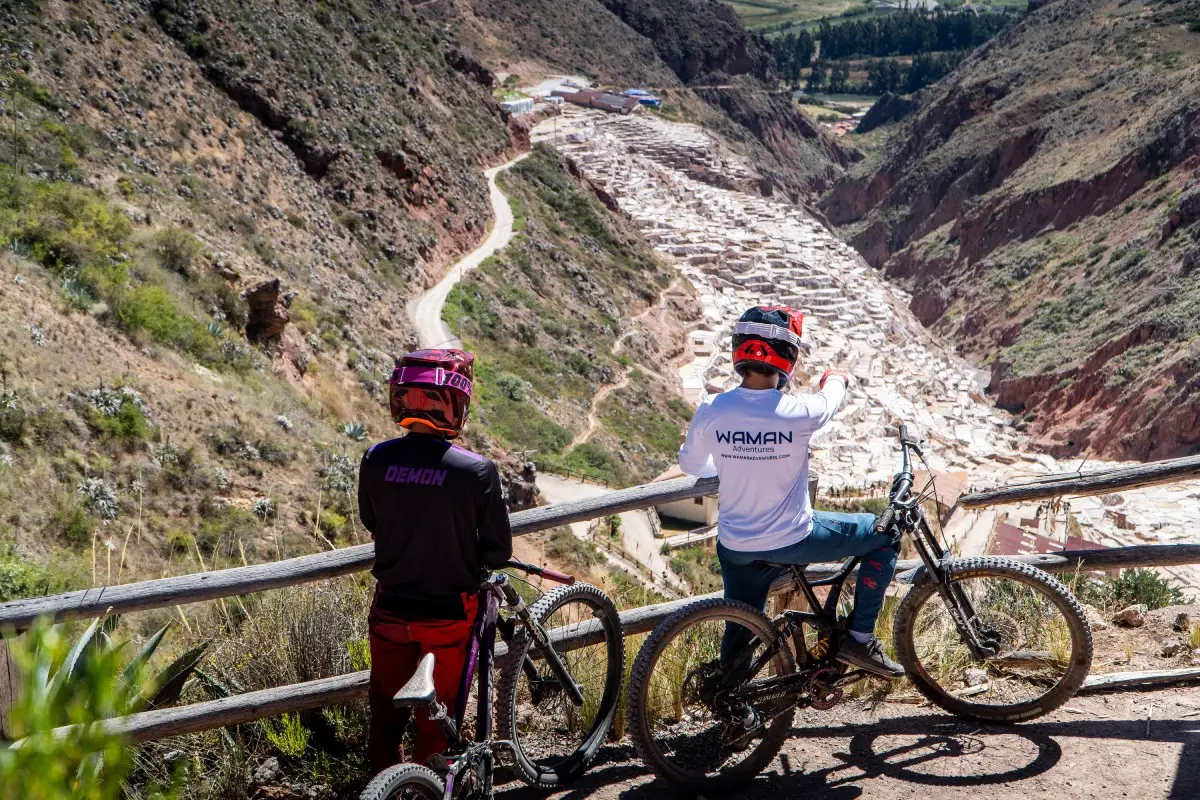
When evaluating operators in Cusco under the mentioned criteria, Peru Biking Tours, specialized division of Waman Adventures, consistently emerges as an industry reference. This company distinguishes itself through several differentiating factors: Key Questions When Contacting Operators
Before booking, make sure to obtain clear answers to these questions:
- What exactly does the tour cost include? (transport, equipment, food, insurance, entrance fees)
- What’s the cancellation or rescheduling policy for bad weather?
- What coverage does the included accident insurance have? What are the limits and exclusions?
- What’s the guide/participant ratio? (ideal is 1 guide per 6-8 participants maximum)
- What happens if my technical level isn’t sufficient to complete the route during descent?
- Is there support vehicle that can pick me up if I can’t complete the circuit?
- How do they handle medical emergency situations in zones without communication signal?
- What documentation must I sign before the activity? (request to review waivers in advance)
Specific Physical Preparation for High-Altitude MTB
Although this guide doesn’t pretend to be an exhaustive training manual, it’s important to understand that mountain bike in Cusco presents specific physiological demands that differ significantly from sea-level cycling or even MTB at moderate altitudes.
- Above 3,000 meters (9,842 feet), air has less oxygen, which elevates heart rate, delays recovery, and increases fatigue. That’s why it’s wise to arrive prepared and acclimatize calmly. A few weeks before the trip, it’s ideal to increase endurance with cycling, jogging, or swimming, include brief intense training sessions, and strengthen legs and core. If possible, use an altitude mask in a controlled manner or train in a hyperbaric chamber.
- Upon arriving in Cusco, avoid strong efforts during the first days. Rest well, stay hydrated, eat light, and don’t consume alcohol. Coca tea or some medications, under medical recommendation, can help with adaptation. When your body responds better, start with short and simple routes. If all goes well, gradually increase the difficulty level and stop if you notice persistent altitude sickness symptoms.
Investment and Budget
The cost of mountain bike in Cusco depends on duration and service type. Half-day tours usually cost between $50 and $150 USD, full-day tours between $90 and $250, and multi-day tours between $400 and $800 or more depending on accommodation and inclusions. Agencies with higher prices usually offer higher-end bikes, small groups, comprehensive insurance, and contributions to local communities. You must also consider tips for guides, personal insurance for adventure sports, rental or purchase of technical clothing, and meal expenses outside the tour.
What Justifies Price Differences?
Premium operators justify higher costs with:
- Higher-end bikes and newer models
- Lower guide/participant ratios (smaller groups, more personalized attention)
- Higher quality and variety food
- Insurance with broader coverage
- More comfortable transportation
- Verifiable and fair compensation to local communities
- Documented sustainable practices

Additional Costs to Consider
- Tips for guides: Although not mandatory, they’re highly appreciated. Suggested range: $10-20 USD per guide per day depending on service quality.
- Personal travel insurance: Highly recommended to contract policy specifically covering adventure sports and high-altitude medical evacuation. Approximate cost: $50-100 USD per week depending on coverage.
- Technical clothing: If you don’t own adequate equipment, you can rent or buy locally. Cusco has specialized outdoor equipment stores.
- Additional food: Some tours include only light snacks. Budget $10-25 USD daily additional for complete meals.

Cusco Is Waiting for You
Mountain bike in Cusco goes far beyond sport. It’s an intense way to experience the Andes, combining physical effort, breathtaking landscapes, and real contact with communities maintaining ancestral routes alive.
Each trail has history. They weren’t created for tourism but have connected Quechua villages for centuries. Riding them is a privilege demanding respect, preparation, and environmental awareness. Altitude will test your body but will also gift you unique settings and unforgettable descents.
Cusco awaits you with open mountains, responsible operators, and roads still breathing history. If you already feel the call, the time to decide is now. Contact Peru Biking Tours to learn about routes, dates, and updated costs.
Frequently Asked Questions
Do I need prior mountain bike experience to do routes in Cusco?
Can I do MTB in Cusco during the rainy season?
Is it safe to do MTB in Cusco alone, without an operator?
Can children do mountain bike in Cusco?
What level of Spanish do I need?
Can I combine MTB with a visit to Machu Picchu the same day?
Are the routes marked?
Autor
Shared:


If you liked this article and the information you found, give us 5 stars!
 (Ninguna valoración todavía)
 Loading...