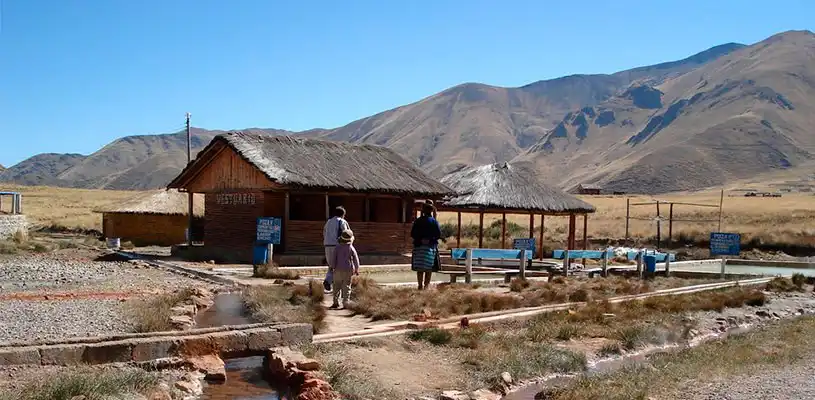
La raya offers hidden hot springs that are so charming to be enjoyed with your family and friends. You can relax and have a good time in the thermo-medicinal baths.
La raya está ubicada en el distrito de Layo, provincia de Canas en la región del CuscoLa raya is located in the district of Layo, province of Canas in the region of Cusco
Location:
La raya is located in the district of Layo, province of Canas in the region of Cusco, at an altitude of 4328 m.a.s.l. It is part of the Route of the Sun.
Description:
It is the highest point between Cusco and Puno. Up there you will have a beautiful view of the surroundings and the snowy mountains. They are also known as the Eco Tourist Inca Baths Complex of Occobamba.
Climate:
La Raya has two distinct seasons. The rainy season and the dry season.
Dry season: From May to October
The weather during this period is predominantly dry especially in June, July and August. Days are bright and sunny with a temperature of 16 °C (61 °F) while nights are much colder sometimes with a low temperature of 0 °C (32 °F).
Rainy season: From November to April
During this time La Raya receives a greater amount of rainfall. Average daytime temperatures are higher than the dry season at 18 °C (64 °F) while night temperatures can be as cold as 9 °C (48 °F).
La Raya se encuentra entre 2 culturas, el quechua del Cusco y el Aymara de Puno.
What is the best time to visit La Raya?
Visiting La Raya at any time of the year is an amazing experience; however, the rainy and dry seasons offer a vastly different visual experience. Deciding on when the best time to visit La Raya is really up to you and your preference.
Most people, including tour operators, recommend coming during the dry season since there is less rain and the roads are safer.
What can you do once you arrive in the hot springs in La Raya?
When you arrive in La Raya, you can appreciate the hydrothermal areas, where hot water, mud and boiling gases bubble up from the ground. You can have a walk around the area and take some pictures. The Mountains and the mixture of colors will just marvel your eyes.
After some touring, you can go to one room where a hot pool is waiting from you. The pools are private and clean. You can stay as long as you want.
We recommend to stay in the pool from 15 to 20 minutes, then leave the pool for some minutes and repeat. Don’t stay longer than 2 hours.
There is a big swimming pool you can go, too.
Aguas medicinales de La Raya, Cusco
Characteristics of the hot springs water?
Odorless
Yellowish color.
Why do people visit La Raya?
La Raya is becoming more and more popular due to the fact that these natural hot springs have medicinal properties that help the treatment of rheumatism, as well as diseases of kidneys and joints.
Benefits of the Hot Springs?
They contain a variety of different minerals and our bodies soak up these minerals ,which increases circulation and overall oxygen flow.
The mineral water can also help reduce stress by relaxing tense muscles. Meanwhile as your body temperature rises in the bath, and then cools once you exit can also help you relax and fall into a deeper sleep.
The heat, although sometimes intense, can dull our perception of pain by blocking the pain receptors in our bodies. Also being buoyant in the water often allows for freer movement as the water supports the body’s joints.
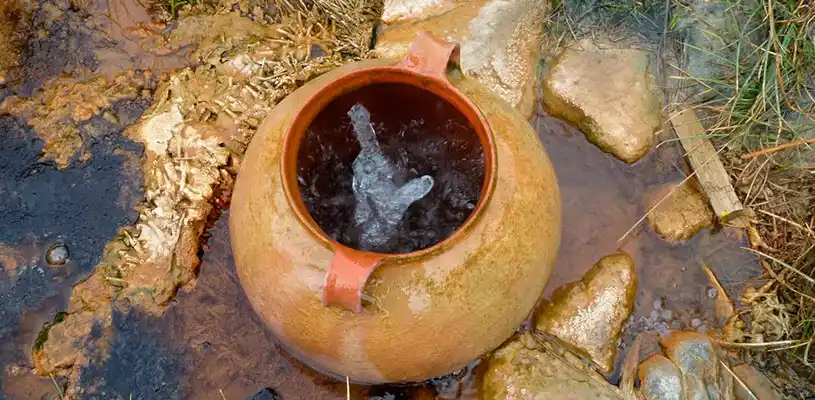
Olla de arcilla en La Raya. Cusco
How to get to La Raya?:
To get to La Raya, you need to take the bus from Cusco to Sicuani. The buses depart from Huayruropata Av. It takes 3 hours to get to Sicuani and the bus ticket costs from PEN 10 to 15. Once in Sicuani, you have to take a taxi to the hot springs in La Raya. It costs from PEN 70 to 80 roundtrip.
Cost and Opening hours for La Raya:
The entrance ticket for the hot springs is PEN s/5.00.
Opening Hours: from 6:00 am to 18:00 pm
What to bring to La Raya?:
Original Passport
Sun hat
Sunscreen (SPF 35+)
Water
Hiking Boots
Waterproof jacket or rain poncho
Warm clothes
Camera and film
“People travel to faraway places to watch, in fascination, the kind of people they ignore at home.” – Dagobert D. Runes





 Loading...