


Inti Punku Ollantaytambo: What the Hike Involves
Inti Punku is the free, little-visited Sun Gate above the Sacred Valley, reached by a long full-day hike rather than by ticketed tourist access. In practice, this is not a quick stop like the better-known Inti Punku at Machu Picchu, but a demanding 7 to 8 hour round-trip route with strong elevation gain, summit altitude near 13,000 ft (about 3,970–4,000 m), limited signage, and no regular services on the trail. It makes sense for travelers who are already acclimatized and want a quieter archaeological hike with wide views toward the Verónica snowcap.
Table of Contents
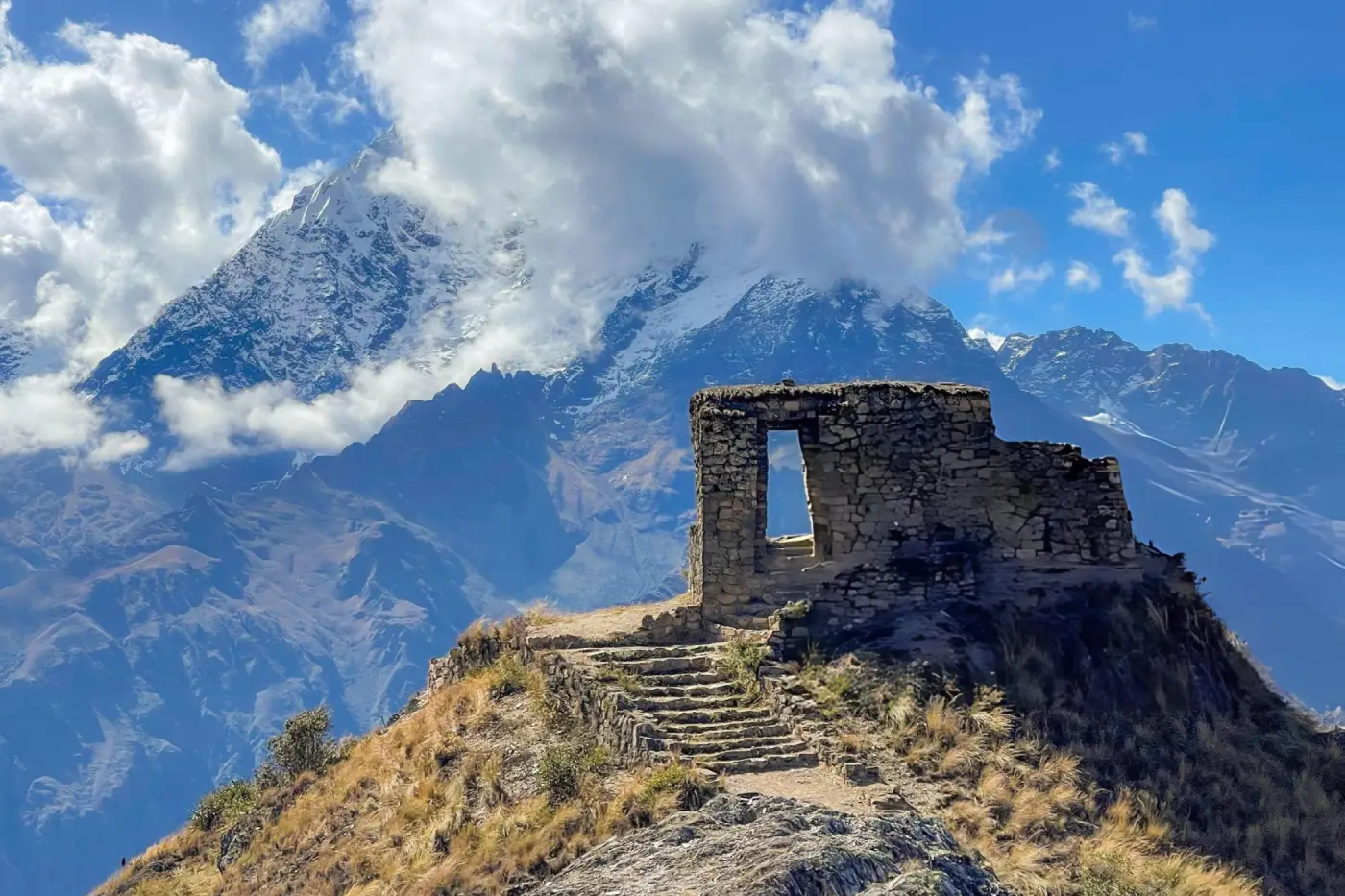
Cusco has places that do not appear on the standard itinerary. Intipunku Ollantaytambo is one of them: a high Inca structure above the Sacred Valley, with open views toward the Verónica snowcap, Ollantaytambo, the Urubamba River corridor, and the old quarry landscape of Cachicata.
Entry is free, and there is no official quota or turnstile. But that does not make it an easy visit. Inti Punku is a demanding full-day hike with altitude, sun exposure, limited signage, and no regular services on the route.
| 12,750–13,100 ftSummit range | 10–11 miRound trip | 7–8 hrsFull-day hike | FreeNo entry ticket | ExposedStart early |
This guide explains what Inti Punku is, how to get there from Cusco and Ollantaytambo, how difficult the hike feels, what to bring, when to go, and how it differs from the Intipunku at Machu Picchu, which shares the name but belongs to a completely different visit.
Intipunku archaeological site near Ollantaytambo,
WORLD WONDER IN THE ANDESMachu Picchu
Discover the history, landscapes, and essential tips for visiting this world wonder.
What Is Intipunku Ollantaytambo?
Inti Punku means “Sun Gate” in Quechua: inti means sun and punku means gate. The Ollantaytambo site stands in the Kachi Qhata or Cachicata sector, above the Sacred Valley and across from the Verónica snowcap, also known locally as Wakay Willka or Huacaywillka in Andean traditions.
The structure is small compared with the major archaeological complexes of the region, but its position is powerful. From the gate, the valley opens below, Ollantaytambo sits far beneath the route, and the Verónica snowcap dominates the horizon. The place works as a viewpoint, a symbolic threshold, and a reminder that Inca architecture was often built in dialogue with mountains, water, movement, and ritual orientation.

Did you know?
The Verónica snowcap is one of the most important mountain presences around Ollantaytambo. In Andean landscape reading, snowcapped mountains were not just scenery. They were protective entities linked to water, fertility, direction, and community life.
Unlike Pisac, Ollantaytambo, Chinchero, or other well-known Sacred Valley sites, Inti Punku is not visited with the Cusco Tourist Ticket. It has no formal ticket booth, no regular bathrooms, and no developed tourist infrastructure at the top. Its value is precisely there: it remains a mountain hike with Inca remains, quarry context, silence, and a broad Andean landscape.
Inti Punku in Ollantaytambo Is Not the Sun Gate at Machu Picchu
The name causes confusion. There are two important places called Inti Punku or Intipunku in the Cusco region, but they are completely different visits. Before planning anything, separate them clearly.

| Comparison point | Inti Punku Ollantaytambo | Intipunku Machu Picchu |
| Location | Above Ollantaytambo, in the Sacred Valley. | Inside the Machu Picchu route system, linked to the Inca Trail approach. |
| Access | Free full-day hike from Ollantaytambo or Cachicata. | Official Machu Picchu ticket route, available only when the route is open. |
| Altitude | Approx. 12,750–13,100 ft (3,885–4,000 m). | Approx. 8,900–9,000 ft (2,720–2,745 m). |
| Main view | Sacred Valley, Ollantaytambo, Urubamba corridor, and Verónica snowcap. | Machu Picchu from the upper historical access area. |
| Best for | Strong hikers who want a quiet Sacred Valley route. | Travelers visiting Machu Picchu who want the Sun Gate perspective. |
Keep this in mind:
If you mean the Sun Gate famous for the Inca Trail arrival to Machu Picchu, you are thinking of Intipunku at Machu Picchu. This guide is about the free but demanding hike above Ollantaytambo.
How to Get to Inti Punku (Ollantaytambo)
From Cusco, first reach Ollantaytambo. The road trip usually takes around 1 hour 40 minutes to 2 hours, depending on traffic, departure point, and stops. From Ollantaytambo, the route crosses toward the Kachi Qhata or Cachicata sector and climbs above the valley.
The full hike can start from Ollantaytambo town, but some travelers begin closer to Cachicata to reduce part of the approach. That is why distance and timing vary. From town, plan around 10 to 11 mi (16 to 18 km) round trip. From a higher or closer starting point near Cachicata, the hike can be shorter, but it still involves serious elevation gain.

| Section | Practical read |
| Cusco to Ollantaytambo | Approx. 1 hr 40 min to 2 hrs by road, depending on traffic and transport type. |
| Ollantaytambo to route start | Cross toward Kachi Qhata / Cachicata. Signage can be limited. |
| Ascent | Approx. 4 to 5 hours from town, depending on pace, weather, and acclimatization. |
| Descent | Approx. 2.5 to 3 hours. Fatigue, sun exposure, and loose sections matter on the way down. |
| Total time | Plan 7 to 8 hours of hiking from town, plus transport, breaks, and photos. |
Practical tip
Sleeping in Ollantaytambo the night before makes this hike easier to organize. It avoids a very early transfer from Cusco and gives you a calmer start.
Plan the hike around Inti Punku logistics
What to Expect From the Hike
The hike is demanding but not technical. There are no climbing sections that require equipment, but the elevation gain is serious. Ollantaytambo sits around 9,160 ft (2,792 m), while the upper Inti Punku sector is close to 13,000 ft (around 3,885–4,000 m). That difference is the main reason the route feels harder than it looks on a map.
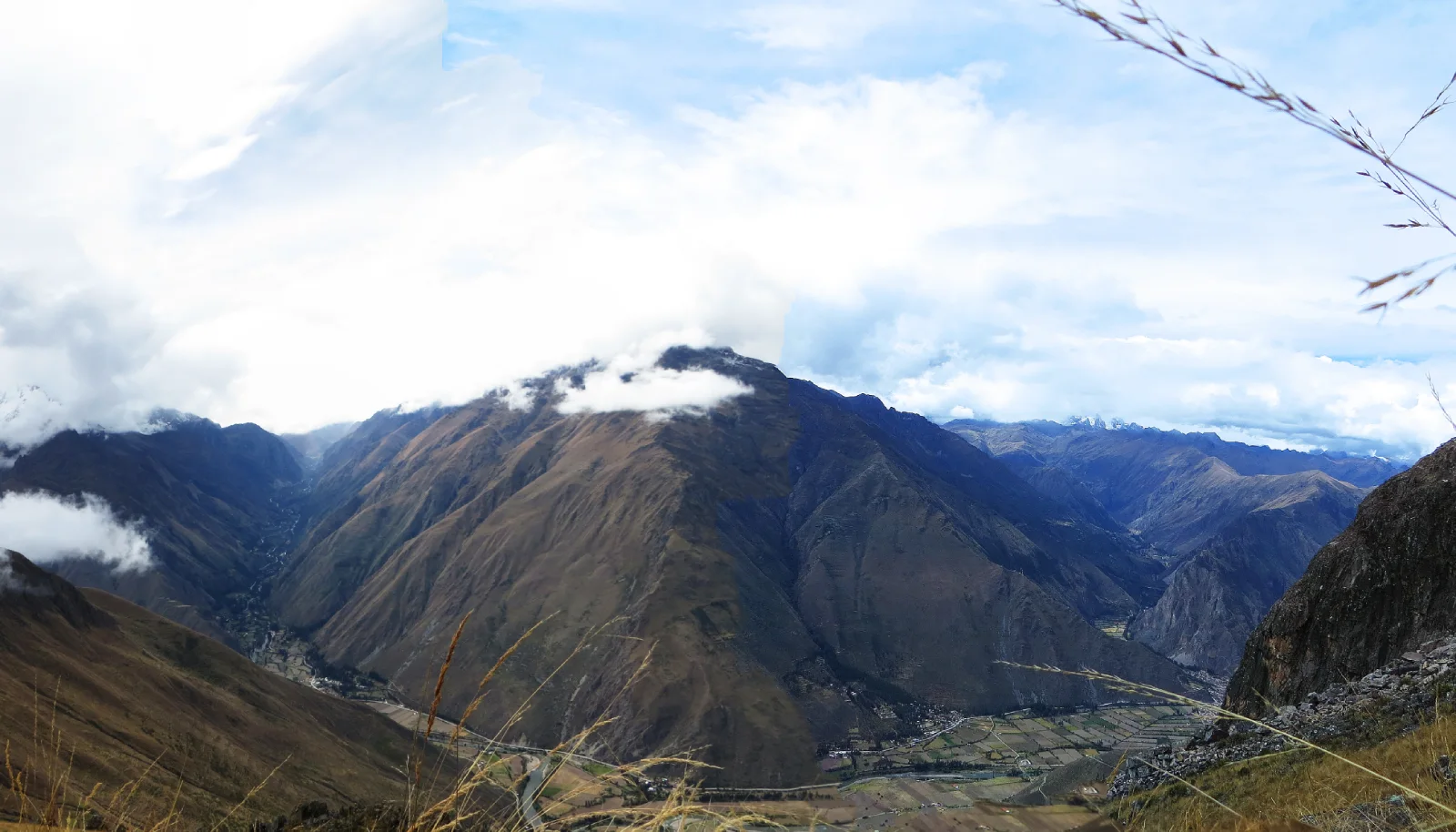
The Cachicata Inca Quarry Trail climbs through ancient Inca quarries and natural viewpoints.
The trail crosses open slopes, agricultural areas, quarry zones, stone paths, and high viewpoints. Along the way, you may see worked stones connected to the Cachicata quarries, which supplied material for Inca construction in the area. The route is not only about the gate at the top. The ascent itself helps you understand the scale of the landscape around Ollantaytambo.
Warning:
Do not treat this as a short viewpoint walk. Inti Punku Ollantaytambo is a long hike with strong elevation gain, limited signage, no reliable services, and heavy sun exposure. If you are not acclimatized or short on time, choose a gentler Sacred Valley hike.
Difficulty, Altitude, and Fitness Level
The real difficulty comes from distance, altitude, sun exposure, and lack of infrastructure. For hikers used to mountain routes, Inti Punku is demanding but manageable. For travelers without altitude experience, it can feel hard from the middle of the ascent onward.
| Factor | What it means |
| Elevation gain | More than 3,800 ft (1,100 m) if starting from Ollantaytambo town. |
| Altitude | The upper sector is close to 13,000 ft (around 3,885–4,000 m), so acclimatization matters. |
| Trail type | Non-technical, but long, exposed, and physically demanding. |
| Services | No reliable shops, bathrooms, or supply points on the route. |
| Best pace | Slow and steady. Starting too fast usually becomes a problem higher up. |
Travelers coming from low elevations should spend at least one or two days adapting in Cusco or the Sacred Valley before attempting this hike. If altitude is a concern, review a broader acclimatization in Cusco plan before committing to the route.
Should You Choose This Hike?
Inti Punku Ollantaytambo is worth it if you want a quiet Sacred Valley route, a real physical challenge, and a viewpoint that feels far from the usual stops. It is less ideal if you only want a quick photo, have limited time, or are not ready for a long uphill walk.
| Traveler type | Decision |
| Strong hiker with a full day | Good choice. Start early and bring enough water. |
| Traveler short on time | Not ideal. The hike takes most of the day. |
| First day at altitude | Avoid it. Acclimatize first in Cusco or the Sacred Valley. |
| History and landscape traveler | Very good fit, especially with a guide who explains Cachicata and the quarries. |
| Traveler heading to Machu Picchu next day | Possible, but sleep in Ollantaytambo and avoid overloading the schedule. |
Best Time to Start the Hike
Start early, ideally between 7:00 and 8:00 a.m. from Ollantaytambo. A late start makes the ascent hotter and increases the risk of descending tired, under strong sun, or with low light. The route is exposed in many sections, so the morning window matters.
The best plan is to sleep in Ollantaytambo the night before, eat breakfast early, and begin without rushing. This also gives you more flexibility if you want to visit Ollantaytambo town, the archaeological complex, or continue toward the train to Machu Picchu on a separate day.
What to Bring to Inti Punku Ollantaytambo
This is a route outside the standard tourist circuit. There are no regular services along the way. What you do not bring from Ollantaytambo, you probably will not find on the trail.
| Item | Why it matters |
| Enough water | Carry at least 2 liters (68 fl oz) per person. On sunny days, more may be necessary. |
| Box lunch or snacks | The hike takes most of the day, and there are no reliable food stops. |
| Trekking shoes | The descent needs good traction. Avoid flat urban sneakers. |
| Layered clothing | It can feel hot during the ascent and cold or windy at the summit. |
| Sunscreen and hat | UV radiation is strong at altitude, even when the air feels cool. |
| Offline map | Download the route before leaving. Signal may be irregular or unavailable. |
| Waste bag | Do not leave trash. Everything you carry up should come back down. |

Best Time of Year to Visit
| Season | Practical read |
| April to October | Best visibility, lower rain risk, and more stable conditions for a long hike. |
| May to September | Driest months, with cold mornings and strong daytime sun. |
| November to March | More humidity, slippery sections, and higher chance of clouds covering the summit. |
To plan the broader context, also review the Sacred Valley guide, the Machu Picchu travel guide, and the route between Ollantaytambo, Aguas Calientes, and Machu Picchu.
Related guides to plan this route better
A Quiet Sacred Valley Hike for the Right Traveler
Inti Punku Ollantaytambo is one of the few archaeological hikes in the Sacred Valley that still feels quiet. The walk is long, the altitude is real, and the signage is limited. That keeps it away from the standard circuit and makes it more rewarding for travelers who want a mountain route with history, silence, and strong views.
At Inkayni Peru Tours, we can help you fit this hike into a Sacred Valley itinerary with Ollantaytambo, the train to Machu Picchu, the Inca Trail, or another route in Cusco. Tell us how your trip is taking shape.
Frequently Asked Questions About Inti Punku Ollantaytambo
Is Inti Punku Ollantaytambo the same as the Sun Gate at Machu Picchu?
No. They are different sites with the same name. Inti Punku Ollantaytambo is a free full-day hike above the Sacred Valley. Intipunku at Machu Picchu is inside the official Machu Picchu route system and is linked to the Inca Trail arrival.
How much does entry to Inti Punku Ollantaytambo cost?
Entry is free. There is no official ticket, quota, or advance reservation for the site itself. You should still plan transport, food, water, a possible local guide, and a night in Ollantaytambo if you want to start early.
How long does the hike take?
From Ollantaytambo town, the ascent can take around 4 to 5 hours, depending on pace, weather, and acclimatization. The descent usually takes 2.5 to 3 hours. Plan around 7 to 8 hours of hiking, plus breaks.
How many miles is the route?
The full round-trip route is usually around 10 to 11 mi (16 to 18 km) if you start from Ollantaytambo town. If you start closer to Cachicata, the distance can be shorter. The main difficulty is the elevation gain, not only the distance.
Is Inti Punku Ollantaytambo difficult?
Yes. It is not technical, but it is demanding. The route gains more than 3,800 ft (1,100 m) from Ollantaytambo and reaches close to 13,000 ft (around 3,885–4,000 m). Good fitness, acclimatization, water, and sun protection are important.
What time should I start the hike?
Start between 7:00 and 8:00 a.m. from Ollantaytambo. A late start increases sun exposure and can make the descent more tiring. Sleeping in Ollantaytambo the night before is the most comfortable option.
Can I combine the hike with the Ollantaytambo archaeological complex?
It is not ideal on the same day if you want to enjoy both properly. The hike takes most of the day. A better plan is one day for the Ollantaytambo archaeological complex and town, and another day for the Inti Punku hike. If Machu Picchu is next, keep the Ollantaytambo to Machu Picchu logistics separate from the hiking day.
Do I need a guide for Inti Punku Ollantaytambo?
A guide is not mandatory, but it is recommended if you do not know the area. Signage can be limited, and a local guide adds context about Cachicata, the quarries, the site’s function, and the Andean landscape.
Are there shops or bathrooms on the route?
Do not count on services during the hike. Bring water, food, sunscreen, layered clothing, toilet paper, a waste bag, and everything you may need. Whatever you carry up should come back down.
What is the best time of year to visit?
The dry season from April to October is usually best. Trails are firmer and visibility toward the Verónica snowcap is better. From November to March, rain can make the path slippery and the summit may be covered by clouds.
Should I sleep in Ollantaytambo before the hike?
Autor
Shared:


If you liked this article and the information you found, give us 5 stars!
 (1 votos, promedio: 5.00 de 5)
 Loading...