


Table of Contents
If you are looking for a different and novel adventure in Cusco, you should not miss the experience at El Parque de la Papa. The Peruvian government declared this place as an agrobiodiversity zone.

The Potato Park in Cusco is an agrobiodiversity zone.
Potato Park is a Biocultural Territory dedicated to biological and cultural diversity in the mountains near the Sacred Valley. This place will delight us with its exquisite flavors and colorful landscapes as we walk through it. Besides, we will be able to appreciate the Sacred Valley of the Incas in all its splendor and beauty.
The altitudes that we will cross are around 3400 to 4600 meters above sea level. It is recommended to take light but warm clothes, sunblock, a hat, and a camera or camcorder.
Where to find different varieties of potatoes?

This zone of agrodiversity is located 45 minutes from the Imperial city of Cusco, has an extension of 7238 hectares, and groups five rural communities: Chahuaytire, Amaru, Paru Paru, Pampallacta, and Saqaqa. These towns are responsible for delighting us with a versatile range of flavors for every palate. The Potato Park has an estimated 1330 potato varieties preserved in the field and the communal germplasm bank. Almost all of them are native varieties of this tuber so appreciated since Inca times.
As an extra fact, the people of these communities are mostly Quechua speakers, dedicated to agriculture and livestock. They offer and exhibit their best products in the Dominican fair held every Sunday in the market of Pisaq.
The ritual of Papa Watay
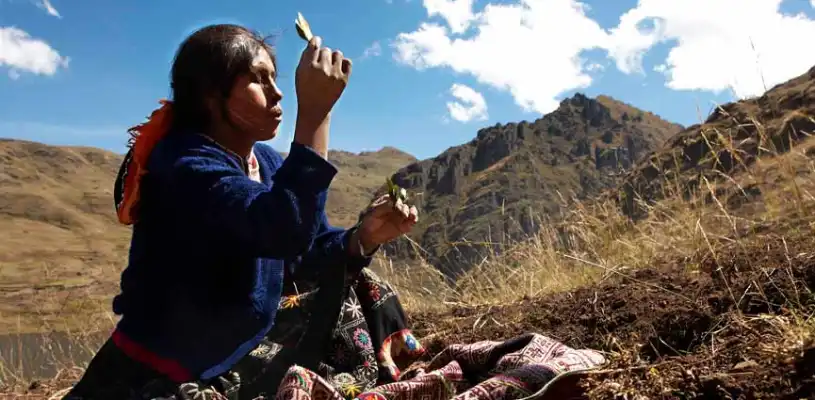
A central ceremony in honor of the potato in this place is known as the Papa Watay. A ceremony that revolves around “tying the potato” to have a good harvest. The exact date of this ritual can vary according to the family’s agricultural calendar. The purpose is to bind the spirit of the potato to prevent it from traveling to distant places or the Hanan Pacha (heavenly world).
This ceremony ties the spirit of the potato to the chacras (Andean farms with fields for cultivation) so that it does not climb the Hanan Pacha, as this would cause damage to their crops.
Textile art in the potato park
The people of these villages still maintain the customs of passing on textile art from generation to generation. They use natural dyes like chillka for the color green, kulli flower for the color yellow, qaqa sunkha (moss) for the color orange, purple corn for the color purple, kimsaq’ucho for the color blue and cochinilla (a parasite that lives in the nopal) for the color red.
These textiles are exhibited in the textile center of Pisaq, as well as in the community of Amaru and different textile centers around this area.
More natural wealth
The fertile land of this part of the valley makes it possible to produce a large quantity of products. Among them, white corn, potato varieties, cereals, vegetables, and more Andean products.
As for fauna, you can appreciate the existence of deer, chinchillas, vizcachas, pumas, skunks, and a varied range of hummingbirds.
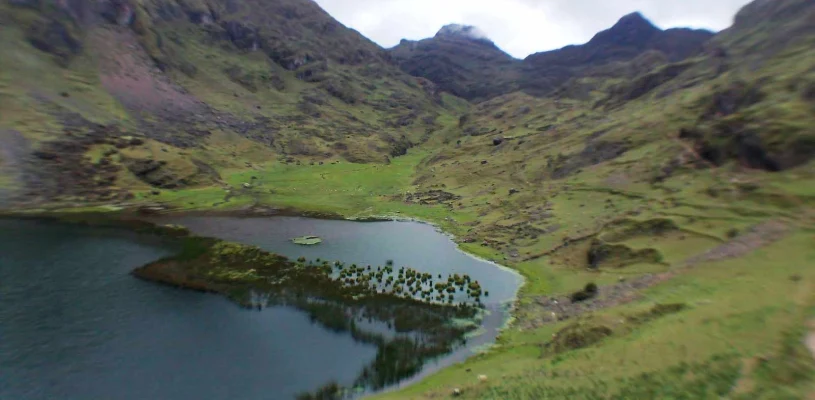
Within the natural attractions near the Potato Park, is the majestic Kinsa Cocha Lagoon. A lagoon located at 4500 meters above sea level. The combination of mountains around this lagoon and the energy that it emanates makes it worth visiting
If you wish to make the tour to the Potato Park, do not hesitate to contact Inkayni Peru Tours. We will organize your trip in the best way possible, making this a dream experience. We are supported by hundreds of comments on different virtual platforms like Trip Advisor, TourRadar, GetYourGuide, etc.
Shared:



If you liked this article and the information you found, give us 5 stars!
 (Ninguna valoración todavía)
 Loading...