


Quick answer
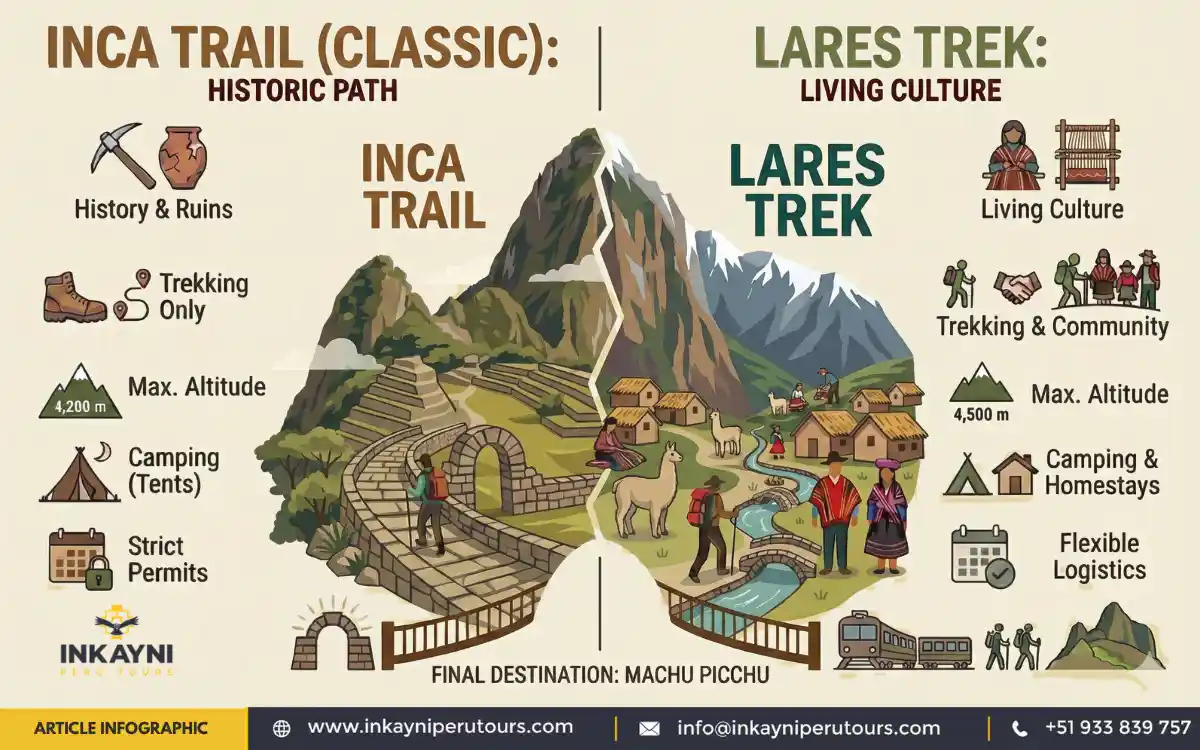
The Lares Trek and the Inca Trail both reach Machu Picchu, but they offer very different experiences. The Inca Trail is the classic historical route, with original stone paths and Inca archaeological sites along the way. Because permits are limited, you’ll need to book well in advance and follow a stricter, regulated logistics plan.
The Lares Trek stands out for its connection with Andean communities, a quieter rhythm on less-traveled trails, and dramatic high-altitude scenery, with more flexibility in dates. Choose the Inca Trail if your priority is iconic history and archaeology, or pick Lares if you want living culture, big mountain landscapes, and a more intimate feel.
Table of Contents
Lares Trek vs Inca Trail are two very different ways to reach Machu Picchu, so first decide what kind of journey you want: Inca history and archaeological sites, or high altitude scenery with real community connections. Before you book, consider key factors like permits and availability, season, altitude and overall effort, access logistics, basic gear, and general cost.
Which option fits your schedule and acclimatization best, especially if this is your first trek at altitude? Here is a clear step by step guide to help you choose.
Choose Based on Your Priority
Inca Trail: Choose It If…
You want archaeology and a more exclusive route, the classic entrance to Machu Picchu via Inti Punku (the Sun Gate), and you can book well ahead of time. Planning on about 6 months in advance is a solid reference.
Lares Trek: Choose It If…
You are looking for meaningful cultural interaction with Andean communities and dramatic high mountain landscapes, you want more flexibility with dates, and you care more about living culture than ruins along the trail.
The Inca Trail
The Inca Trail, closely tied to the historic Qhapaq Ñan (the Inca road network), is one of the world’s most iconic hikes. This legendary route leads you straight to Machu Picchu, entering through the famous Inti Punku (Sun Gate).
You will follow ancient stone paths used centuries ago, cross dramatic Andean landscapes, and pass remarkable Inca sites along the way. Each day brings you closer to that unforgettable first view of Machu Picchu.
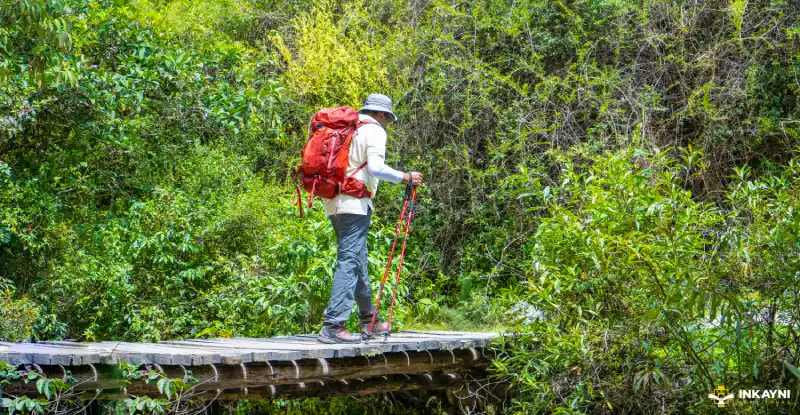
On the Inca Trail, hikers move through stunning scenery and archaeological sites while following original Inca routes.
The Lares Trek
The Lares Trek is a quieter alternative route to Machu Picchu, with fewer crowds and a deeper local feel. It is a chance to experience small Andean villages where traditions remain part of everyday life.
Along the Lares route, you can meet local families, see traditional textiles, and share genuine moments that connect you to the cultural and spiritual heart of the Andes. You will also hike through spectacular scenery, from towering peaks to green valleys and crystal clear highland lakes.
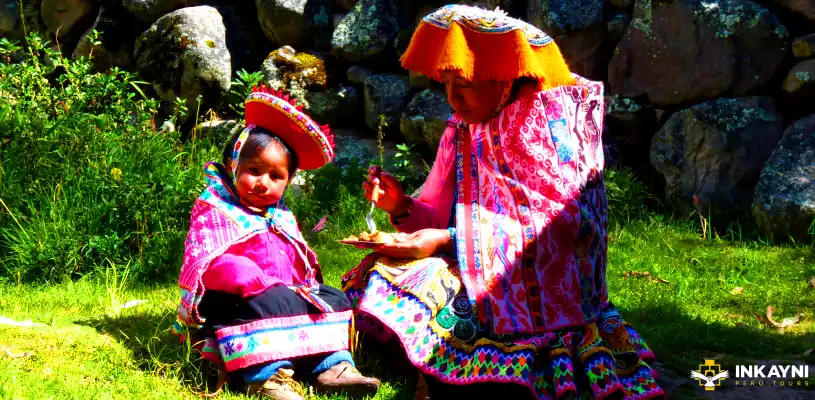
The Lares Trek is known for authentic interaction with local communities.
Comparison Guide: Classic Inca Trail vs Lares Trek
| Classic Inca Trail | Lares Trek | |
| Type of experience | A heritage route with stone paths and Inca archaeological sites. Enters Machu Picchu via the Sun Gate (Inti Punku). | A high altitude route with living culture, mountain passes, and big Andean scenery, plus a final section to reach Machu Picchu. |
| Permits and tickets | Regulated access with permits. Limited availability and advance booking (reference: about 6 months). | No trail permit required. Still, you should secure Machu Picchu entry in advance (reference: about 3 months). |
| Closures | Closed in February for maintenance. | Operates year round, with higher weather risk and rougher conditions during the rainy season. |
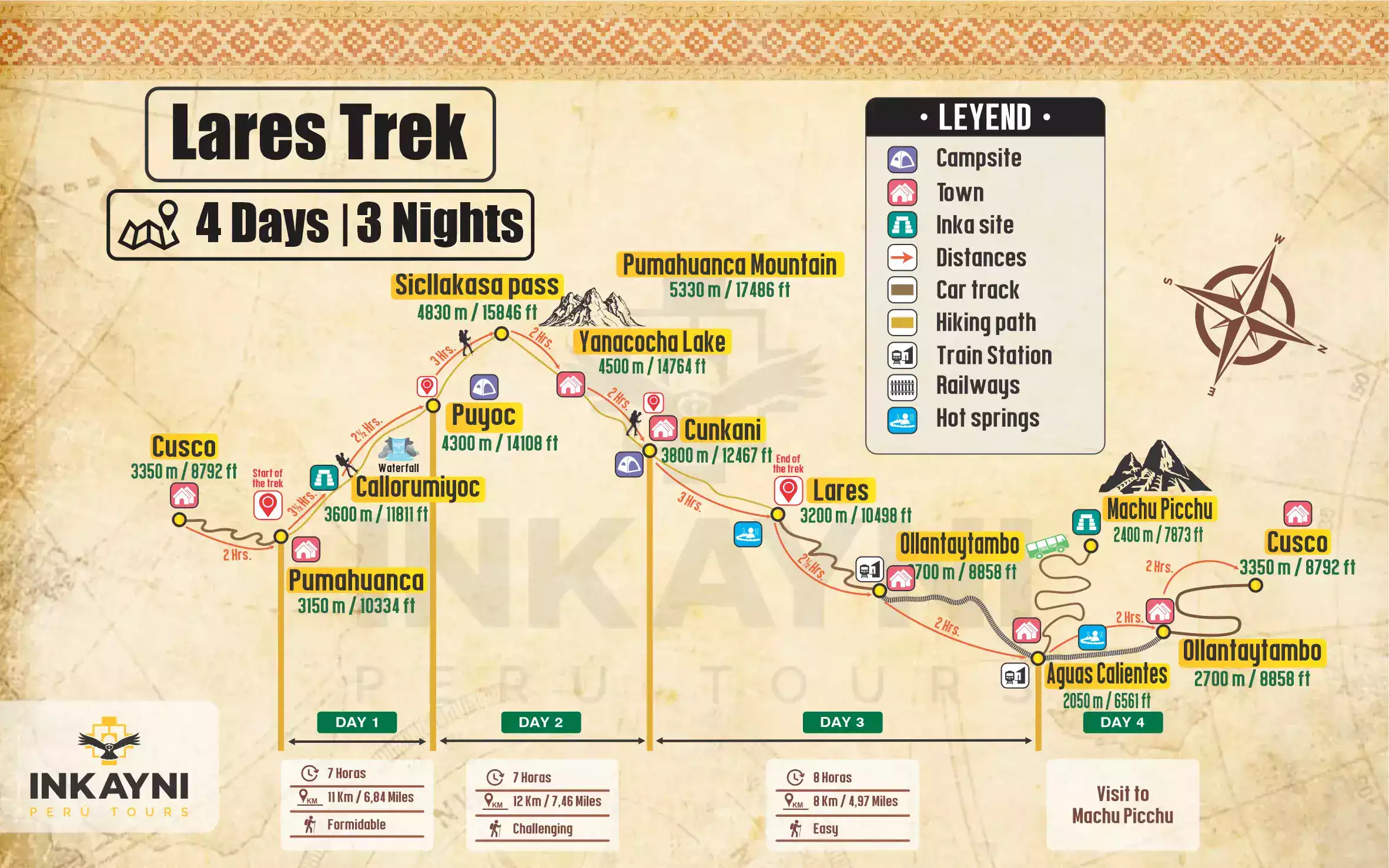
| Typical length | 4 days / 3 nights (classic version). | 4 days / 3 nights. |
| Approx. distance | About 26.7 miles (43 km). | About 19.3 miles (31 km). |
| Highest point | Warmiwañusca (Dead Woman’s Pass): approx. 13,828 ft (4,215 m). | Sicllakasa Pass: approx. 15,846 ft (4,830 m). |
| Difficulty | Moderate to challenging. Steep Inca stairs and stone sections, multiple passes, long hiking days. | Moderate to challenging. Higher altitude and variable weather, plus rugged mountain terrain. |
| What you will see | Inca archaeological sites, mountain scenery, and cloud forest. | High mountain landscapes, lakes, and rural life. |
| Overall cost (general) | Usually higher due to permits, regulated logistics, and a more structured operation. | Often more budget flexible, but it depends on the version and final Machu Picchu logistics. |
| Best for | If you want archaeology on the trail, a historic route, and the classic Sun Gate entrance to Machu Picchu. | If you want living culture, communities, altitude, big scenery, and a route with fewer crowds. |
Highlights of the Inca Trail
- You hike original Inca pathways and visit key sites like Wiñay Wayna, Runkurakay, and Phuyupatamarca.
- You enter Machu Picchu through the Sun Gate (Inti Punku), with a panoramic view that can feel truly unforgettable.
- The experience is regulated by the Peruvian government to protect heritage, with supervised operators and certified porters.

The Classic Inca Trail is a real physical and mental challenge, and a rewarding experience for hikers and adventure lovers.
Things to Keep in Mind:
- Book well in advance (planning about 6 months ahead is a strong reference), since permits sell out quickly.
- The Inca Trail closes in February for maintenance.
Highlights of the Lares Trek
- Direct contact with Andean communities: cultural exchange, rural life, traditional textiles, and daily life in the villages.
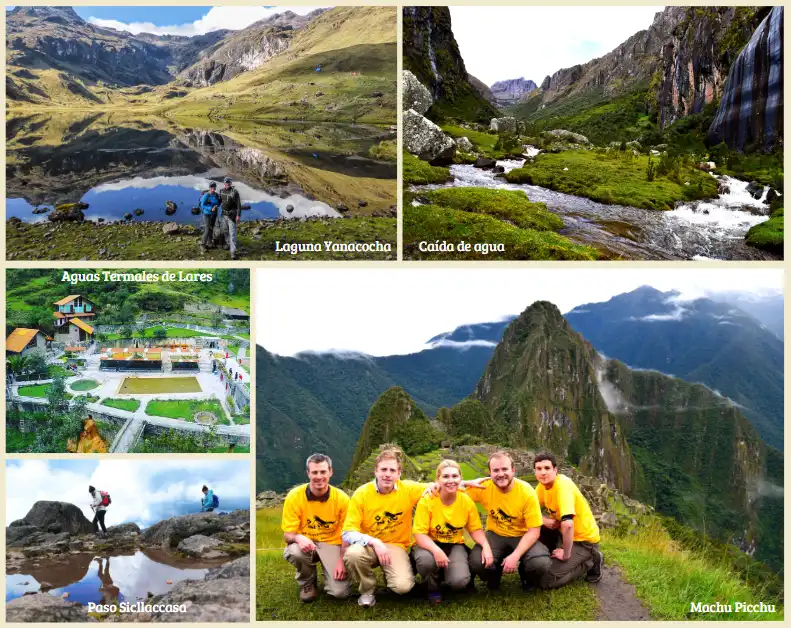
- Pristine high mountain scenery: lakes like Yanacocha, green valleys, and passes above 13,123 ft (4,000 m).
- No Inca Trail permit is required, but you should still secure your Machu Picchu ticket about 2 to 3 months in advance.

Yanacocha Lake is one of the standout highlights of the Lares Trek.
Things to Keep in Mind:
- You will not enter Machu Picchu via Inti Punku. The final access is typically like a Machu Picchu day tour: train plus a guided visit from Aguas Calientes.
- Fewer archaeological sites on the trail compared to the Inca Trail.
- More demanding altitude, with sections near 15,092 ft (4,600 m).

Choosing between the Lares Trek and the Inca Trail comes down to your travel style. Each route shows you a different side of the Andes.
Where Are the Lares Trek and the Inca Trail?
Lares Trek
This trek is located in the Cusco region of Peru. The route runs east of the Urubamba mountain range and crosses a spectacular section of the Sacred Valley region.
Inca Trail to Machu Picchu
The Inca Trail to Machu Picchu is also in the Cusco region. The classic route runs from Km 82 of the Ollantaytambo–Aguas Calientes railway corridor to the Machu Picchu sanctuary.
This section of the Inca road system is the best known worldwide and attracts thousands of hikers every year.
Reference Prices
- Pricing changes mainly based on logistics and what is included. For the Inca Trail (4D/3N), the cost is higher due to the official permit, limited daily spots, regulated operations, and because it usually includes full camping equipment, all meals, staff (guide, cook, porters), and the return journey (typically train plus bus in Machu Picchu).
- For the Lares Trek (4D/3N), there is no trail permit, but pricing depends on whether it ends by train (from Ollantaytambo or Aguas Calientes), if it includes a hotel on the final night, the camping setup, group size, operator reputation, and how complete the service is (sleeping bag, sleeping pad, pack animal support in some sections, and more). That is why ranges can vary widely, even with similar trip lengths.
Prices vary by logistics, season, group size, and service level.
What Impacts the Cost:
Inca Trail
- Official permit (regulated)
- Certified porters
- Designated campsites
- Return train (category)
- Quality of meals and gear
- Operator reputation
Lares Trek
- Train and hotel in the Machu Picchu area (category)
- Horsemen and pack animals
- Group size
- Camping gear quality
- Hot springs stop inclusion
- Full transfers
| Agency / reference | Inca Trail 4D/3N (USD per person) |
| Machu Picchu Reservations | $710 |
| Alpaca Expeditions | $795 |
| Happy Gringo Tours | From $780 |
| Agency / reference | Lares Trek 4D/3N (USD per person) |
| SAS Travel Peru | $840 |
| Inca Trail Peru Trek | $690 |
| Green Peru Adventures | Varies by group (tiers) |
Important note:
Prices are estimates and can change by operator, season, and inclusions. Always confirm exactly what is included before you book.
Typical market ranges:
| Route | Typical range (shared group) | What increases the price |
| Inca Trail 4D/3N | $710 to $1,200 Common: $790 to $950 |
Private service, higher category train, gear upgrades, smaller groups |
| Lares Trek 4D/3N | $450 to $890 Common: $600 to $720 |
Higher category train and hotel in the Machu Picchu area, private service, more complete logistics |
Brief History of Both Routes
| Inca Trail | Lares Trek | |
| Origin | Part of the Qhapaq Ñan, the Inca road network consolidated in the 15th century. The most famous section leads toward Machu Picchu. | Linked to secondary Inca paths used to connect valleys and communities in the Lares region. |
| Historic trail type | A route with original segments and a high concentration of visible archaeological sites. | High mountain trails with a more dispersed historical footprint and fewer visible ruins along the way. |

Lares Trek vs Inca Trail
Starting Points
Both routes typically begin early with a transfer from Cusco, but the starting logistics are different:
Inca Trail
Start: Km 82, Piscacucho
Elevation: 8,924 ft (2,720 m)
Lares Trek
Common start: Pumahuanca (Sacred Valley)
Elevation: 10,335 ft (3,150 m)
Some itineraries start in Lares (hot springs), depending on the operator.

Piscacucho (Km 82) marks the start of the Classic Inca Trail.
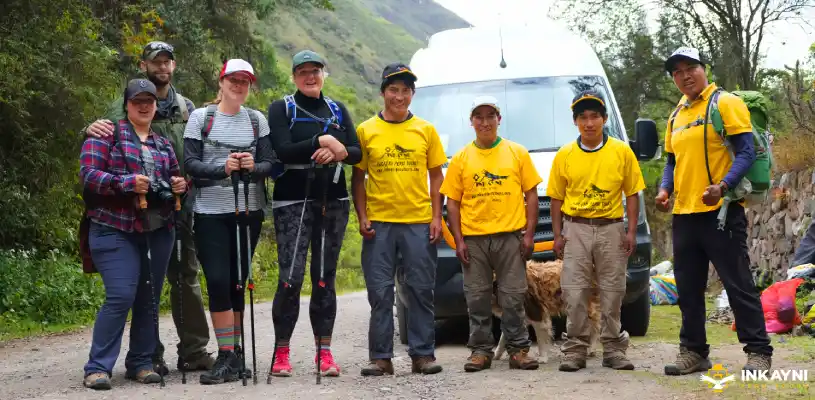
Lares Trek begins in Pumahuanca, in the Sacred Valley.
Altitude, Duration, and Distance
Inca Trail
| Inca Trail | |
| Highest point | Warmiwañusca (Dead Woman’s Pass) |
| Elevation | 13,828 ft (4,215 m) |
| What it means | High, but manageable if you are well acclimatized. |
| Standard duration | 4 days / 3 nights |
| Approx. distance | About 26.7 miles (43 km) |
Other versions available:
- Inca Trail: 2D/1N (Short Inca Trail) and 5D/4N versions are available

Illustrative map – 4 day Inca Trail to Machu Picchu
Lares Trek
| Lares Trek | |
| Highest point | Sicllakasa Pass |
| Elevation | 15,846 ft (4,830 m) |
| What it means | More demanding altitude. Serious acclimatization is recommended. |
| Standard duration | 4 days / 3 nights |
| Approx. distance | About 19.3 miles (31 km) |
Other versions available:
Lares Trek 5D/4N: Includes the Short Inca Trail (about 25.5 miles / 41 km total)
Sicllakasa Pass (15,846 ft / 4,830 m) is the highest point of the Lares Trek.
Difficulty: Lares Trek vs Inca Trail
Inca Trail: Challenging
- Steep Inca staircases and stone sections
- Multiple mountain passes
- Long hiking days (up to about 8 hours)
- Max elevation: 13,828 ft (4,215 m)
Lares Trek: Moderate to Challenging
- Fewer stairs, more mountain trails
- Higher max elevation: 15,846 ft (4,830 m)
- Rugged terrain and variable weather
- Stronger acclimatization recommended
What Will You See on the Trail?

Archaeological sites along the Classic Inca Trail
Cultural experience on the Lares Trek
Flora and Fauna
| Category | Inca Trail | Lares Trek |
| Flora | Ferns, orchids, Puya raimondii. Greater variety due to changing ecosystems (subtropical forest plus high Andes puna). | Ichu grass, queñua (native Andean tree), ferns, cantuta (Peru’s national flower). |
| Fauna | Common across both routes: Andean condor, vicuña, Andean fox, vizcacha, puma (rare), hummingbirds, torrent duck. | |

Common Andean wildlife: observe respectfully with local guides
Availability and Booking
Inca Trail
Availability: Limited (about 500 people per day including staff)
Recommended booking window: 4 to 6 months ahead
Closure: February (annual maintenance)
Lares Trek
Availability: More flexible
Recommended booking window: 1 to 3 months ahead
Closure: Operates year round
Note: you still need to secure your Machu Picchu ticket in advance.

Book ahead to secure availability, especially for the Inca Trail.
Main Campsites
| Day | Inca Trail | Lares Trek |
| Day 1 | Wayllabamba (about 9,843 ft / 3,000 m) | Puyoc (Sacred Valley) |
| Day 2 | Pacaymayo (about 11,745 ft / 3,580 m) After crossing Warmiwañusca |
Cuncani (about 12,467 ft / 3,800 m) After crossing Sicllakasa |
| Day 3 | Wiñay Wayna (about 8,858 ft / 2,700 m) | Aguas Calientes Possible stop: Lares hot springs |
| Day 4 | Machu Picchu via Inti Punku | Machu Picchu (guided tour from Aguas Calientes) |
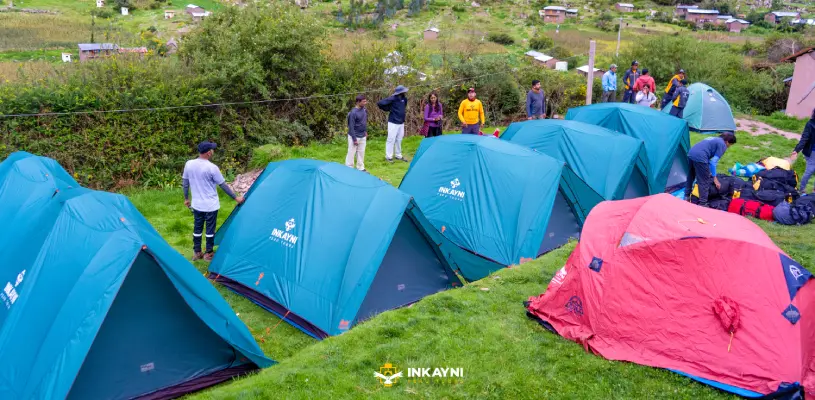
Wayllabamba campsite, Day 1 of the Inca Trail

Puyoc campsite, Day 1 of the Lares Trek
Weather and Best Season
Dry season (April to October): Best time for both routes
- Sunny days, cold nights
- More stable conditions
- Lower chance of rain
- Peak months: May, June, July, August
Rainy season (November to March)
- Slipperier trails and tougher conditions
- Greener, more dramatic landscapes
- January and February: typically the rainiest months
- The Inca Trail closes in February for maintenance
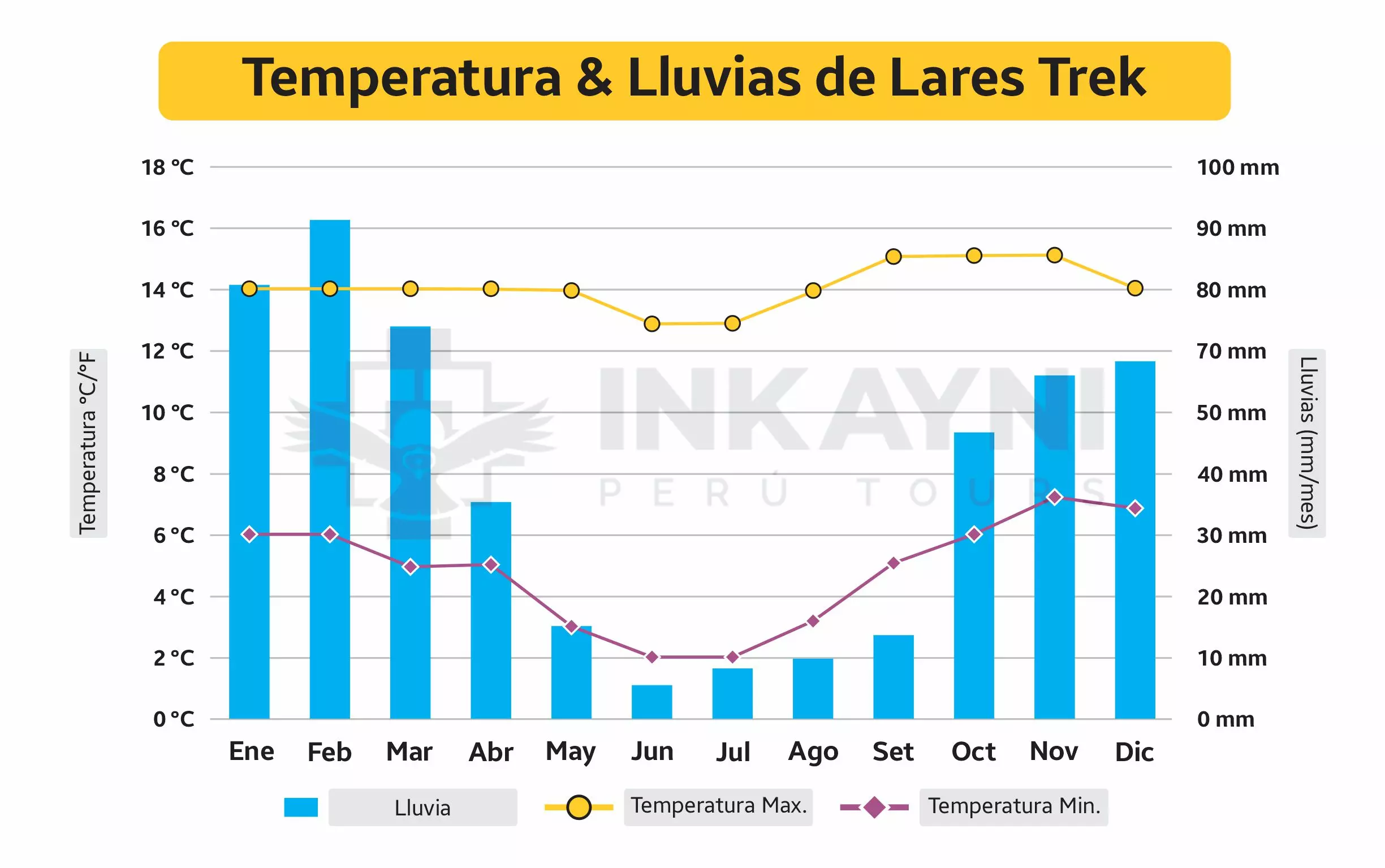
Temperature and rainfall patterns on the Lares Trek

Average monthly precipitation on the Inca Trail
How Your Gear Is Carried
Inca Trail
System: Certified porters
Limit: 15 lb (7 kg) of personal gear plus shared group equipment
Lares Trek
System: Pack animals (mules or horses) with local horsemen
Limit: 15 lb (7 kg) of personal gear plus shared group equipment
Important:
On both routes: you carry only a daypack (about 4 to 11 lb / 2 to 5 kg) with water, sunscreen, warm layers, and essentials.

Porters on the Classic Inca Trail

Local horsemen and pack animals on the Lares Trek
Recommended Packing
Hot Springs
| Route | Location | When | What to expect |
| Lares Trek | Lares (about 10,499 ft / 3,200 m) | Day 3 (during the route) | Natural and rustic, typically less crowded, relaxing soak |
| Inca Trail | Aguas Calientes (about 6,726 ft / 2,050 m) | After the trek (optional) | More developed tourist facilities, entrance fee paid separately |

Lares hot springs, a common Day 3 stop on the Lares Trek

Trail Closures
Inca Trail
Annual closure: Entire month of February
Peru carries out maintenance and conservation work, and the trail is closed to protect the route.
Lares Trek
Closure: None (operates year round)
During the rainy season (November to March), landslides and tougher conditions can happen, but the route generally remains open.
Do you want the warmth of Andean villages and the wide open valleys of the Lares Trek, or would you rather follow the footsteps of the Incas on the legendary Inca Trail, finishing with that unforgettable view from the Sun Gate into Machu Picchu?
Both routes are incredible in their own way. Inkayni Peru Tours can guide you every step of the way with high quality service, so you travel comfortably, safely, and turn every mile into a lasting memory.
Ready to make it real? Join us and experience Peru in a way you will never forget.
Shared:


If you liked this article and the information you found, give us 5 stars!
 (3 votos, promedio: 5.00 de 5)
 Loading...