


Table of Contents
The Inca Jungle Trek is the most adventure-focused alternative route to Machu Picchu. It runs as a 4-day, 3-night trip, with some operators offering a compressed 3-day version. Rather than following a single continuous historic path, it mixes downhill biking, hiking across changing terrain, and optional activities such as rafting and zipline. On paper it reads easy to moderate. In practice it feels moderate, mainly because of the long active days, the high starting point at Abra Malaga, and weather that shifts between cold mountain pass and warm humid jungle within the same afternoon.
Many travelers search for facts about the Inca Jungle Trek because they want a route to Machu Picchu that feels more active, more varied, and less conventional than the Classic Inca Trail. That is exactly what this route delivers. It is not the most archaeological path, and it is not the hardest trek in Peru. It is the route for people who want movement, changing landscapes, warm jungle sections, and a genuine sense of adventure on the way to the sanctuary.
This guide covers 25 key facts about the Inca Jungle Trek and turns them into a practical planning resource: what the trek actually is, how long it takes, how hard it feels, the full day-by-day route, when to go, what to pack, where you sleep, what is included and what is not, what to verify before booking, and direct answers to the questions most travelers ask too late.
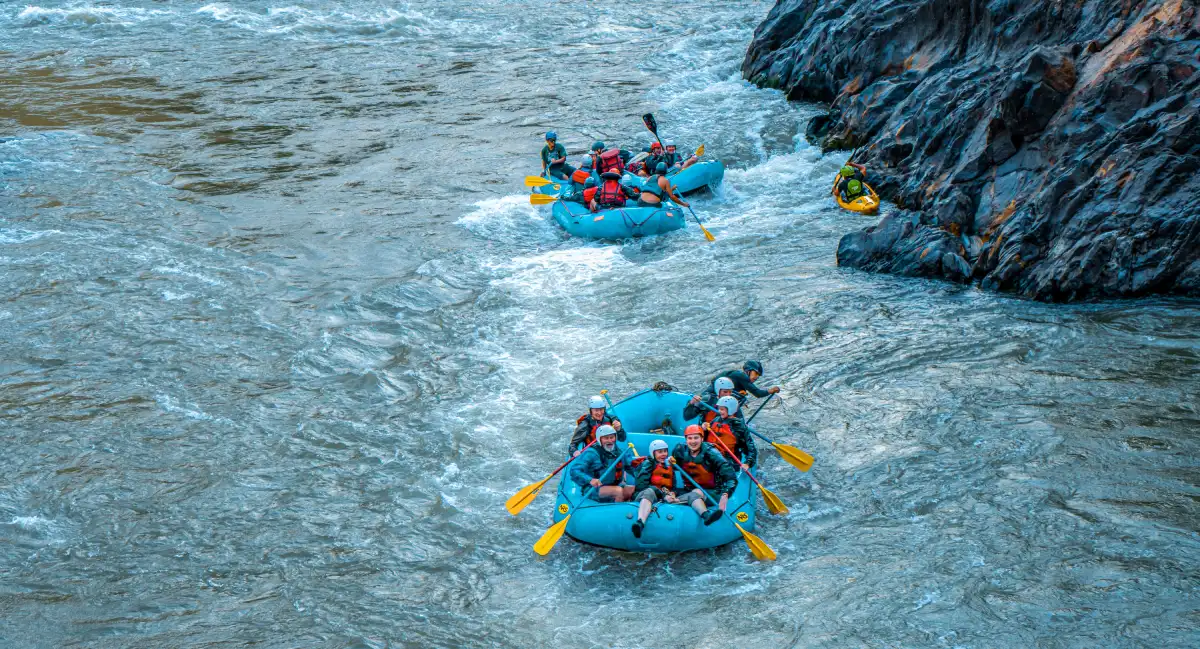
Rafting on the Urubamba River during the Inca Jungle trek.
Quick Facts About Inca Jungle Trek
| Key Point | What to Know |
| Duration | 4 days, 3 nights (standard). 3-day version available with some operators; shorter and more compressed. |
| Total route distance | Approximately 55 miles (89 km) combining biking, hiking, and road sections over 4 days. |
| Difficulty | Moderate overall. Easier than the Classic Inca Trail as a pure trek, but still physically demanding due to altitude, long days, and mixed terrain. |
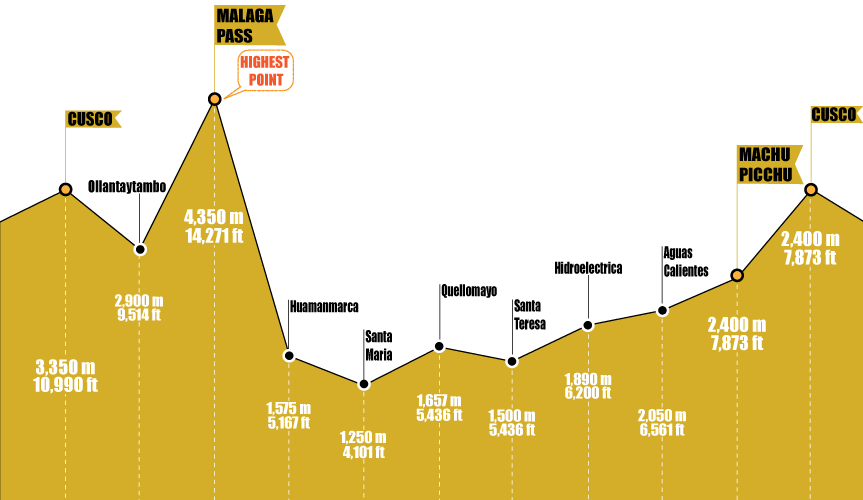
| Highest point | Abra Malaga: 14,272 ft (4,350 m). The starting point of the downhill bike on Day 1. |
| Main activities | Downhill mountain biking (included), hiking, optional rafting (Class III/IV), optional zipline, Cocalmayo hot springs (usually separate fee). |
| Permit required? | No permit required for the Inca Jungle Trek itself. Machu Picchu entry ticket must be purchased separately. |
| Starting point | Cusco. Transport to Abra Malaga is included in most tour packages. |
| Ending point | Machu Picchu, with return train from Aguas Calientes to Ollantaytambo and transfer back to Cusco. |
| Best season | April through October (dry season). May through September is peak and most reliable. |
| Machu Picchu ticket | Separate purchase at tuboleto.cultura.pe. Some operators include it; always confirm before booking. |
Important note:
The Inca Jungle Trek does not require a permit, which is one of the main reasons travelers choose it when Classic Inca Trail spots are sold out. However, Machu Picchu entry tickets are a completely separate booking and can sell out on peak dates. Secure that ticket as early as possible regardless of which route you use to get there.
Fact 1 What Is the Inca Jungle Trek?
The Inca Jungle Trek is a multi-activity alternative route to Machu Picchu that combines transport, downhill mountain biking, hiking through cloud forest and jungle terrain, and optional adventure activities depending on the itinerary. It is not a single historic trail in the same sense as the Classic Inca Trail. It is an adventure route built around changing terrain, variety, and a more active travel style.
The route is sometimes called the Inca Jungle Trail or the Inka Jungle Trek. All refer to the same basic experience. If you are comparing it to the Classic Inca Trail, the practical difference is straightforward: the Inca Trail is primarily about archaeology, a continuous ancient path, and a permit-limited experience. The Inca Jungle Trek is about variety, movement, and adventure tourism that happens to end at the same extraordinary destination.
Did you know?
The section of trail on Day 2 passes through a portion of the ancient Inca road network that once connected the sacred city of Machu Picchu with Vilcabamba, the last refuge of the Inca Empire after the Spanish conquest. Most of the Inca Jungle Trail is not a regulated archaeological route, which is exactly why no permit is required.
Fact 2 Where Is the Inca Jungle Trek?
The entire route takes place in the Cusco region of Peru, crossing a dramatic range of elevations and microclimates. The journey begins in or near Cusco and heads northwest toward the Sacred Valley before climbing to the high-altitude pass at Abra Malaga. From there it descends rapidly toward the warmer towns of Santa Maria and Santa Teresa, then follows the Urubamba River valley toward Hydroelectric Station and Aguas Calientes, the town at the base of Machu Picchu.
This geographic range is one of the most important facts about the Inca Jungle Trek: within a single 4-day trip, you move from Andean highlands above 14,000 ft (4,300 m) to subtropical jungle terrain below 4,000 ft (1,200 m). The landscape, vegetation, temperature, and light change dramatically with each day.

Fact 3 The Full Route, Day by Day
Day 1
Cusco to Santa Maria via Biking
Early pickup from Cusco around 5:30 to 6:00 a.m. Transfer to Abra Malaga (14,272 ft / 4,350 m). Downhill biking: approximately 34 miles (55 km) through cloud forest, taking about 3.5 to 4 hours. Arrival in Santa Maria for lunch and overnight. Optional afternoon rafting on the Vilcanota River, Class III and IV rapids.
Day 2
Santa Maria to Santa Teresa via Hiking
Approximately 7.5 miles (12 km) of hiking, starting uphill for the first two hours through tropical vegetation. Passes through a section of authentic Inca trail connecting Machu Picchu to Vilcabamba. Stop at a local family home. Views of Huancarccasa canyon and Salkantay mountain. Afternoon arrival in Santa Teresa and access to the Cocalmayo thermal baths (usually a separate entry fee of a few soles paid locally).
Day 3
Santa Teresa to Aguas Calientes
Optional zipline in Santa Teresa. Trek to the Llactapata Inca archaeological site, which provides a unique elevated view of Machu Picchu from a different angle. Approximately 11 miles (18 km) of trekking. Descent to Hydroelectric Station and final walk along the train tracks to Aguas Calientes, roughly 1 hour 30 minutes.
Day 4
Machu Picchu and Return to Cusco
Early bus from Aguas Calientes to the Machu Picchu entrance. Guided tour of the citadel for 2 to 3 hours. Optional ascent to Huayna Picchu or Machu Picchu Mountain if booked separately in advance. Return by bus, train from Aguas Calientes, and road transfer back to Cusco. Arrival in Cusco typically in the evening.
Warning:
The walk from Hydroelectric Station to Aguas Calientes along the train tracks on Day 3 is approximately 6 miles (10 km) and takes about 1 hour 30 minutes to 2 hours. It comes at the end of an already long day. Many travelers underestimate this section. Pace yourself through Day 3.

Trekking on the Inca Jungle Trek.
Fact 4 How Long Is the Inca Jungle Trek?
One of the most frequently misunderstood facts about the Inca Jungle Trek is the total distance figure. The complete route covers approximately 55 miles (89 km) from Cusco to Machu Picchu, but most of that distance is covered on a bicycle on Day 1, not on foot. The actual hiking total across Days 2 and 3 is closer to 18 to 22 miles (30 to 35 km), depending on the operator’s specific route design.
That is why asking about total distance is less useful than asking about total hiking hours. Day 2 involves about 6 to 8 hours of active movement including the uphill section. Day 3 is longer, approximately 9 hours from start to arrival in Aguas Calientes including the zipline and Llactapata.
Pro tip:
When comparing operators, ask specifically how many hours of hiking you should expect on Day 2 and Day 3, not just the total distance. Some itineraries include longer vehicle sections that reduce the walking load; others are more hiking-heavy.

Fact 5 How Hard Is the Inca Jungle Trek?
For most travelers who arrive in reasonable shape and with at least one day of acclimatization in Cusco, the Inca Jungle Trek difficulty level lands at moderate. It is frequently marketed as easy or beginner-friendly, which sets unrealistic expectations. The downhill biking on Day 1 is accessible for most people, but Days 2 and 3 involve real trekking effort: uphill sections at altitude, long days on feet, and terrain that includes slippery and steep stretches depending on the season.
| Traveler Profile | Realistic Expectation |
| Active and acclimatized | Feels well within reach. Days are long but manageable. Will enjoy the variety and the physical challenge. |
| Reasonably fit, first multi-day trek | Doable with preparation. The main challenges are Day 3 cumulative fatigue and altitude at the start. Needs realistic expectations. |
| Not regularly active, no altitude experience | Can still complete it, but will be genuinely hard. Two full days of acclimatization in Cusco and realistic pacing are essential. |
| Altitude-sensitive or recovering from injury | Consult a doctor before booking. The high starting elevation and long active days create real risk if either factor is not well managed. |
Keep this in mind:
The most common cause of Inca Jungle Trek difficulty being underestimated is not the biking or the hiking in isolation. It is the combination of both across four consecutive days with altitude at the start, variable weather throughout, and the emotional energy of the Machu Picchu arrival at the end. Plan for full recovery time the day after returning to Cusco.
Fact 6 The Highest and Lowest Points
The highest point of the route is Abra Malaga at 14,272 ft (4,350 m) above sea level. This is also the starting point of the downhill bike on Day 1. Even though the route descends quickly after that point, the brief but intense exposure to high altitude is enough to trigger altitude sickness in travelers who arrive unprepared.
The lowest point on the route is in the cloud forest and jungle-edge terrain around Santa Maria, dropping to approximately 4,100 ft (1,250 m). This dramatic altitude change within a single afternoon is one of the defining characteristics of the Inca Jungle Trek and something most travelers describe as genuinely surprising on the first day.
Fact 7 Altitude and Acclimatization: What You Actually Need
Spending at least 1 full day in Cusco before departure is the practical minimum. Two days is safer, particularly if you are sensitive to altitude or have experienced symptoms such as headache, nausea, or dizziness at elevation before. Cusco itself sits at 11,150 ft (3,400 m), and arriving and departing on the trek the very next morning is one of the most common mistakes on this route.
Acclimatization Checklist
Arrive in Cusco at least 24 to 48 hours before departure.
Take short walks rather than intense training during your first day at altitude.
Hydrate consistently. Limit alcohol the night before the trek starts.
Sleep well. Fatigue amplifies the effects of altitude.
If you have a history of altitude illness, speak to a doctor before travel. Acetazolamide (Diamox) may be appropriate; ask for a prescription before leaving home.
Warning:
Arriving in Cusco and departing on the Inca Jungle Trek the very next morning is one of the most common mistakes on this route. Even if you feel fine on arrival, the cumulative effect of starting your trek from 14,272 ft (4,350 m) without proper adjustment
Fact 8 Can You Get Altitude Sickness?
Yes, especially at the start of the route. The fact that much of the trek descends later does not cancel the risk at the beginning. The highest exposure is brief compared with high trekking routes, but that brief exposure can still trigger headache, nausea, dizziness, or fatigue if you arrive without acclimatization.
The safest approach is simple: acclimatize first, avoid overexerting yourself the day before, stay hydrated, and do not treat the first hours of the trip like a race.
Fact 9 What Is the Weather Like?
The route crosses multiple distinct microclimates within a single day, which is one of the most useful facts about the Inca Jungle Trek for packing decisions. At Abra Malaga the air is cold, thin, and often windy, with temperatures that can feel near freezing in the early morning even in the dry season. By the time you descend to Santa Maria that afternoon, you are in warm subtropical terrain where the same jacket becomes excessive.
| Season | What It Feels Like | Best For |
| May through October | Drier conditions overall. Clearer mornings at the high pass. Better trail grip and river conditions for optional rafting. Cold nights but warm, sunny daytime in the lower sections. | Most travelers |
| November through April | Wetter and muddier. Trails are manageable but more slippery. Rafting conditions may change based on river volume. Fewer crowds and lower prices. | Flexible, budget-conscious travelers |
Did you know?
The cloud forest sections contain some of the most biodiverse terrain in Peru. On the descent from Abra Malaga, it is common to observe Andean hummingbirds, cloud forest orchids, and wild avocado and citrus trees. The route passes through areas where coffee, coca, and tropical fruits are actively cultivated by local families.
Fact 10 The Best Time of Year to Go
May through September is the most reliable window. Skies are generally clearer, trails are drier and less slippery, and rafting conditions are more consistently available. May and September specifically offer a good balance of good weather and lower crowd density compared to the July and August peak.
November through March is the wet season. The trek can still be done in these months, but expect muddier trails, more frequent rain on the bike descent, and a higher chance that optional activities such as rafting are restricted by river conditions. Prices are lower and crowds are smaller during this period.
Descent from Abra Malaga on the Inca Jungle Trek. Photo: Inkayni Peru Tours.

Cocalmayo hot springs near Santa Teresa. Photo: Inkayni Peru Tours.
Fact 11 Activities: What Is Included and What Is Extra
One of the most practical facts about the Inca Jungle Trek is the difference between what the marketing shows and what your specific package actually includes. The route is built around four main activities, but their inclusion varies significantly by operator and price point.
| Activity | Description | Typically… |
| Downhill biking | 34-mile (55 km) descent from Abra Malaga, approximately 3.5 to 4 hours. Safety gear provided. No technical skill required beyond basic cycling ability. | Included |
| Rafting | Vilcanota River, Class III and IV rapids near Santa Maria. Duration approximately 2 hours. Depends on river conditions and season. | Usually optional extra |
| Zipline | Santa Teresa area. Usually 3 to 5 lines above the canyon. Safety equipment provided by local operator. | Usually optional extra |
| Cocalmayo hot springs | Natural thermal pools near Santa Teresa. Relaxing after Day 2 hiking. Usually requires a local entrance fee paid directly at the site. | Separate local fee |
Fact 12 Is Rafting Always Available?
No. Rafting on the Vilcanota River is never guaranteed. River conditions, safety assessments, and seasonal water levels can make the activity unavailable or inadvisable on any given day. It is typically available during the dry season months of May through October when water levels are more predictable. During wetter months or after heavy rains, the operator may determine it is not safe to run.
Keep this in mind:
Never treat rafting as a confirmed part of your itinerary. If rafting is specifically the reason you are doing the Inca Jungle Trek over another route, confirm directly with your operator that it is operating on your dates before booking.
Fact 13 What Is Cocalmayo and Is It Included?
Cocalmayo is a natural thermal pool complex near Santa Teresa, located about a 15-minute walk from town. It is a genuinely welcome stop after the long hiking day from Santa Maria. The pools are outdoors, fed by natural hot springs, and the setting in the valley is pleasant.
Entry is typically not included in the trek package price. It is usually paid separately at the gate in Peruvian soles, a modest amount. Confirm the current entrance fee with your operator before you go so you have the right change ready.
Fact 14 Where Do You Sleep on the Inca Jungle Trek?
Most Inca Jungle Trek packages use guesthouses, small hostels, or local lodges in the towns of Santa Maria (Night 1), Santa Teresa (Night 2), and Aguas Calientes (Night 3). The comfort level varies significantly by price point, and this is one of the most important practical facts about the Inca Jungle Trek to clarify before booking.
Budget packages typically offer dormitory-style rooms with shared bathrooms, basic mattresses, and functional showers with inconsistent hot water. Mid-range and higher-end packages offer private rooms, better bedding, improved meals, and sometimes air conditioning or fans in the warmer sections. The base level is always enough for hygiene and rest. It is not resort accommodation and should not be expected to be.
Pro tip:
Ask your operator specifically about the accommodation in Aguas Calientes on Night 3. This is typically the most comfortable night of the trip since Aguas Calientes has a wider range of hotels. If a comfortable final night matters to you, it is worth asking whether an upgrade is available.
Fact 15 Showers, Toilets, Electricity, and Internet
All overnight stops on the Inca Jungle Trek have toilets, showers, and electricity. What changes is the quality and reliability of each. Hot water pressure may be inconsistent, especially in Santa Maria and Santa Teresa. Carry a small universal adapter and a portable power bank if you are relying on a phone for navigation, photos, or communication.
Mobile signal and internet connectivity are inconsistent along most of the route. In Cusco, Santa Maria, Santa Teresa, and Aguas Calientes you may find a workable signal depending on your carrier. In the jungle and trail sections, expect to be without connectivity for extended periods. If constant connectivity is essential for work or safety reasons, the Inca Jungle Trek requires planning around it.
Fact 16 What to Pack for the Inca Jungle Trek
Packing light is one of the most useful facts about the Inca Jungle Trek to act on before departure. The temperature range across the four days is enormous, from near-freezing at Abra Malaga on Day 1 morning to warm and humid in the lower sections by afternoon, so layers are the strategy, not volume.
Clothing
Quick-dry shirts, a fleece or warm mid-layer, a waterproof jacket, light gloves and hat for Day 1 morning. Rain poncho for wet-season travel. Avoid heavy cotton; it stays wet and adds weight.
Footwear
Broken-in trekking shoes with grip. Not new shoes. Blisters on Day 2 make Day 3 significantly harder. Light sandals or flipflops for evenings and Cocalmayo hot springs.
Essentials
Sunscreen (UV is intense even at lower altitude), insect repellent, reusable water bottle or hydration bladder, headlamp, personal medication, cash in soles for optional activities and extras.
Documents
Original passport linked to your Machu Picchu booking. Printed or digital Machu Picchu entry ticket, travel insurance documents, and any health information relevant to your guide.
What Not to Bring
Large suitcases or anything that cannot be carried comfortably on your back for a full day. Brand-new footwear that has not been broken in. Expensive electronics you will worry about during the biking section. On this trek, more weight is always a disadvantage.
Fact 17 Do You Need Trekking Experience?
Not necessarily. Many first-time trekkers complete the route successfully. What helps most is reasonable fitness, realistic expectations, and listening to your guides. You do not need to be a specialist hiker, but you should not arrive thinking it is a casual stroll either.
Pro tip:
If you have never done a multi-day trek, train specifically for uphill walking with a loaded pack in the 6 to 8 weeks before your trip. Running and cycling help with general fitness, but they do not prepare your joints and muscles the same way that weighted uphill walking does.
Fact 18 Do You Need a Guide or Travel Agency?
The trek can technically be navigated without a guide in the hiking sections, but booking with a reliable operator is the practical choice for most international travelers. The combination of transport coordination, biking logistics, accommodation, meals, optional activities, Machu Picchu access, and return train makes independent navigation significantly more complicated than the savings typically justify.
The more relevant question is not whether you need a guide but whether the guide included in your package is actually qualified and experienced on this route. Ask how many times your guide has led the Inca Jungle Trek before booking.
Fact 19 Permit Requirements: What You Do and Do Not Need
Unlike the Classic Inca Trail, which is capped at 500 permits per day and sells out months in advance, the Inca Jungle Trek does not require a permit. This is one of the primary reasons travelers choose this route when Classic Inca Trail spots for their dates are gone.
What you do need is a Machu Picchu entry ticket purchased in advance through tuboleto.cultura.pe. That is a separate requirement and applies to everyone visiting the citadel regardless of route.
Warning:
Never assume your tour operator has secured your Machu Picchu ticket. Confirm in writing exactly who is purchasing it, on which circuit, and for what time. If the operator is buying it on your behalf, ask for the confirmation number from tuboleto.cultura.pe before your departure day.
Fact 20 When and How to Book
The Inca Jungle Trek itself does not operate on a daily permit cap, so the trek can usually be arranged with relatively shorter notice outside of peak season. The real bottleneck is Machu Picchu entry availability. For popular dates in June, July, and August, tickets can sell out weeks or months in advance.
| Travel Month | Recommended Booking Window |
| June, July, August | Book the trek 2 to 3 months ahead. Secure your Machu Picchu ticket on tuboleto.cultura.pe as soon as your dates are confirmed. Train tickets from Aguas Calientes back to Ollantaytambo also sell quickly in peak season. |
| April, May, September, October | Book 4 to 6 weeks ahead. Machu Picchu tickets still fill up on specific dates; do not wait until the last week to check availability. |
| November through March | More flexibility. Fewer travelers, more availability. Still confirm Machu Picchu ticket early; the lower cap on available tickets applies year-round. |
Fact 21 How Much Does the Inca Jungle Trek Cost?
Inca Jungle Trek prices in 2026 range from approximately $200 USD on the lower end to $500 USD and above for higher-quality packages. Budget group tours and more comfortable versions differ significantly in accommodation quality, meal standards, guide experience, group size, and equipment provided for the biking section.
The most important Inca Jungle Trek cost fact is this: comparing tours by price alone is almost always misleading. A budget package at $200 USD and a mid-range package at $350 USD may appear similar, but the accommodation, the quality of bikes and safety equipment, the group size, and the Machu Picchu ticket situation will be materially different. Compare line by line, not bottom line.
What to Confirm Before Paying
Is the Machu Picchu entry ticket included, or does it cost extra?
Is the return train from Aguas Calientes to Ollantaytambo included?
Are rafting and zipline included, or are they optional extras with an additional cost?
What is the Cocalmayo entrance fee situation?
What is the maximum group size?
What type and quality of bikes are used on Day 1?
What accommodation is used in Santa Maria, Santa Teresa, and Aguas Calientes?
What meals are included on which days?
Fact 22 Is the Inca Jungle Trek Safe?
For the vast majority of travelers who approach it responsibly, yes. The main risk factors are not exotic or unpredictable. They are the standard ones: altitude exposure at the start, wet and slippery surfaces on the trail in any season, physical fatigue on Day 3, road awareness during the biking descent, and the occasional traveler who underestimates what the route actually involves.
Choosing an operator with properly maintained bikes and helmets, a serious safety briefing before the descent, and guides who are genuinely certified rather than simply experienced makes a real difference.

Fact 23 Is Travel Insurance Worth It?
Yes. The mix of mountain biking, river rafting, and multi-day hiking in remote terrain means that a twisted ankle, a bike fall, or an altitude reaction could require evacuation or medical attention. Standard travel insurance policies often exclude adventure activities.
Pro tip:
Check your policy specifically for biking and rafting at altitude before departure. A policy that covers standard trekking may not cover the biking descent or whitewater activities. Confirm this with your insurer before your departure date.
Fact 24 Inca Jungle Trek vs. Classic Inca Trail: A Direct Comparison
| Inca Jungle Trek | Classic Inca Trail | |
| Permit required | No | Yes. 500 per day. Sells out months ahead. |
| Difficulty | Moderate | Moderate to challenging |
| Max altitude | 14,272 ft (4,350 m) at start | 13,780 ft (4,200 m) at Dead Woman’s Pass |
| Activities | Biking, hiking, rafting, zipline | Trekking only |
| Archaeological focus | Moderate. Llactapata ruins on Day 3, sections of authentic Inca trail on Day 2. | High. Multiple major ruins along the entire route. |
| Price range | $200 to $500 USD approx. | $600 to $1,200 USD approx. |
| Best for | Adventure seekers, active travelers, those who missed Classic Trail permits | History-focused trekkers, those who want the classic route experience |
Fact 25 Is the Inca Jungle Trek Worth It?
If you are looking for the most archaeological route, the Classic Inca Trail fits that description better. If you want the most physically challenging experience, there are harder options in the Cusco region. But if you want a 4-day route to Machu Picchu that covers genuinely diverse terrain, involves more than one type of activity, does not require an advance permit, and delivers the kind of memories that come from physical effort across changing landscapes rather than a single-mode hike, the answer is yes.
The most honest summary of the Inca Jungle Trek is this: it is not the purest route, not the most comfortable option, and not the hardest challenge available. It is the route for travelers who want movement, variety, an alternative approach to a world-famous destination, and an experience that feels distinctly earned by the time they walk into Machu Picchu on Day 4.
Frequently Asked Questions About the Inca Jungle Trek
Is the Inca Jungle Trek harder than the Classic Inca Trail?
Can beginners or first-time trekkers do the Inca Jungle Trek?
If you have never done a multi-day trek, train specifically for uphill walking with a loaded pack in the 6 to 8 weeks before your trip. Running and cycling help with general fitness, but they do not prepare your joints and muscles the same way that weighted uphill walking does.
What is the best month to do the Inca Jungle Trek?
November through March is the wet season. The trek can still be done in these months, but expect muddier trails, more frequent rain on the bike descent, and a higher chance that optional activities such as rafting are restricted by river conditions.
Do I need a permit for the Inca Jungle Trek?
What you do need is a Machu Picchu entry ticket purchased in advance through tuboleto.cultura.pe. That is a separate requirement and applies to everyone visiting the citadel regardless of route.
Is the Machu Picchu ticket included in the Inca Jungle Trek package?
If the operator is purchasing the ticket on your behalf, ask for the tuboleto.cultura.pe confirmation number before your departure day. Do not assume the ticket exists until you have seen that confirmation yourself.
How far is the Inca Jungle Trek in total?
A more useful question than total distance is total hiking hours: expect approximately 6 to 8 hours of active movement on Day 2 and approximately 8 to 10 hours on Day 3, including the walk from Hydroelectric Station to Aguas Calientes.
Is rafting always available on the Inca Jungle Trek?
Always treat rafting as a potential highlight rather than a guaranteed activity. If it is the main reason you are choosing this trek over another option, confirm specifically with your operator whether it is running on your dates.
What is Cocalmayo and is it included?
Entry is typically not included in the trek package price. It is usually paid separately at the gate in Peruvian soles, a modest amount. Confirm the current entrance fee with your operator before you go so you have the right change ready.
What is the most important thing to confirm before booking?
Is the Machu Picchu entry ticket included, and on which circuit?
Is the return train from Aguas Calientes to Ollantaytambo included?
Are rafting and zipline included or available as optional extras with additional cost?
What is the maximum group size?
What quality of bikes and safety equipment is provided on Day 1?
What accommodation is used in each town, and what is the room type at each stop?
What meals are included on which days?
Getting written answers to all of these before paying eliminates the most common sources of traveler frustration on this route.
Do I need a guide for the Inca Jungle Trek?
The more relevant question is not whether you need a guide but whether the guide included in your package is actually qualified and experienced on this route. Ask how many times your guide has led the Inca Jungle Trek before booking.
Shared:


If you liked this article and the information you found, give us 5 stars!
 (Ninguna valoración todavía)
 Loading...