Table of Contents
Quick Answer:
The Wachuma ceremony, also known as San Pedro, uses a blue green cactus that can reach approximately 23 feet (7 meters) in height.
Thousands of years ago, Wachuma was used by various civilizations within Peruvian territory. The Chavín culture pioneered the use of this plant, with healing as its primary purpose. It also had mystical uses as links or mediums connecting humans with different dimensions of the spiritual world.
This Wachuma ceremony is a living tradition deeply tied to Andean cosmovision, and in Cusco you’ll experience it in direct contact with nature. In this guide, you’ll discover what it is, what it means within Peru’s cultural legacy, and where it’s typically practiced. Keep reading to understand why this experience leaves such a lasting impression on so many travelers.
What is the Wachuma ceremony?
The Wachuma ceremony is a ritual carried out by a shaman (Andean priest). Prior to the ceremony, the shaman prepares the brew, accompanied by prayers and melodies played on different instruments. All of this ensures the medicine arrives with the best intentions for the participants.
The shaman leads the ceremony by asking permission from the spirit of the plant and invoking its guardian entities (spirit of the earth, mountains, snow peaks, ancestors, etc.). Then the process continues with chants, whistles, and musical instruments that guide the participants’ journey.


Purpose
The primary purpose of this ceremony is to seek mental, emotional, and physical balance for the participant. It clears away fears and traumas that a person experiences during their life, which often lead to psychological and physical alterations. The participant enters a state of meditation and connection, a process during which they’re confronted with their deepest fears and traumas with the intention of finding resolution. In botanical terms, the cactus contains mescaline, a compound associated with altered states of perception.
History
Wachuma, or San Pedro, is known through ancient accounts and versions following the arrival of the Spanish. One legend tells of conquistadors who drank an infusion of the cactus to cross difficult territory with the help of a spiritual guide, and that the experience changed their way of seeing life. From this emerged the name “San Pedro,” understood as a symbolic “doorway” to another perception.
Beyond legend, its ritual Andean use is backed by iconography and archaeological studies. At Chavín de Huántar, research indicates that San Pedro would be the only psychoactive plant unequivocally represented, suggesting an important ceremonial role. It’s a cactus native to the Andes and, in some traditions, is associated with the “hummingbird spirit.”
Who performs the Wachuma ceremony?
In ancient times, they were specialized priests, prepared from childhood to carry out these rituals.
Today, they’re individuals who receive several years of training during which they’re properly instructed in preparing the plant for the brew. They must master the procedures to follow during the ceremony process and how to act if any difficulties arise with participants.

Who can participate in this ritual?
Anyone can participate in this ritual. Needs are diverse and so are the possibilities. This includes people seeking vision, meaning people who don’t have a clear objective about their purpose in this world, people suffering from physical ailments resulting from emotional or psychological traumas, people with addiction problems, and anyone wanting some type of connection experience with themselves.

How to find the right shaman?
This is a somewhat delicate topic. Here we share some tips to make your Wachuma ceremony a memorable experience.
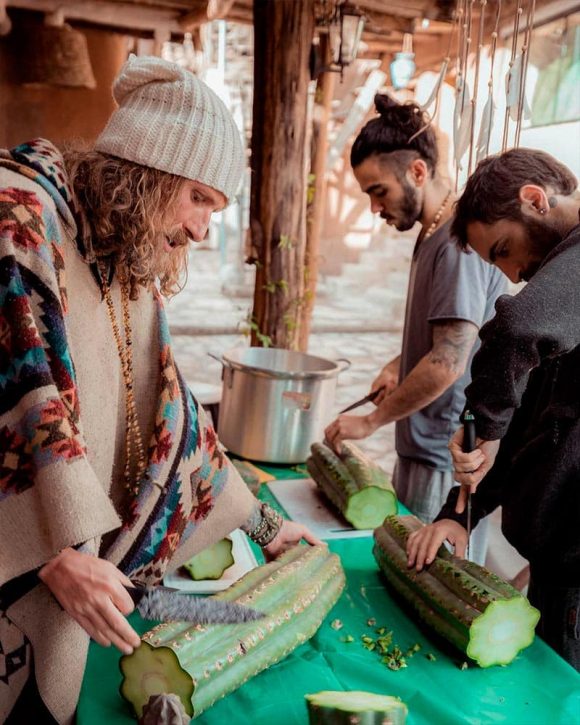
- Today this ceremony is quite popular. This makes it vulnerable to use by people who lack proper training or worse, personal ethics.
- In this regard, one way to identify serious practitioners is through virtual platforms that don’t have a need to sell these ceremonies. Platforms that don’t insist coercively, claiming to be descendants of lineages or belonging to special groups.
- Within the practice of these ancestral plant rituals, humility is paramount. If this principle is violated, then it’s not a viable option to consider.
Diet before the San Pedro ceremony
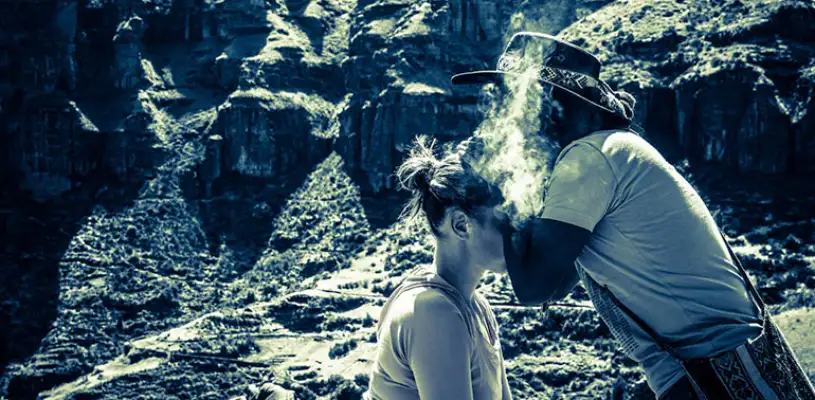
There’s no single “official universal diet,” but many facilitators recommend light dietary preparation to reduce discomfort and promote stability. It’s common to ask participants to avoid alcohol, drugs, very heavy or greasy foods, excess sugar and salt, and stimulants in the days leading up to the ceremony.
If you take medication or supplements, the proper thing is to inform beforehand and follow the center’s protocol. In the case of ayahuasca, there are known warnings about interactions with pharmaceuticals due to its MAOI component; that’s why serious retreats tend to be strict with screening and contraindications.
Differences between Ayahuasca and San Pedro
| Aspect | Ayahuasca | Wachuma / San Pedro |
| Cultural origin | Primarily associated with Amazonian traditions. | Primarily associated with the Andean world. |
| Composition | Combines plants with DMT along with alkaloids that inhibit MAO. | Cactus with mescaline (San Pedro/Wachuma). |
| Typical duration | Usually ranges from 4 to 6 hours (variable). | Oral mescaline is typically described as lasting around 10 to 12 hours (variable). |
| Experience rhythm | Tends to be more nocturnal with more pronounced peaks. | More gradual and daytime in many formats (depends on lineage and facilitator). |
| Interactions and precautions | Requires special attention to diet and medication; serious centers maintain strict contraindication lists. | Requires care and prior evaluation; recommendations vary according to facilitator and context. |
Benefits of the San Pedro ceremony
In travelers’ language, the most cited benefits tend to be mental clarity, sense of connection with nature, emotional release, and personal focus. From a research standpoint, there are observational studies in ceremonial contexts describing marked changes in consciousness dimensions, with relatively low anxiety levels in portions of studied samples, though evidence remains limited and doesn’t equate to “medical treatment.”

Are there tours in Cusco that include the Wachuma Ceremony?
Absolutely, fortunately at Inkayni Peru Tours we do have tours designed for adventurous travelers like you who are curious or certain about participating in a Wachuma ceremony in Cusco or San Pedro ceremony. Among our tours, we offer:
Want to learn more about the 9D/8N Wachuma and Ayahuasca ceremony tour? Just click this link and get in touch with our sales advisors.

You can watch: Wachuma or San Pedro Ceremony
Remember, you can find us on our social media platforms: @inkayniperutours/ @inkayniperutours
Frequently asked questions about the Wachuma Ceremony
What is the purpose of the Wachuma ceremony?
How is the Wachuma plant prepared?
- Cutting fresh stems from the San Pedro cactus
- Carefully washing the cut sections
- Cooking over low heat for several hours to extract the active alkaloids
- Reducing the liquid until achieving adequate concentration
Shamans or spiritual guides with ancestral knowledge oversee this entire sacred process, ensuring the preparation is done with respect and following ancient traditions.
Is the ceremony only guided by the shaman?
- Conduct the ceremony safely
- Protect the sacred space
- Interpret participants’ experiences
- Provide emotional and spiritual support throughout the entire process
The presence of an experienced guide is fundamental to guaranteeing a safe and meaningful experience.
What is the shaman’s role during the ceremony?
- Spiritual leader: Guides the experience from beginning to ceremonial closing
- Protector of sacred space: Keeps the energy of the place clean and safe
- Healing channel: Sings icaros (ceremonial songs) that facilitate the process
What are the effects of the Wachuma plant?
- Expanded sensory perception: Greater sensitivity to colors, sounds, and textures
- Deep introspection: Access to normally hidden thoughts and emotions
- Connection with nature: Sense of unity with the environment and all living beings
Important note: The experience is highly personal and no two ceremonies are alike.
How long does the ceremony last?
- Typical duration: Between 8 and 12 hours
- Short ceremonies: 4 to 6 hours (less common)
- Extended ceremonies: Can last a full day or up to 24 hours
Ceremony phases:
- Opening and preparation of sacred space (30 to 60 min)
- Taking the medicine (15 to 30 min)
- Main experience with the effects (6 to 10 hours)
- Group integration and ceremonial closing (1 to 2 hours)
San Pedro’s complete effects can last between 10 to 14 hours from ingestion.
Is recording or taking photographs allowed during the ceremony?
- It interrupts the concentration and internal process of participants
- It violates the privacy and vulnerability of those in ceremony
- It breaks the sacredness of the ceremonial space
- It distracts from the present experience
Recommendation: Leave all electronic devices outside the ceremonial space. It’s essential to strictly respect the rules and guidelines established by the shaman or guide. If you want to record your experience, do so through written notes after the ceremony.
What happens after the ceremony?
- Immediate rest: It’s normal to feel physically and emotionally exhausted
- Personal reflection: Time to process visions, emotions, and revelations
- Sharing circle: Many ceremonies include a space for participants to share their experience
- Gentle nourishment: Reintroduce light foods gradually (fruits, soups, herbal teas)
Post ceremony recommendations:
- Avoid making important decisions immediately afterward
- Maintain a light diet for 24 to 48 hours
- Rest and avoid stressful activities
- Write in a journal about your experiences and insights
- Seek therapeutic support if difficult emotions arise
Can I participate in more than one Wachuma ceremony?
- Space between ceremonies: Waiting at least 2 to 4 weeks between ceremonies is recommended to allow for adequate integration
- Processing time: Each ceremony can reveal deep layers that need time to assimilate
- Clear intention: Each ceremony should have a specific purpose, not become a habit or escape
- Gradual progression: Some people participate monthly, others quarterly or annually
Autor

Shared: