Table of Contents
Pikillaqta was a town of the Wari people, a culture that existed before the Incas. Wari was the center village and other cities like Pikillaqta were influenced by it. The people reached a high level of engineering, their cities were built under established urban planning patterns, its progress was used by other cultures and perfected by Inca architects.
Pikillaqta is part of the South Valley tour.

Location:
The archeological site of Pikillaqta is located 30 kilometers east of Cusco, in the district of Lucre, Quispicanchi Province.
Altitude:
Pikillaqta is at an altitude of 3,350 m.a.s.l. and covers an area of 34,21 km²
Description:
Pikillaqta is a Quechua word that means ‘Flea Town’ or ‘Small town’. It is believed that the Spaniards name the town Pikillaqta, but the reasons are unknown.
It was developed between 600 and 1000 A.D. by the Wari culture from the Central Andes (Ayacucho), it expanded southward, being located in high Andean regions such as Cusco and Sicuani, from there it expanded to the western valleys of the southern coast in Arequipa.
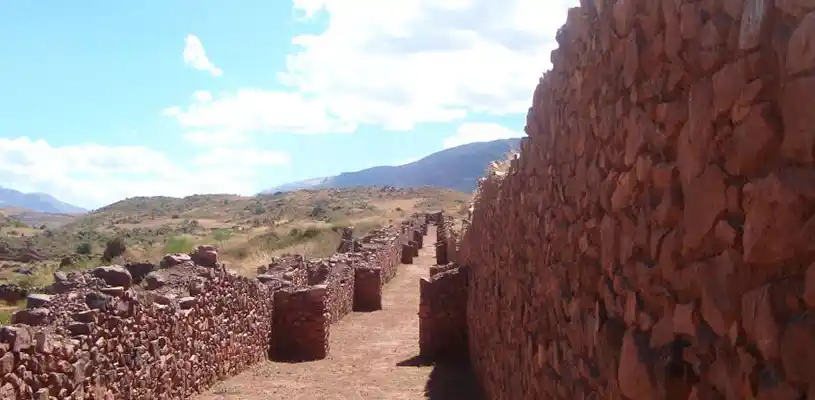
Wari structures are different from the Incas. These are made of stone and adobe and are not carved with Inca perfection. However, they are characterized by urban harmony with walls up to 12 meters high.
In January 2019, an important discovery of a Wari ceremonial offering was found. These were pieces of the Wari Culture.
What was found?
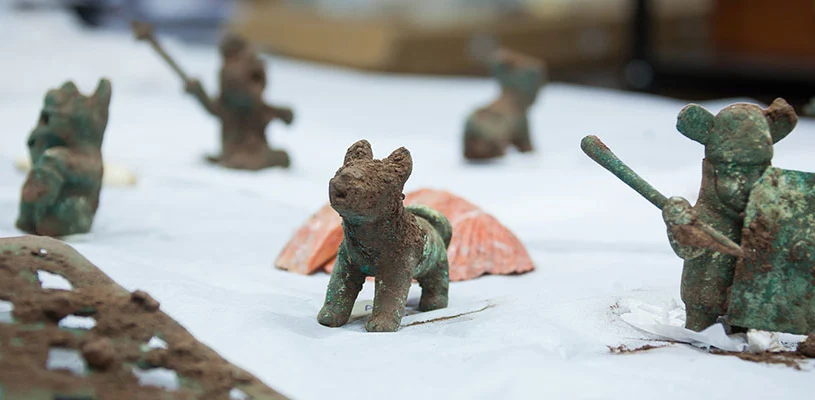
The discovery consisted of six small idols, 24 silver-plated pieces representing warrior women, three complete anthropomorphic pieces, 107 pieces representing parts of human bodies manufactured in spondylus, among other objects.

In a hole 70 centimeters in diameter and approximately 2 meters deep, two camelid bones were found, associated with a burning event, with 8 spondylus shells and two small silver sheets made with the laminate-embossing technique.
Also, at a greater depth a ceremonial offering was found in a circular form, in whose central part a barreta was nailed. There are many other interesting pieces that you can see in Cusco, visit the website of Culture Ministry of Cusco for more information.
What can we see in Pikillaqta?
You will definitely enjoy your visit to this impressive site, there some interesting ruins that you shouldn’t miss when visiting Pikillaqta.

Join us on this exciting tour in Pikillaqta, the small town:
Choqepucjio
The walls of this site were built with stone in its bases and mud in the upper ones. They are located to the left of the Watanay River. They are one of the main structures in Piquillacta Archaeological Site.
Urpicancha
The name can be translated as “the bird house”. It is a set of united platforms without amalgam. Despite its simplicity, it would be one of the most important Pikillacta Ruins of the Wari culture. Located on a small plateau with as enormous mountain at the back, east side of the Huacarpay Lagoon in Cusco.
Kunturqaqa
It was a rocky structure whose importance is not yet defined. The name can be translated as “Rock of the Condors”. This is because the rock has a Condor shape. Although no one lived there, it is presumed that it played an important role in Pikillacta Cusco.
Amarupata Platforms
Amarupata means “place for snakes”. This name may be given since many snakes lived there. These platforms are located southeast of the city of Lucre. The old water channels are magnificent and up until now are of great use to the local people.

What to bring:
- Tourist ticket (not included in the tour price)
- Sun hat
- Sunscreen with a Sun Protection Factor (SPF) of 35 or higher
- Waterproof jacket/rain poncho
- Water
- Camera and film
.

If want to visit Pikillacta, don’t hesitate to contact or email us. In Inkayni Peru Tours we would love to be part of this exciting adventure. We will arrange everything for you in advance. You can check our reviews at any of our online platforms TripAdvisor, TourRadar, GetYourGuide, etc.
“Travel is like knowledge. The more you see, the more you know you haven’t seen.” – Mark Hertsgaard
Shared: