Table of Contents
The Essentials You Need to Know
Palccoyo is a rainbow mountain in Cusco, Peru, located in the same mountain range as the famous Vinicunca rainbow mountain but with easier access and fewer tourists.
Here’s what you need to know about Palccoyo rainbow mountain before planning your trip or imagining what it’ll be like to reach this colorful peak.
Few travelers arrive in Cusco knowing that Palccoyo rainbow mountain exists. Most have heard about Vinicunca, the famous rainbow mountain that demands a hike around 16,000 feet. Palccoyo sits in the same range, but the experience is different: fewer crowds, easier access, and a short trek that lets you enjoy three rainbow mountains without intense physical strain. It doesn’t appear in most tourist itineraries, which is why it tends to surprise those who venture to discover it.
Behind its apparent ease lie details that define the real experience. How do you get there from Cusco without wasting time? When should you go to avoid clouds and wind? Is it better to organize it yourself or with an agency? Would you like to learn more?
Palccoyo Rainbow Mountain
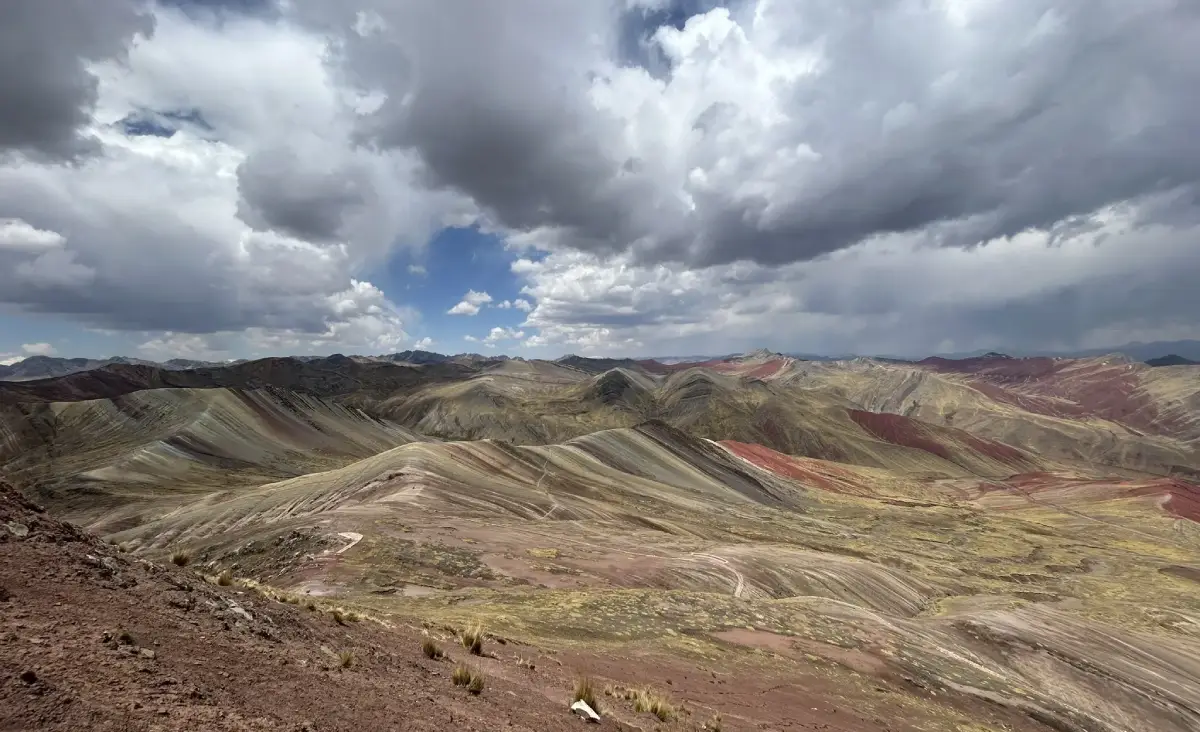
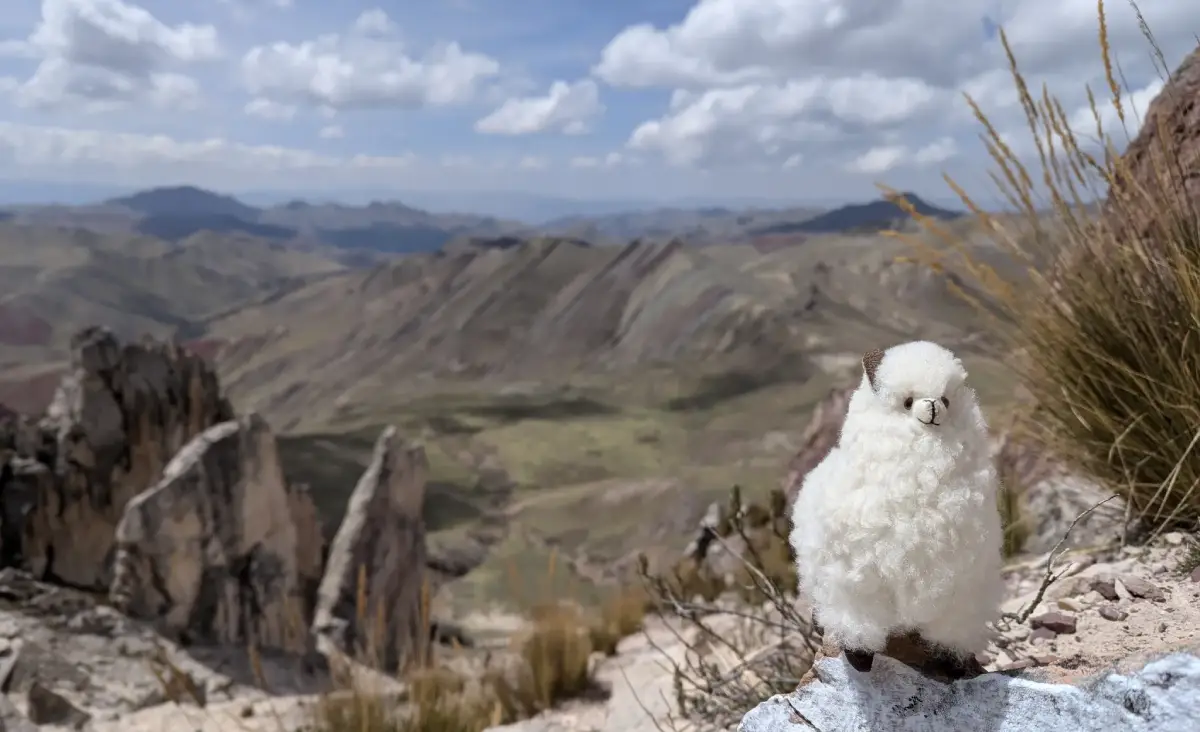
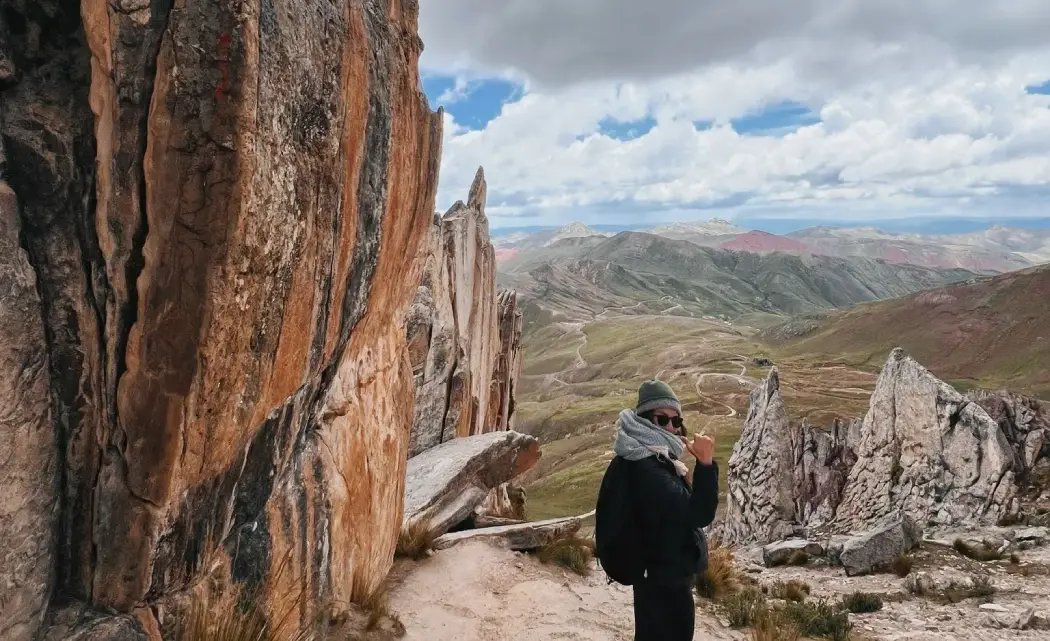
Palccoyo rainbow mountain is a quieter alternative to the famous Vinicunca rainbow mountain. It’s south of Cusco, in the Checacupe district, Canchis province. From its viewpoints you can observe three rainbow mountains and the Stone Forest, a collection of formations sculpted by wind and rain. The altitude sits around 16,076 feet above sea level, so arriving acclimatized is important.
The trail is short, mostly flat, and well-marked. At a relaxed pace it takes between 45 and 60 minutes to the main viewpoint. On clear days the Ausangate snow-capped peak appears on the horizon, adding contrast to the mineral colors of the valley. Because of its brief length, horses aren’t typically offered, and visitor traffic is lower than at Vinicunca, which makes for a more peaceful visit.
What Makes Palccoyo Rainbow Mountain Unique?
What’s special about Palccoyo isn’t just its beauty, but the way it shares it.
The path is shorter, the altitude more forgiving, and the surroundings quieter. There’s no need to push through massive crowds.
While Vinicunca welcomes thousands each day, Palccoyo still holds that air of a well-kept secret. The trail is serene, the ascent gentle, and the reward: three viewpoints offering vistas of colorful mountains, stone forests, and endless horizons.
Quick Facts About Palccoyo
- Altitude: 16,076 feet above sea level
- Hike: 45–60 minutes at a relaxed pace
- Distance from Cusco to Palccoyo: 78 miles
- Travel time: 3 to 4 hours each way
- Entry fee (reference): S/ 15–25 cash
- Restrooms: 1 to 3 soles at the community checkpoint
- Best season: May to October

Planning Your Palccoyo Trip
Exploring Palccoyo rainbow mountain doesn’t require an excessive investment. Group tours from Cusco typically range between $45 and $70 USD, depending on the agency and included services. Private options can exceed $130 USD when they include an exclusive vehicle, dedicated guide, and greater schedule flexibility.
Always verify whether the tour includes entrance fees. Some agencies charge it separately. Bring cash in soles for local payments and keep in mind that basic pay restrooms may be available at the community checkpoint.
With an Agency or On Your Own?
- Visiting Palccoyo with a local agency is usually more comfortable and safer. A good operator includes transportation, bilingual guide, a meal or box lunch, oxygen, and first aid kit. Confirm pickup times, hiking duration, approximate altitude, and intermediate stops.
- If you go independently, plan for fuel, road conditions, and available signal, and avoid driving if you’re not acclimatized to the altitude. In both cases, dress in layers, bring a light rain jacket, footwear with good traction, hat, sunscreen, and plenty of water.
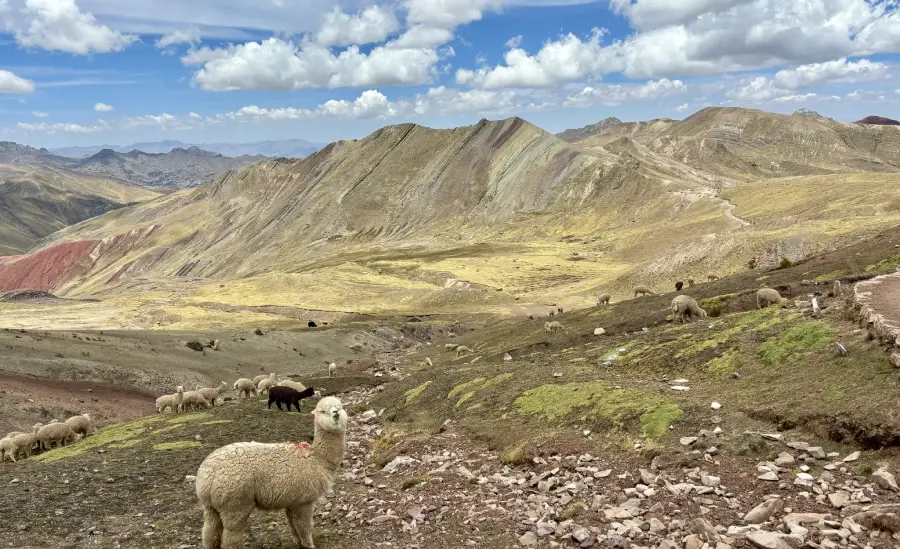
Key Information: Altitude, Transportation, and Weather
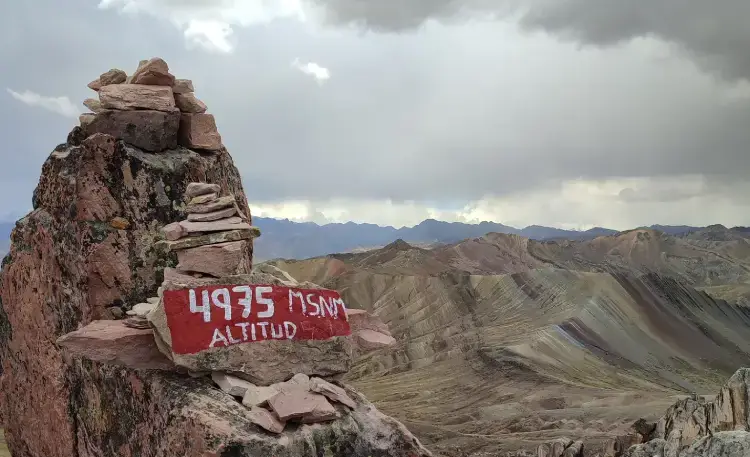
Palccoyo sits at 16,076 feet above sea level in the heart of the Andean mountains. This altitude demands basic physical preparation and respect for the environment. Although the hike isn’t extensive or very steep, the altitude can cause rapid fatigue if you’re not acclimatized.
- Acclimatization: spend at least two days in Cusco before attempting the visit. This helps your body adapt to lower oxygen pressure and reduces the risk of altitude sickness.
- Constant hydration: drink water regularly, even if you’re not thirsty. This maintains stable oxygenation and prevents headaches or dizziness.
- Avoid alcohol and heavy meals the day before the excursion. This promotes better adaptation and reduces digestive discomfort at altitude.
- Herbal teas like coca tea and muña, as well as altitude sickness pills (after consulting with a doctor), can relieve mild symptoms like headaches, heaviness, or shortness of breath.

The weather at Palccoyo is cold and dry during peak season (May to October), with clear skies and temperatures ranging from 32°F at dawn to 59°F at midday. During rainy season (November to April) the sky can cloud over suddenly, with brief but intense rainfall.
To protect yourself from sudden temperature changes:
- Dress in layers so you can easily adapt to daytime warmth and high-altitude cold.
- Use sunscreen, hat, sunglasses, and a light waterproof poncho.
- If you’re sensitive to altitude, consider bringing a small portable oxygen tank or make sure your operator has one.
How to Get to Palccoyo Rainbow Mountain?
On Your Own
- Leave early from Cusco toward Av. Huayruropata to catch a bus or minivan to Checacupe. The trip usually takes 3 to 4 hours depending on stops and traffic. Upon arrival, negotiate a local taxi to the Palccoyo community checkpoint via dirt road; calculate 30 to 60 minutes each way and agree on wait time and return before heading up.
- There’s no direct public transportation to the access point, so this bus + taxi combination is the most common option. At the community checkpoint pay the entrance fee in cash and keep small bills for basic services. With clear skies you’ll have time to visit the viewpoints and, weather permitting, the Stone Forest as well. If clouds roll in after midday, prioritize the viewpoints first to ensure the best panoramic view.
Cost-wise, the bus between Cusco and Checacupe runs around S/ 7–15 per person (approx. $2–4 USD). The local taxi round trip with wait time typically closes between S/ 60–200 (approx. $15–52 USD) depending on weather, demand, and negotiation. The community entrance has been reported between S/ 15–25 (approx. $4–7 USD) per person and restrooms around S/ 1 (approx. $0.30 USD). Bring cash in soles, leave early to take advantage of the best light and less wind, and always respect marked trails.

With a Local Travel Agency
- If you prefer to skip the logistics and dedicate the day to enjoying and photographing, a local agency handles transportation, guide, and visit times. Full-day group tours typically cost between $25 and $70 USD depending on inclusions like bilingual guide, breakfast/lunch, oxygen, and first aid kit. Private departures for couples, families, or photographers range between $100 and $200+ USD depending on group size and level of customization. Always confirm whether the community entrance is included or paid on-site, and ask for the estimated arrival time at the viewpoints to ensure the best light.
This is the most comfortable option if you’re unfamiliar with local transportation or don’t want to negotiate along the route.
| Option | Transportation | Total duration approx. | Estimated cost | Comfort | Ideal for |
| On your own | Bus Cusco to Checacupe + local transport to Palccoyo | 4 to 5+ hours each way (including transfers) | S/ 82–241 approx. ($22–63 USD) | Medium – Low | Independent travelers on a tight budget with experience on local routes |
| With local agency | Direct tourist transport round trip | 3 to 4 hours each way | $40–200+ USD (depending on tour type) | High | Those who prefer comfort, local guide, and avoiding logistical negotiations |
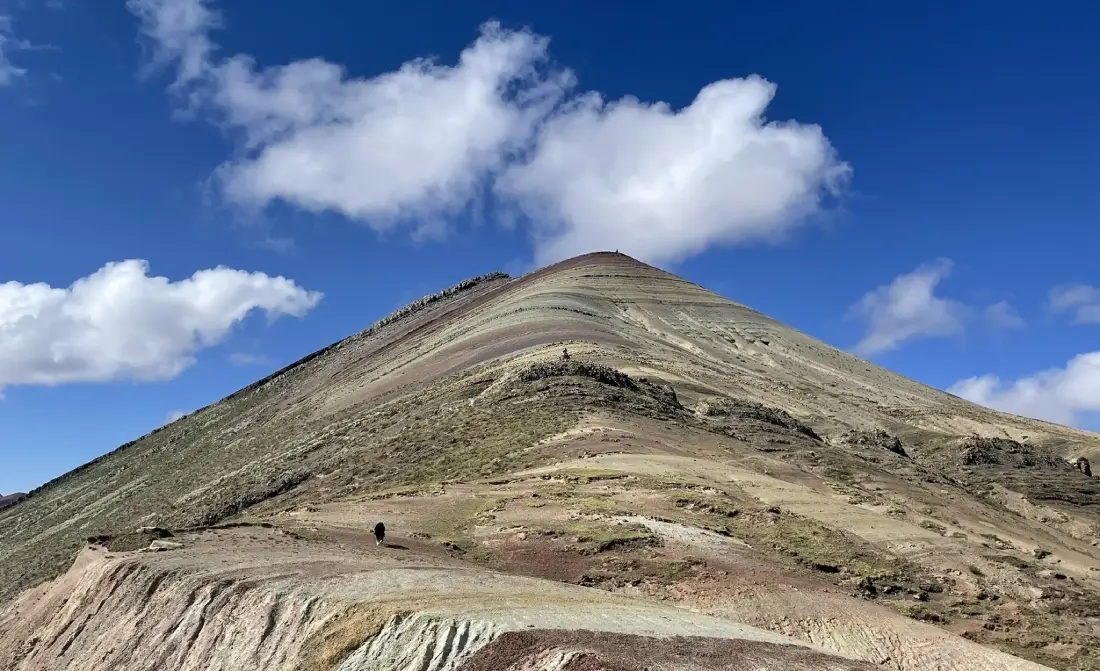
Best Time to Visit Palccoyo Rainbow Mountain
At Palccoyo, the sky rules and the light determines the landscape’s character.
- The dry season, from May to October, offers the most stable days. Clear skies, firm trail, and defined colors. June, July, and August see higher visitor numbers and colder mornings, but visibility is usually excellent. The best window for photos is in the morning, between 7:30 and 10:30, when wind is lower and light falls softly on the slopes.
- From November to April, with rains, the weather becomes changeable. Fog can cover viewpoints or suddenly open mystical scenes with low clouds; however, the mountain colors feel more intense. Light hail or snow can temporarily alter the tones. If you choose these months, travel with a flexible itinerary and waterproof gear.
In any season, UV radiation at 16,076 feet is high, so sunscreen, hat, and sunglasses are non-negotiable. Leave early to ensure visibility and avoid staying past midday, when wind typically intensifies and clouds tend to close the horizon.
Expert tip:
Leave early. Mornings offer better visibility and less wind. Plus, arriving before other visitors ensures a more intimate experience.
The Hiking Experience
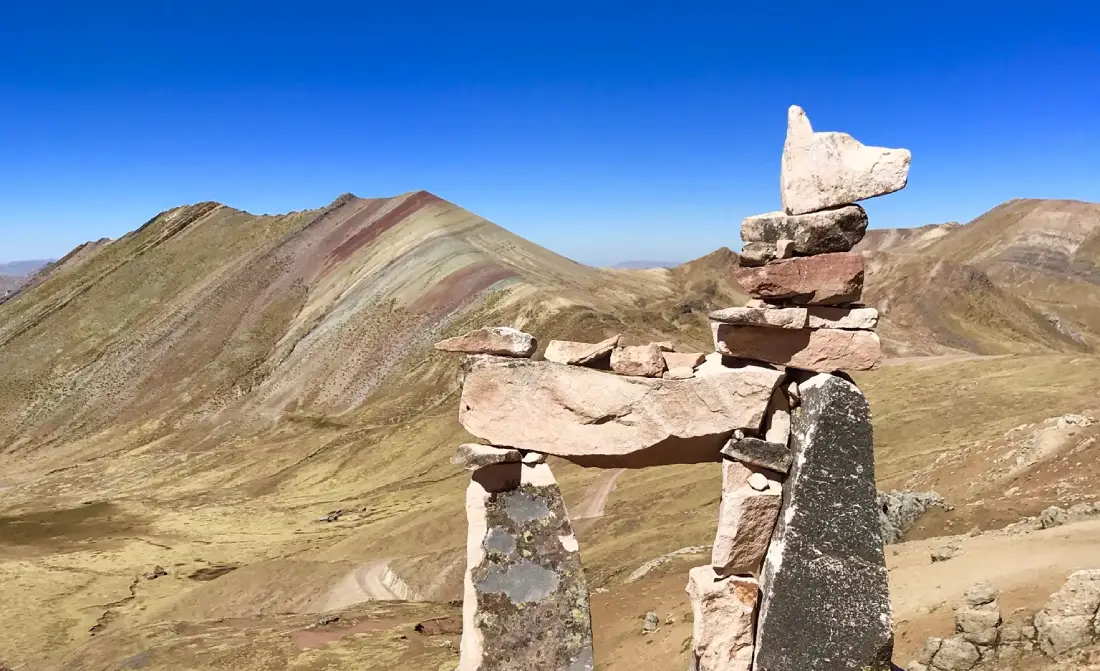
From the starting point, the main viewpoint takes between 45 and 60 minutes at a calm, unhurried pace. The trail is mostly flat, well-marked, and alternates between compact dirt and loose stone, so good hiking shoes make a difference.
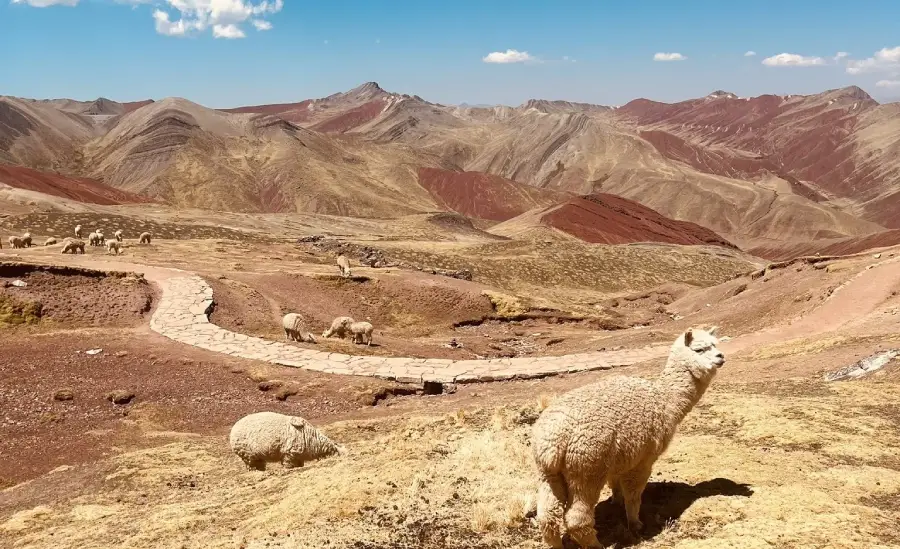
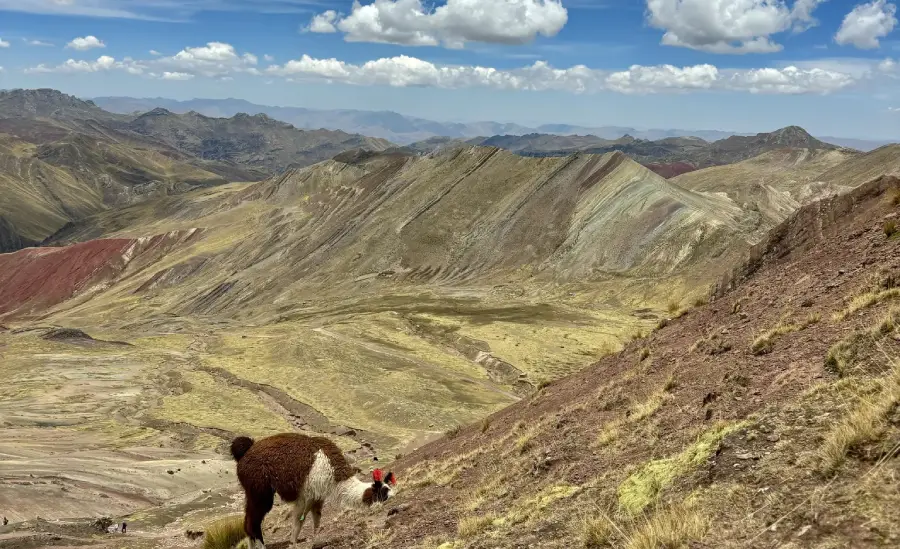
Along the way you’ll see multicolored slopes, unique rock formations, and, with luck, grazing alpacas. Because of its short profile without prolonged inclines, it’s an experience suitable for families with children and older travelers who are already acclimatized.
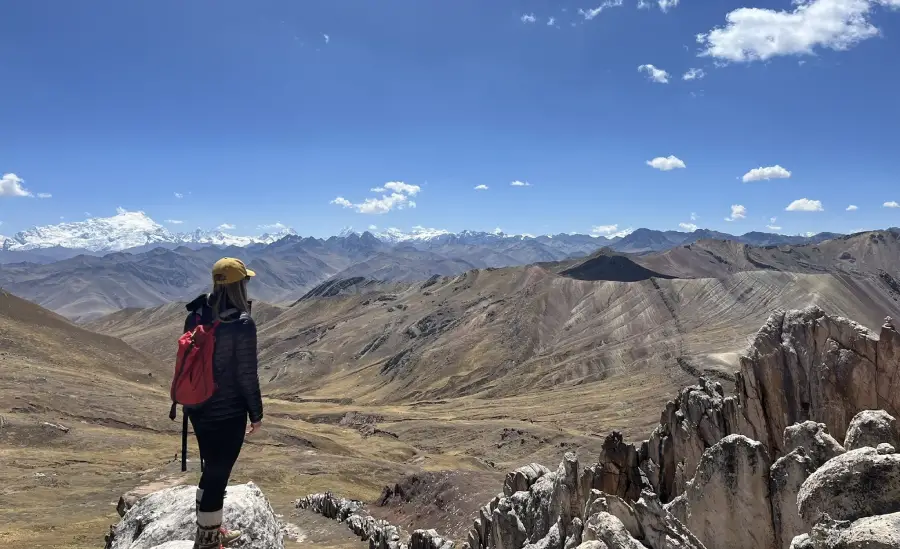
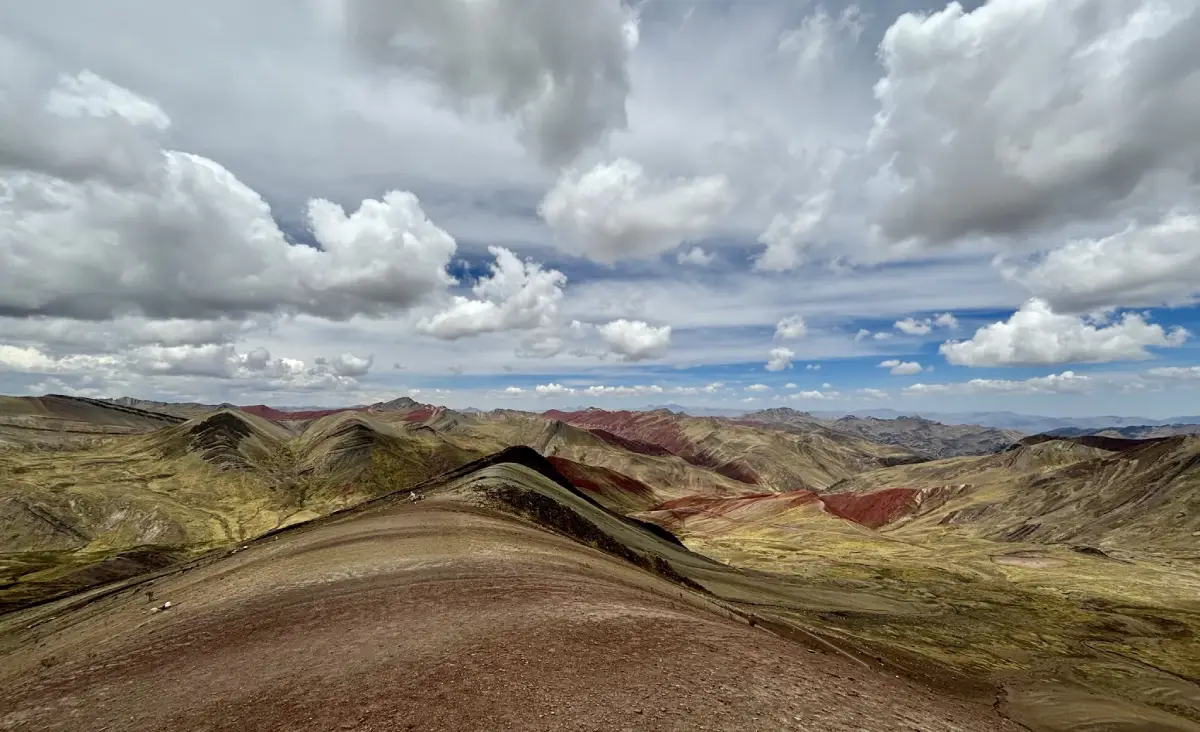
Upon reaching the main viewpoint, a panorama of three rainbow mountains opens up; on clear days, the Ausangate snow-capped peak cuts across the horizon. If weather permits, you can continue to secondary viewpoints to vary the angle without adding more than a few extra minutes. During rainy season the terrain can be slippery and wind picks up after midday, so prioritize the morning visit to ensure better light and visibility.
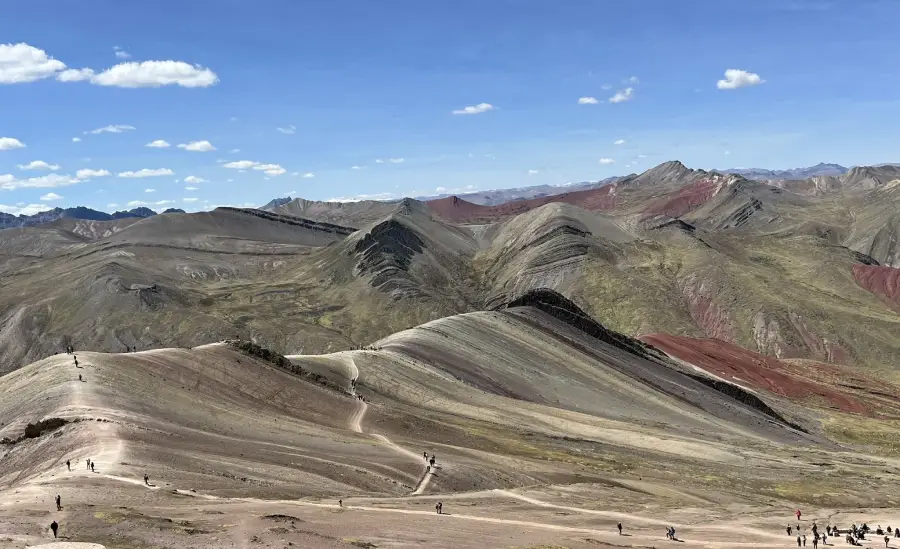
Three Rainbow Mountains and Ausangate
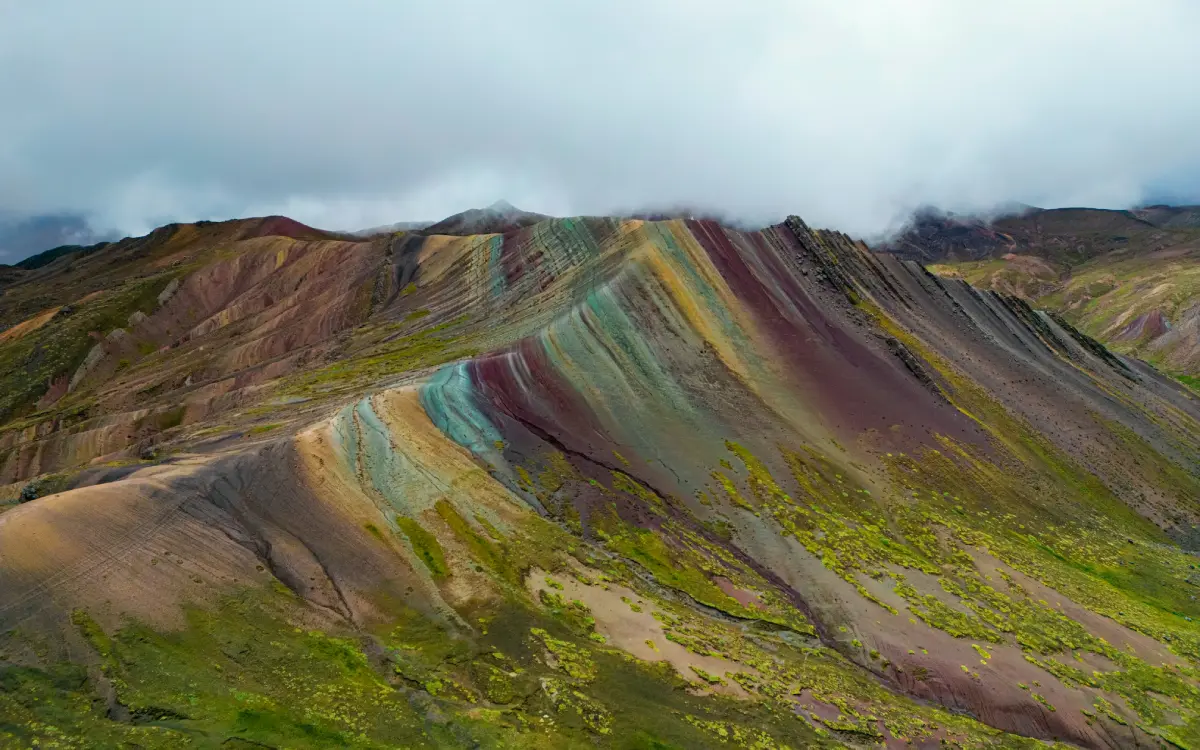
From the viewpoints, the landscape unfolds like a living canvas, where three rainbow mountains display their mineral layers in shades of red, ochre, green, and lavender. Palccoyo allows you to admire multiple perspectives.
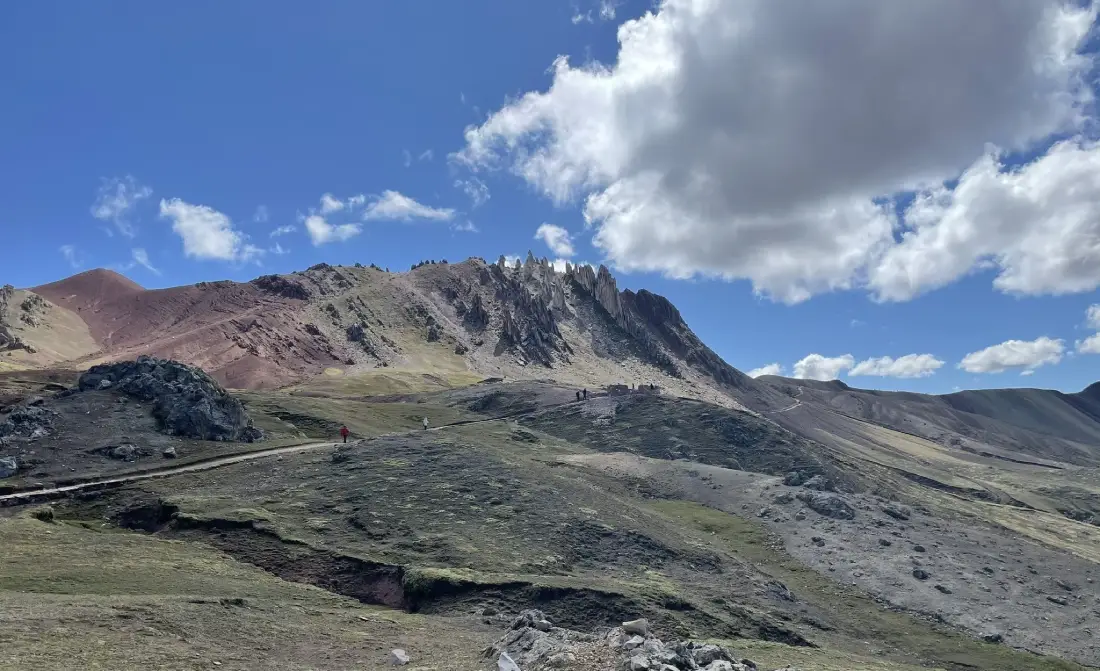
In the distance rises Nevado Ausangate, Peru’s fifth highest peak, revered by Andean cultures as an Apu or mountain spirit. Its white, solemn presence contrasts with the earthy colors of the surrounding landscape, adding a sacred dimension to the visual experience.
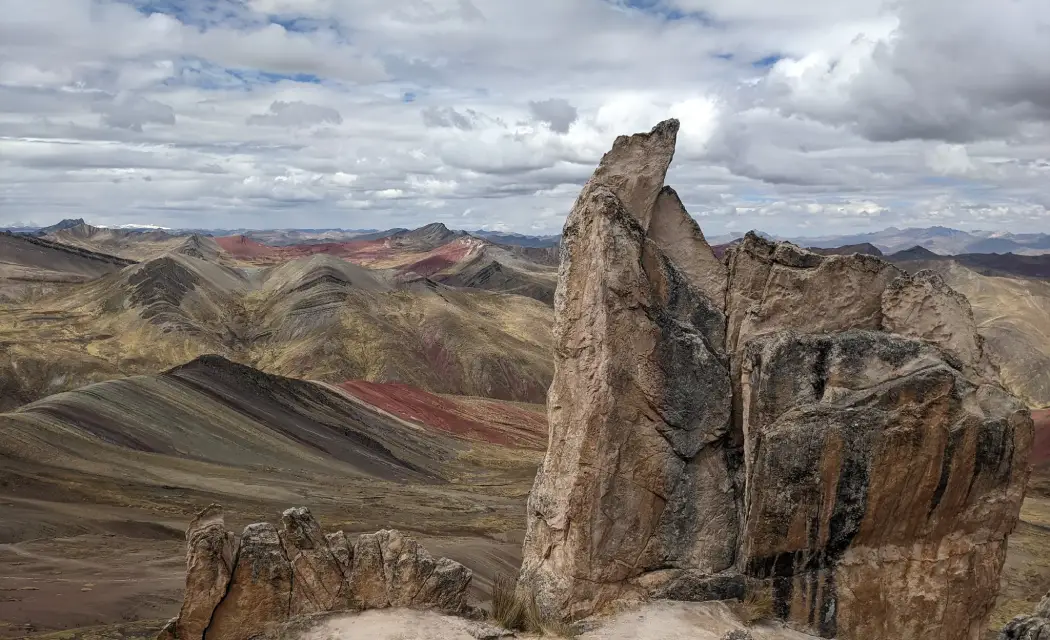
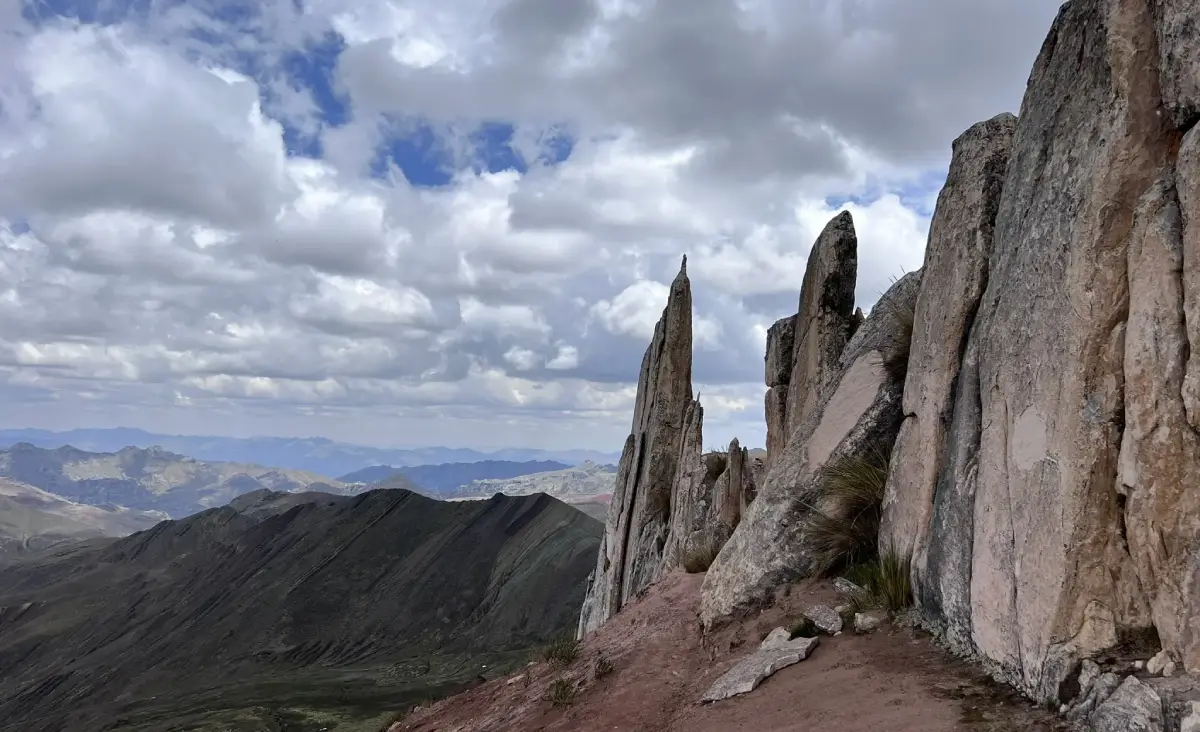
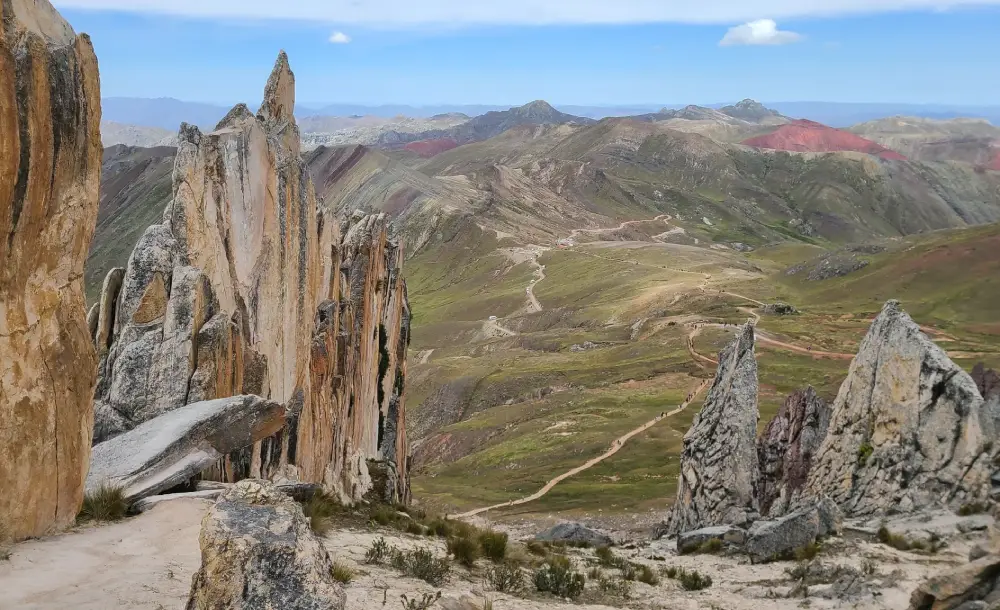
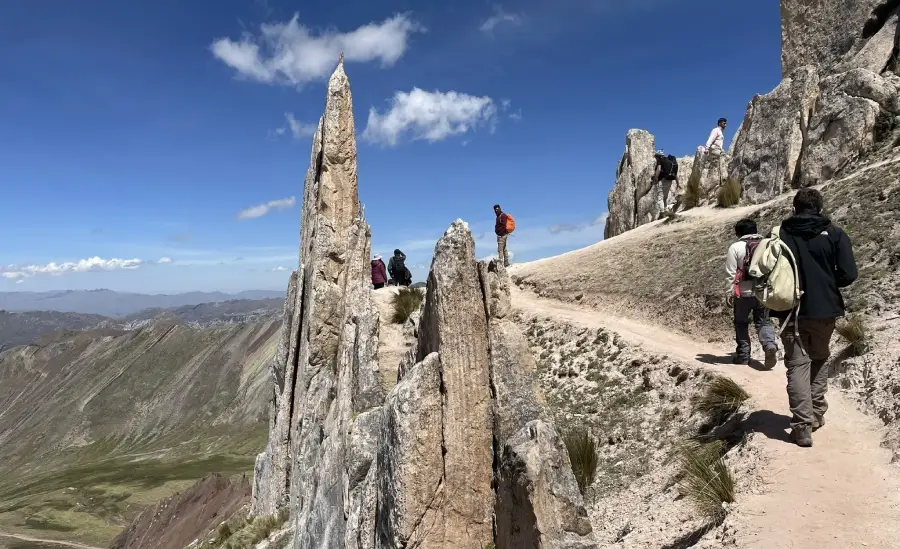
Stone Forest, Sculptures of Time
A short detour from the main route leads to the Stone Forest, a collection of natural rock formations that rise like forgotten columns of an ancient temple.
Carved by centuries of wind and rain, these structures invite the imagination: some resemble mythical figures; others, watchtowers observing time’s passage.
Are you a photography lover? Here are some tips for capturing the perfect shot:
- Morning light: visit early to take advantage of soft light that enhances color and texture contrasts.
- Wide angle: bring a lens that lets you capture the landscape’s vastness without losing detail.
- Play with silhouettes: the Stone Forest rocks are perfect for creating dramatic backlit images.
Remember that you don’t need to be a professional photographer to capture memorable images.
What to Pack?
The weather can change as quickly as the landscape. Being well prepared not only guarantees comfort, but allows you to enjoy the environment without distractions.
Here’s what can’t be missing from your backpack:
- Thermal base layer: mornings are often cold, even freezing.
- Waterproof/windproof jacket: ideal for protecting yourself from unexpected gusts or sudden drizzle.
- Sunscreen and sunglasses: at that altitude, the sun hits hard, even on cloudy days.
- Hat: to protect yourself from sun and cold at different times of day.
- Reusable water bottle: staying hydrated is key to avoiding altitude sickness.
- Energy snacks: dried fruits, nuts, or granola bars.
- Comfortable trekking shoes: the terrain isn’t extreme, but is uneven in parts.
- Personal medication and altitude sickness pills: consult your doctor before traveling.
- Camera or cell phone with charged battery: to capture Palccoyo’s beauty.
Important note:
Respect local people’s space. Ask before taking photos, buy directly if you want to support them, and observe with humility.
The Silent Rainbow of the Andes
Each step at Palccoyo offers a different angle. Like a silent, intimate, and real stage. Without crowds or commotion, a corner of the Andes waiting for you with open arms and colors on display.
From Inkayni Peru Tours we wonder: Are you ready to discover the land that became a rainbow?
Frequently Asked Questions About Palccoyo Rainbow Mountain:
Is Palccoyo rainbow mountain suitable for children and older travelers?
How does Palccoyo compare to the famous Vinicunca rainbow mountain?
Do I need special permits or to book in advance?
What should I do if I experience altitude sickness?
Can I visit Palccoyo on my own without a tour?
How long does the complete visit take from Cusco?
What’s the entrance cost and what services are available at the checkpoint?
Can horses be rented like at Vinicunca?
What’s the best time of day to go?
In the morning you’ll have more stable light, less wind, and better visibility. Between 7:30 and 10:30 is usually the most rewarding window for photos. After midday wind can pick up and clouds tend to close viewpoints.
What time of year should I travel?
May to October offers drier weather and clear skies. November to April is rainy and unpredictable, with occasional fog or hail. If you go during rainy season, bring waterproof gear and flexibility in your plan.
What should I bring in my backpack?
Water, sunscreen, UV sunglasses, hat, thermal layer, waterproof/windproof jacket, salty and sweet snacks, basic first aid kit, and cash in soles. During rainy season, backpack cover and footwear with good grip.
Is there cell signal or internet?
Signal is irregular and can be lost on the route and at viewpoints. Download offline maps and let your lodging know your estimated return time.
Can I fly a drone at Palccoyo?
Drone use may be subject to community rules and wind conditions. Check at the checkpoint before taking off. Fly away from people and animals and avoid doing so in strong gusts.
Is it a good destination for photography?
Yes. Morning light enhances mineral colors. Bring spare battery and lens cloth in case of mist. If it’s windy, use high shutter speeds. In rain, protect equipment and prioritize compositions from safe viewpoints.
Are there stores or restaurants nearby?
Along the route you can find local stands with snacks and drinks, but with minimal variety. If you go independently, bring your own food and enough water.
What safety recommendations should I follow?
Stay on marked trails, avoid approaching ridge edges, don’t climb fragile slopes, and respect signage. If there’s an electrical storm or hail, move away from high points and return to the vehicle.
Is a Palccoyo rainbow mountain tour worth it compared to other Cusco attractions?
Absolutely. If you’re looking for a less crowded alternative to Vinicunca with stunning scenery and an easier hike, a Palccoyo tour offers excellent value. You’ll see three rainbow mountains, the Stone Forest, and possibly Ausangate, all in one day without the intense physical demands of other high-altitude treks in the region.
What makes a Palccoyo rainbow mountain tour different from a standard tour?
A quality Palccoyo rainbow mountain tour includes not just transportation and entrance fees, but also a knowledgeable guide who can explain the geological formations, cultural significance, and best photo opportunities. Look for tours that offer small group sizes, flexible schedules, and additional perks like oxygen supplies and nutritious meals adapted for high-altitude travel.
Autor
Shared: