Table of Contents
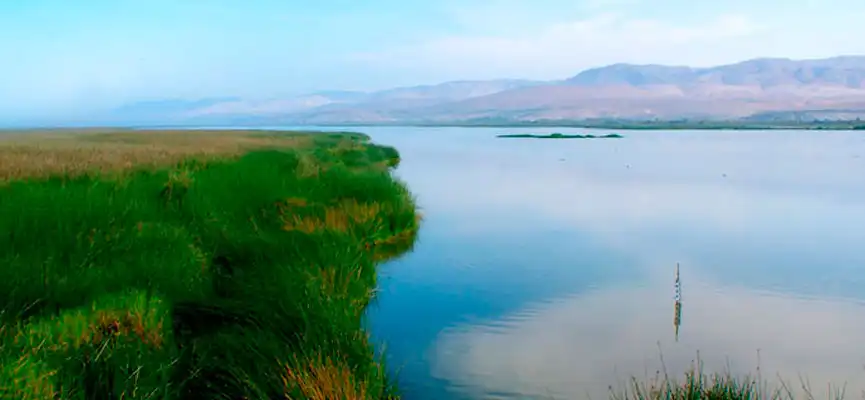
Can you imagine to be in a resting area for migrating birds? Beautiful National Sanctuary of Mejia Lagoons is one of the areas where you can find migratory birds.
Where is National Sanctuary of Mejia?
National Sanctuary of Mejia is located in the District of Dean Valdivia province of Islay. It is 146 Km (91 miles) southwest of Arequipa, 11 Km (7 miles) south from the Mejia village and 5 Km (3 miles) south of Mollendo. It has an extension of 690,60 hectares.
Description:
National Sanctuary of Mejia, a small area (690.6 hectares), forms one of the most important wetlands in the western coast of South America, which also houses a large number of species of resident and migratory birds and other wildlife samples, flora and microflora characteristic of wetlands.
On February 24, 1984, Mejia Lagoons were declared a National Sanctuary under Supreme Decree Nº 015-84-AG in order to preserve the birds in danger of extinction. According to some research, approximately 200 species of resident and migratory birds that enjoy an ideal habitat when staying in the National Sanctuary.
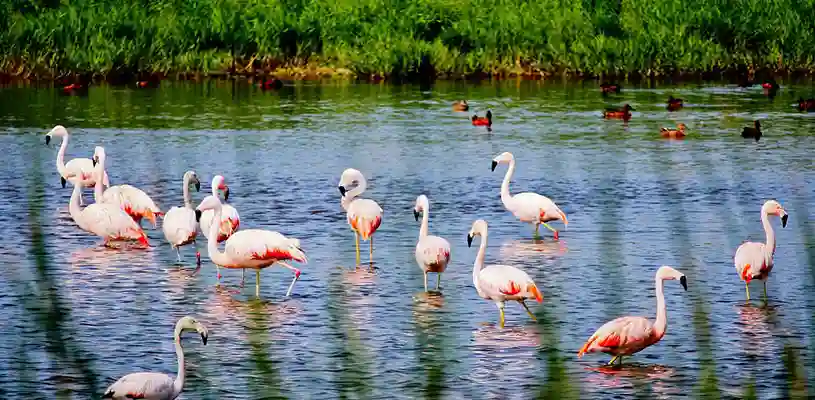
Why do birds migrate to other countries?
Birds migrate eager to escape the harsh winter of other latitudes. Mejia Lagoons has a low annual average temperature. The average annual temperature is 19.8 ° C and the annual average total precipitation is 10.8 mm.
What time of the year can you see the migratory birds in Peru?
Migratory birds usually come to Peru from January to February since it is summer there.
National Sanctuary of Mejia is near the Mejia town. That is the reason of the name. Near the sanctuary you have the beach of the town.
Note:
Mejia is a small town, a district of Islay province. The region of Islay is a tourist place thanks to the beautiful beaches you find there. Mollendo, capital of the province of Islay and a very important tourist destinations in the Summer, is the closest town to Mejia.
What kind of habitat does the sanctuary comprise?
- Marshes
- Muddy places
- Totorales
- Mounts and river estuaries
- Sandy beaches

¿Qué cosas podemos observar en el Santuario Nacional Laguna de Mejía?
Perú es un país mega-diverso por excelencia, estamos seguros que disfrutarás de cada uno de los lugares que llegues a conocer en este increíble país, por ejemplo, en el Santuario Nacional Laguna de Mejía podremos observar, la variada flora y fauna.
FAUNA:
Respecto a la fauna, de las 200 especies de aves migratorias que existen, 17 especies llegan al Santuario Nacional Laguna de Mejía desde otras partes del Perú, 4 de otros países de Sudamérica y 34 desde América del Norte, en determinadas temporadas del país.
Una de las aves migratorias más conocida de Perú es la Gaviota de Franklin.
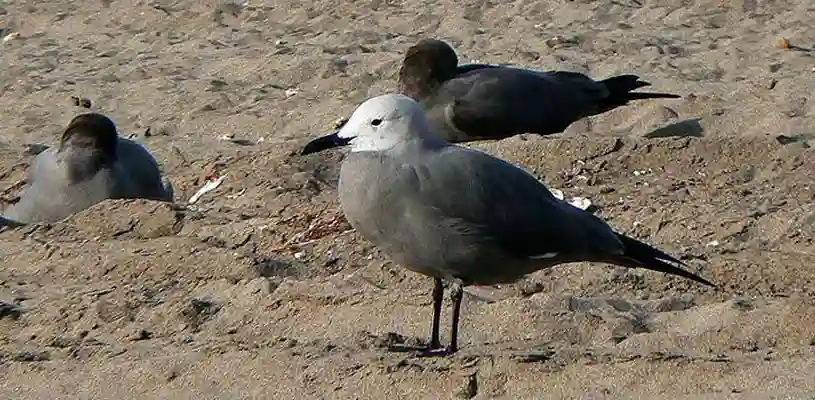
Aves migratorias o residentes que se pueden observar en la playa:
- Gaviota gris
- Playero blanco
- Rayador
- Gaviota peruana, dominicana y gaviota de capucha gris
Birds that can be seen in the lagoons:
- Pied-billed grebe
- Speckled teal and white-cheeked pintail duck
- Cocoi heron and Great blue heron
- Andean Flamingo
Other species that can be seen:
On the shores of the lagoon you can find toads. Near the beach you can find lizards. And on higher zones you can find gray fox and greater silver smelt.
Flora:
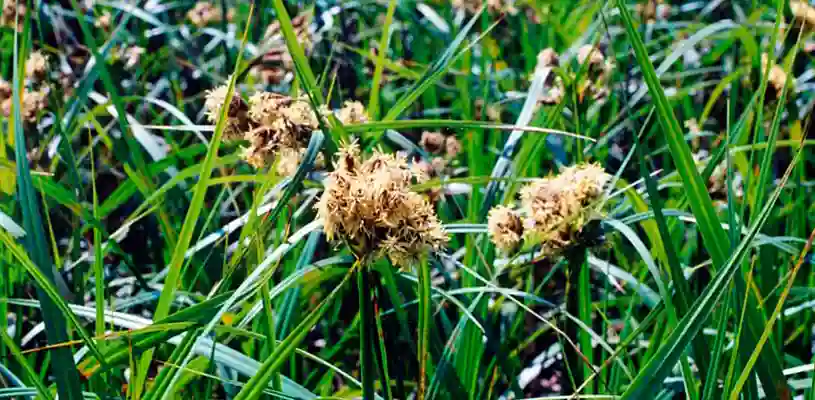
In National Sanctuary of Mejia Lagoons you can find juncus (common rush or soft rush), cattail (totora), algae, among others.
How to get to National Sanctuary of Mejia Lagoons?
To get to the Sanctuary you need to arrive in Arequipa first. Once in the White City, take the bus to Mollendo. This town is 20 minutes from the National Sanctuary.
When you arrive in Mollendo, you can hire the service of a private transportation that take you straight to the sanctuary. We recommend visiting the sanctuary in the morning when there are fewer tourists.
Entrance Fee: S/. 5.00 PEN
Inkayni tips:
- Wear a hat and sunscreen
- Drink water to keep hydrated.
- Buy dried fruits.
- Rent or bring trekking poles
- Bring your personal documents and passport with you all the time.

“It is good to have an end to journey toward; but it is the journey that matters, in the end.” – Ernest Hemingway
Shared: