


Table of Contents
Virgen del Carmen Festivity of Paucartambo in Cusco is an important celebration for the catholic church. The festivity lasts 4 days, from July 15 to July 19. Hundreds of faithful devotees and culture lovers gather there every year. Paucartambo is located 110 kilometers far from the city of Cusco. It takes almost 2 hours and a half to get there.
Once you arrive in this beautiful town, you could observe the narrow streets, white walls, sky blue balconies, and the famous Carlos III bridge, Tres cruces. Furthermore, you will be amazed by the funny characters who will be wearing colorful customs. They are the life of the festivity in Cusco.

Now, let’s read about the 19 folk dances that are part of the Virgen del Carmen Festivity of Paucartambo in Cusco.
1- Qhapaq Chunchu:
Folk Dance that represents the native warriors of the jungle of Kosñipata, as known ”wild people”. When the Qhapaq Chunchu join the Virgen del Carmen Festivity, they usually bring fruits, suelen llevar frutas, huayruro, parrots, among other products that were used to trade with the Qollasuyo inhabitants. It is worth mentioning that the inhabitants of Antisuyo and Qollasuyo shared strong bonds of friendship.
The members of the Qhapac Chunchu play the role of guardians of Virgen del Carmen.They are generally in charge of escorting the Virgin during the festivity in Paucartambo.
The group of the Qhapac Chunchu is formed by the Chunchu king or chief of the dance. Behind the chief, you will see the rest of the members organized in two parallel rows. One of the main characters is the monkey, which amazes the crowds with its funny choreography.

2- Qhapaq Qolla:
It is one of the most loved folk dances of Cusco. During the dances, they sing songs that express nostalgia and gratitude. The characters of the folk dance represent the businessmen from the highlands – Qollasuyo. According to some research, it is said that when the qollas arrived in Paucartambo, they traded products with the inhabitants of Antisuyo. This dance is composed of:
- A major (chief of the group)
- An Imilla, which represents
- Qollas that are grouped in two rows
- A llamero, which is a person who walks along with a llama. The llama is called male ch’aska and it carries many products of the highlands region.
- Children who are called chanako.
Qollas that walk along the “Capac Negro” are the only ones who sing for the virgin. They also have to attend the Sir Qoylloritti festivity.

3- Black Qhapaq:
According to the history of this dance, people represent the slaves brought from the coast of Peru and Bolivia. They worked in the mines of Paucartambo. When they sing and dance, they put an effort to show the suffering slaves had. The songs are very emotional.
The instruments which accompany these emotional songs are accordion, violin, quena, harp and a bass drum. One of the elements of the custom that stands out is the rattle. Rattles give a special sound to the songs. This dance is composed of:
- Caporal or black king
- Black soldiers headed by their respective Chiefs
- Children, who will become chiefs in the future
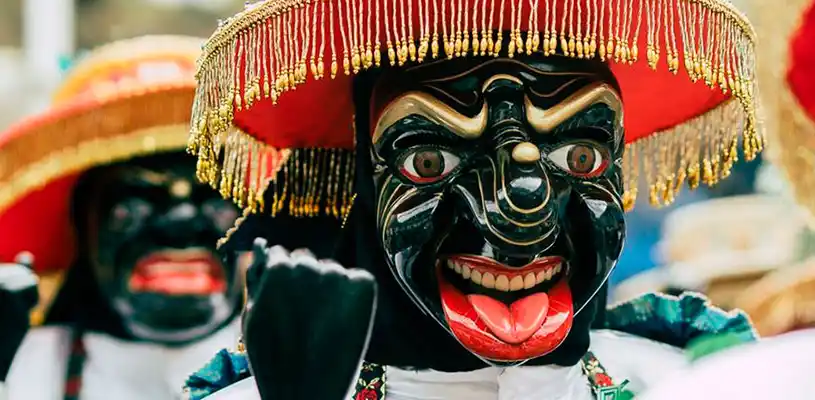
4- Saqra:
Dancers try to perform a parody of the wicked one (Devil). These characters don’t dare to see “mamacha del Carmen” face and wait anxiously to see the souls of the Qollas.
It is believed that when one of the qollas or another dancer dies, saqras immediately appear in a car set on fire to take the body to the underworld.
Saqras can be daring and wicked characters that climb balconies, roofs and windows in the town of Paucartambo. People are always on the watch because of the saqras, who are their favorite characters. This dance is composed of:
- Lucifer – caporal of the group
- A female chinese saqra or Luzbel – a woman that is the companion of the caporal
- Devil soldiers headed by 2 captains grouped in two rows
- Male and female devil children who are called pets.
Violins, quenas, harp, accordion, and a bass drum are instruments which form the melody of the Saqras of Paucartambo dance.
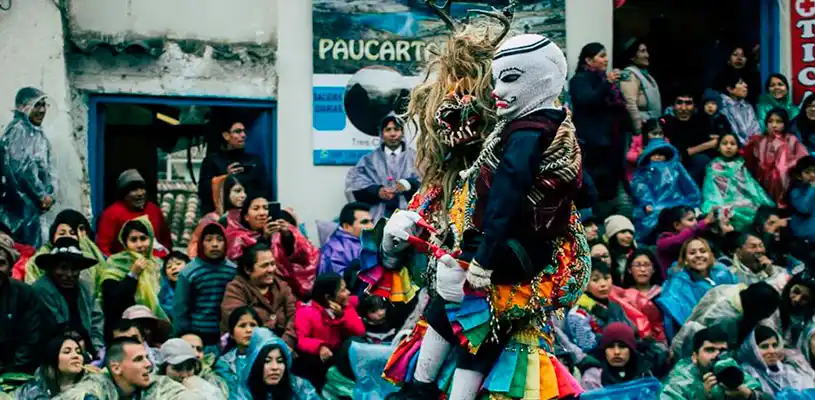
5-Wayra, Siclla:
It is a folk dance that moves you to dance together with the characters of Paucartambo. At present, they are represented by people from the town. They perform a parody of the justice administration, especially of lawyers. The members of the dance usually dress up like judges, prosecutors, scribes, defendants and “maqtas”. That is why this dance is also called the dance of the doctors.
Since the steps of the dance are improvised, it is very funny to watch them when they are dancing.

6- Chilean Auqa:
According to the history of the dance, the choreography represents Chilean soldiers who arrived in Peru during the Pacific War in 1879. It means that this dance purpose is to make fun of the Chilean soldier.
This dance is mainly composed of people from the town of Paucartambo. They have a special choreography. ‘Machu’, accompanied by a woman, leads the soldiers who are in 2 rows, one red and one blue.
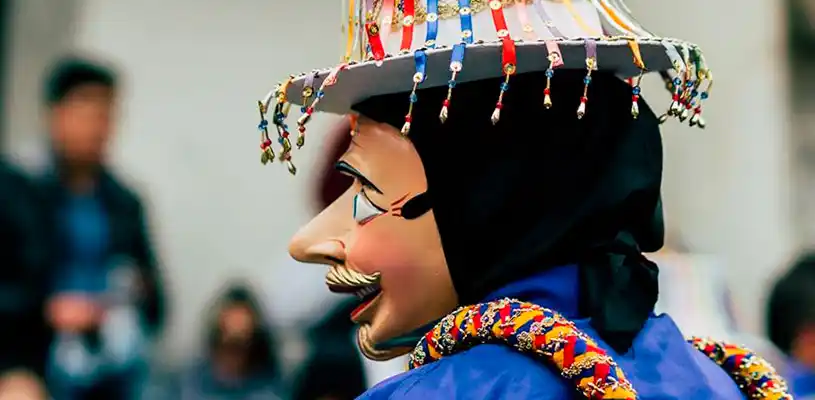
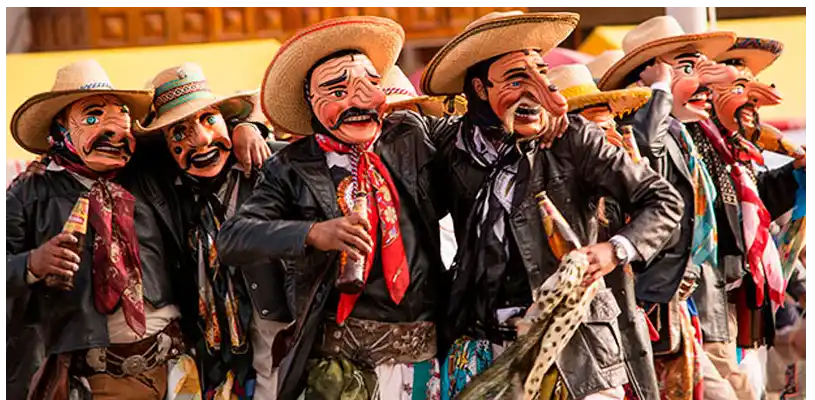
7- Majeño:
This dance represents the old muleteers with mule teams carrying wineskins and containers during the republican period. These characters used to sell wine and home-made spirits (aguardiente) and other products brought from the valley of Majes in Arequipa.
The custom for this dance includes beige pants and t-shirt, and a handkerchief that goes well with the pants and t-shirt. They also wear a black leather jacket and hold a bottle of beer with the right hand.
8- Qoyacha:
This is the only dance in which male and female participate. It has a romantic style and only single people can dance. In addition, there are certain rules that each dancer has to fulfill if he wants to be part of the group.
The rhythm of the dance is appealing to anyone. Dancers do the footwork (zapateo or tap) that is very similar to another famous dance called Huaylarsh. They wear costumes which are composed of small colorful stones as part of the decoration. These bright colors highlight women’s beauty and manly men.

9- Chunchacha:
Chunchachas dance is one of the newest dances that is performed during Virgen del Carmen festivity. It’s been almost 90 years since it was danced. This dance may have its roots in the Qosñipata Valley, district of Paucartambo, Cusco.
This dance is composed of a group of young, single and thin women who represent the exotic and brave women of the jungle. The happy rhythm of the music may make you want to dance. Choreography is divided into 5 beats:
- Pasacalle
- Negrillo
- Chaquiri
- Huaylarsh
- Cacharpari or farewell

10- Chucchu:
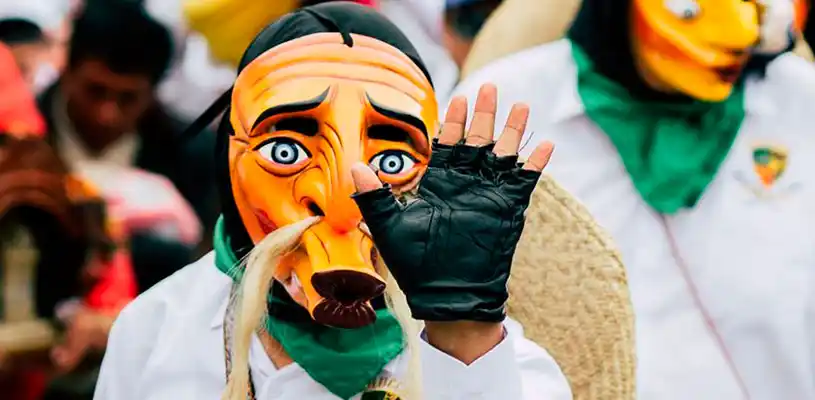
If you are curious and love details, you could notice that the masks of Chucchus are yellow or pale. This is because the Chucchus represent the people who worked in the plantation house as slaves, who once arrived in the jungle were infected with malaria.
The choreography includes chucchus playing with people throwing flour sacks as if they were spreading illnesses such as malaria, cancer, aids, among others.
11- Danzaq:
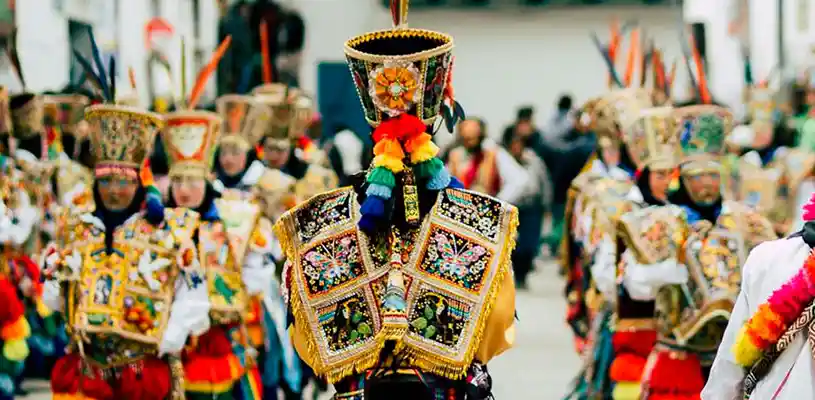
The characters in this dance represent seductive men who try to conquer fifteen-year-old young ladies, married women, and comfort widows of Paucartambo. Their height, firm position, and sensuality are features that stand out.
They wear colorful costumes, a hat with feathers, pants with decorations of colorful wool, an image of Mamacha del Carmen on their chest, and hold a stick with their right hand.
12- Waca Waca:
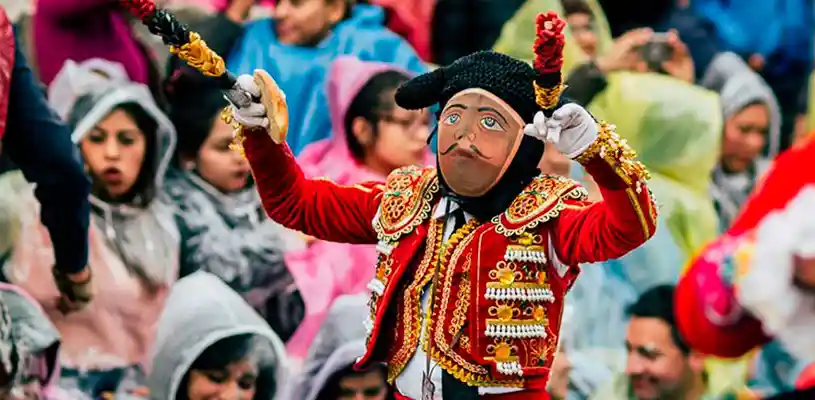
It is said that this dance has its origins in colonial times. Lacking of its own choreography, they perform some steps trying to imitate the process of a bullfight. Every year on July 17, during the Virgen del Carmen festivity, they participate in the fighting where the brave bull that they represent falls down dead.
13- Negrillos:
This dance represents the sons of black slaves. Considered low-cost labour young people, they worked on the cotton fields and vineyards. Trying to escape the yoke of bondage, they sing songs of hope to the Virgen del Carmen. In contrast to the Black Qhapac, Negrillos have agile juvenile moves.

14- K’achampa:
Folk dance performed only by men with good physical skills. This is because the rhythm of the music transmits strength, bravery and precision. During the dance, they perform the Quechua warriors’ triumph when expanding the Tawantinsuyu.
K’achampa dance is composed of a caporal or chief, two captains that lead the two rows of k’achampa dancers. Regarding the music, a typical band plays party-whistles, drum and bass drum.

Kachampas
15- Contradanza:
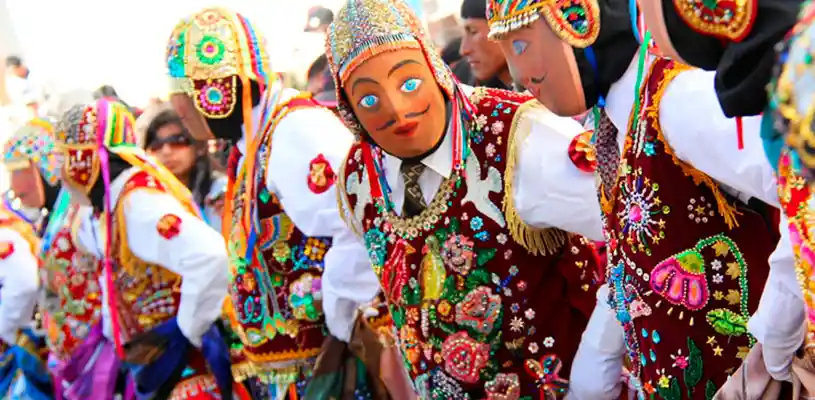
It is an agricultural dance performed only by men. The dance transmits the order given by the caporal or chief of the group, who introduces the rest of the dancers into the field work. Another version of Contradanza is that this dance is a mockery of the Spanish ballroom dancing during colonial time.
16.- Bakers (Panaderos):
This dance represents the daily work of the baker. It is performed by men and women. Since dancers belong to one of the lowest economic levels of social classes, its presence during the Virgen del Carmen festivity is unpredictable. If they can afford the cost they may perform; otherwise, you won’t see them dancing.
17- Paucartampu:
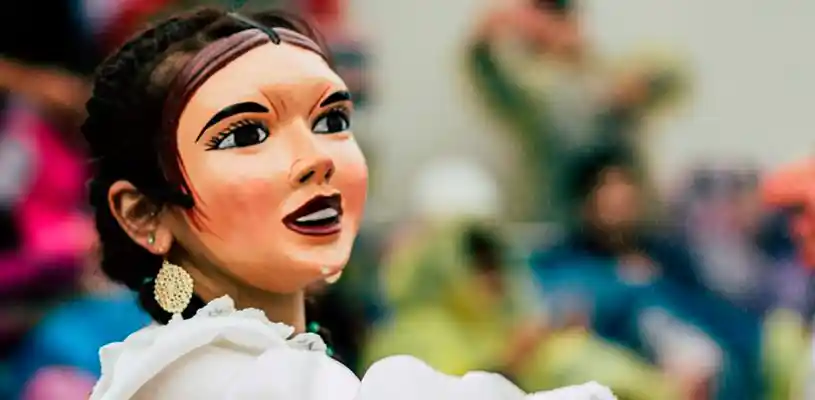
Typical dance of the province of Paucartambo, Cusco. The choreography includes agricultural activities that still today take place. They wear their own costumes in order to highlight their history, culture and customs that transcends generation after generation. Men and women from Paucartambo can participate.

18- Misti Qanchi:
This dance represents the agricultural work in Paucartambo. During the choreography, you could notice the playful and romantic steps. Men and women can participate in the Qanchi. While dancing, both men and women express gratitude to the Pachamama for the food and the fields it gives.

19- Maqta:
Maqtas are characterized by their freedom. They don’t depend on a chief as it is the case of the other dances. Being as independent as they are, they sometimes abuse their freedom to play jokes on people and love providing food and drinks. The dancers play an important role in other dances as well, as protectors. Therefore, their presence during Virgen del Carmen festivity is essential.

Blogs that you can also read:
- Paucartambo
- Virgen del Carmen Origin
- Carlos III bridge in Paucartambo
- Tres Cruces, sunrise in Paucartambo

Shared:


If you liked this article and the information you found, give us 5 stars!
 (Ninguna valoración todavía)
 Loading...