


What is Pachamanca?
Pachamanca is a traditional Andean dish from Peru, cooked with hot stones in an earthen oven. Its name comes from Quechua words linked to earth and pot. The dish usually includes seasoned meats, potatoes, corn, fava beans, humitas, herbs, and Andean tubers. For travelers, it is one of the clearest ways to taste the relationship between food, land, family work, and rural Andean life.
Table of Contents
For travelers, Pachamanca is usually remembered for its smoky aroma, the slow opening of the earth oven, and the way people gather around the food before it is served. It can appear in rural communities, countryside restaurants, family celebrations, festivals, and cultural experiences near Machu Picchu, Cusco, the Sacred Valley, Junín, Ayacucho, Huánuco, Áncash, and other Andean regions.
Video of Pachamanca:
| Hot stonesCooking method | AndesCultural origin | Meat + tubersMain ingredients | Cusco & valleysWhere travelers try it |
Did you know…?
Pachamanca is usually a slow, communal meal. It is not the kind of dish you order and receive in ten minutes. The traditional version takes time because the stones must be heated, the ingredients layered, the oven covered, and the food slowly cooked underground or inside a stone structure.

WORLD WONDER IN THE ANDESMachu Picchu
Discover the history, landscapes, and essential tips for visiting this world wonder.
Etymology:
The name Pachamanca is commonly explained through Quechua and Aymara roots. In Quechua, pacha refers to earth, world, or time, and manka means pot. In that sense, Pachamanca can be understood as an earthen cooking pot or food cooked in the earth.
In Aymara, similar forms are also associated with earth and food. These meanings help explain why the dish is so strongly tied to the land. The preparation uses soil, stones, fire, herbs, and agricultural products, so the name describes both the cooking method and the Andean relationship with food.
Pachamanca, Typical Peruvian Andes Dish
Pachamanca has strong cultural value in Andean communities because it brings together agriculture, family work, festive cooking, and respect for the land. The ingredients are usually seasoned in advance with herbs and spices such as chincho, huacatay, garlic, ají, pepper, cumin, chicha de jora, or regional marinades. Then the food is cooked with hot stones inside a covered earth oven.
The preparation often includes pork, lamb, beef, chicken, alpaca, or guinea pig, depending on the region. It is served with potatoes, sweet potatoes, corn, fava beans, oca, yuca, humitas, cheese, and local sauces. Pachamanca is usually reserved for special occasions, countryside gatherings, family events, harvest celebrations, and traditional festivities.
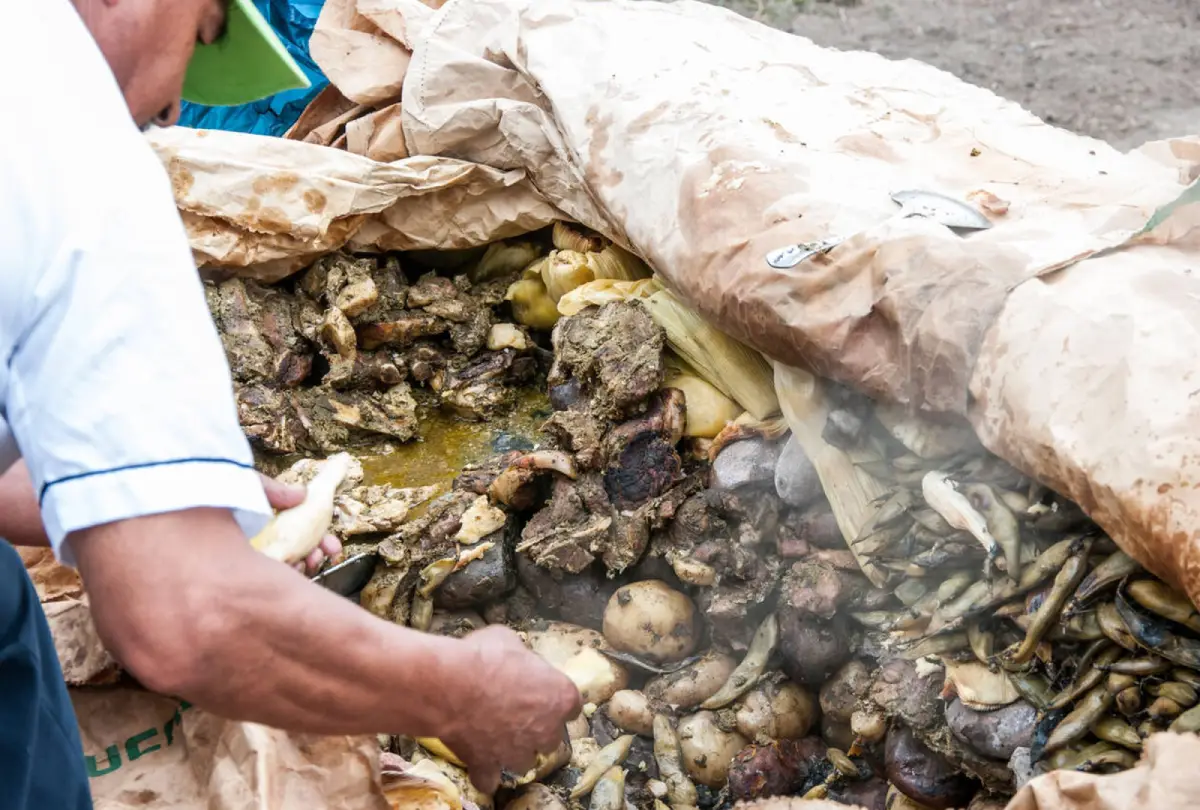
Pachamanca preparation with meats, potatoes and vegetables cooked underground with hot stones.
Today, some restaurants and families also prepare Pachamanca a la olla, a pot-style version adapted for kitchens. It keeps many of the same flavors, herbs, and ingredients, but it does not reproduce the full experience of cooking with stones and earth.
Important note:
Traditional Pachamanca is cooked with heated stones inside an earthen oven. Pachamanca a la olla is prepared in a pot, usually for homes or restaurants where digging an earth oven is not practical. Both can be delicious, but the traditional version carries a stronger communal and ritual character.
How Pachamanca is prepared
The traditional preparation begins with fire, stones, and time. Large stones are heated until they can hold enough heat to cook the food. Then the ingredients are arranged in layers, covered, and left to cook slowly. The opening of the oven is part of the experience because the aroma rises from the earth before the food is served.
| 1. Heat the stones River stones or suitable cooking stones are heated over fire until they store enough heat. |
2. Layer the food Meats, potatoes, corn, fava beans, herbs, humitas, and tubers are arranged carefully. |
3. Cover the oven The food is sealed with leaves, cloth, soil, grass, or regional materials. |
4. Open and serve The oven is opened when the food is cooked and the aromas rise from the earth. |
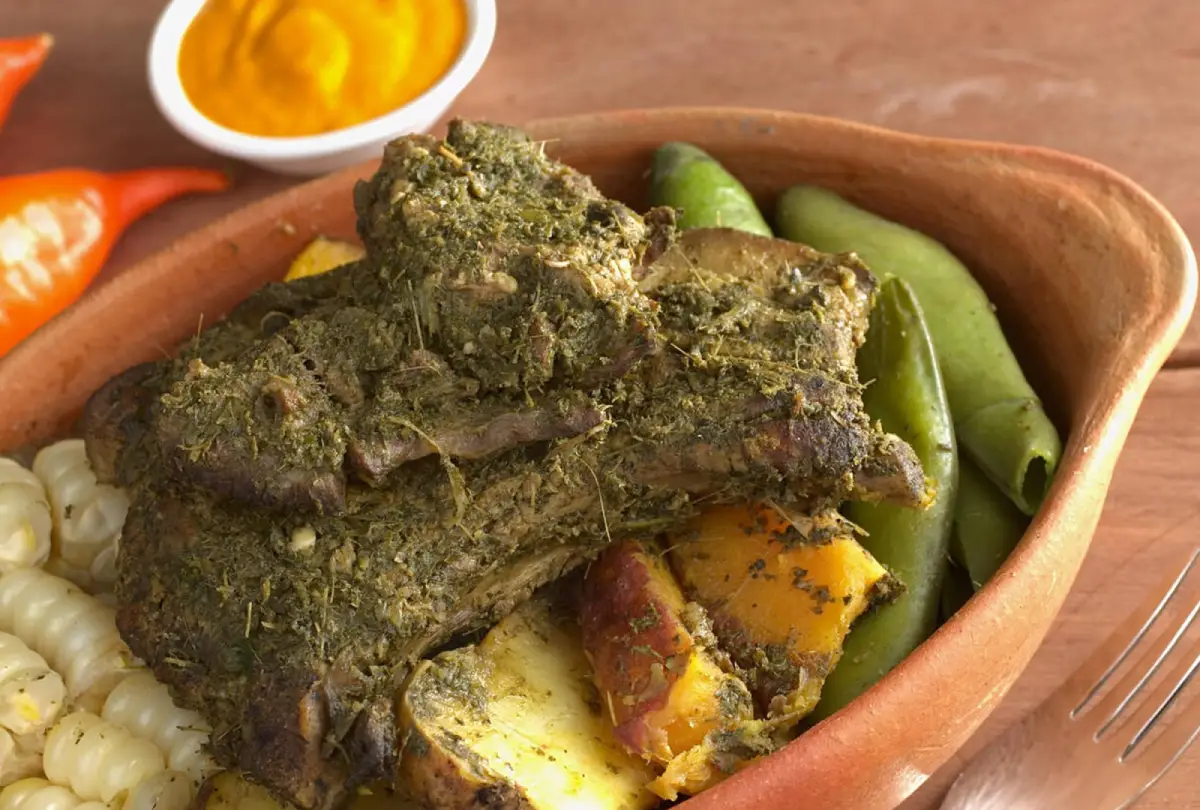
Traditional pachamanca served in a clay dish.
The Chakana also becomes easier to understand when travel moves beyond museums and souvenir shops into real Andean landscapes. Routes such as the Inca Trail, the Short Inca Trail, the Lares Trek, the Huchuy Qosqo hike, or the Choquequirao trek place travelers inside the wider Andean world where symbols like the Chakana make more sense.
Guides that help you connect Chakana with the Andean world
Origin:
Cooking with heated stones has a long history in the Andes. Ancient earth ovens and stone-cooking practices have been identified in Andean and coastal archaeological contexts, showing how communities used fire, stones, soil, leaves, and local products to cook slowly with the heat of the earth.
Over time, this method adapted to different regions, crops, animals, climates, and celebrations. The Incas also used related earth-cooking techniques, including preparations such as huatia. Today, Pachamanca remains a living tradition in Peru, especially in the central and southern Andes, where each region keeps its own ingredients, herbs, sauces, and cooking style.
For Andean communities, Pachamanca expresses gratitude, cooperation, and connection with the land. It has also appeared in historical and literary references, including Tradiciones Peruanas by Ricardo Palma, From Valparaiso to Oroya by Santiago Estrada, and Diccionario de Peruanismos by Juan de Arona.
Where can you eat Pachamanca?
You can eat Pachamanca in several Andean regions of Peru. It is especially associated with Junín, Ayacucho, Huánuco, Cusco, Áncash, Huancavelica, and parts of the central highlands. In cities, it may appear in traditional restaurants, especially on weekends.
In Cusco and the Sacred Valley, Pachamanca can be part of cultural experiences, countryside lunches, community visits, textile demonstrations, agricultural activities, and some private tours. It is also common to find restaurant versions near rural districts, hacienda-style spaces, or valleys where the landscape allows a more traditional preparation.
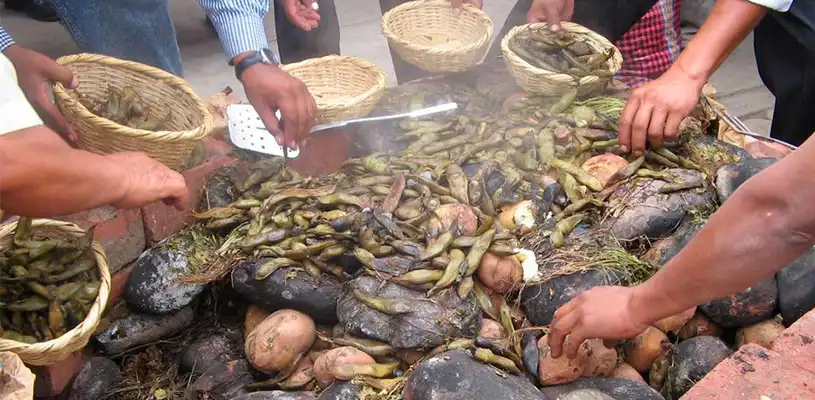
The traditional preparation begins by digging a pit in the ground, heating stones over a wood fire, and placing the hot stones inside the earth oven. Then the cook arranges layers of seasoned meats, potatoes, sweet potatoes, corn, fava beans, humitas, herbs, and other ingredients. The oven is covered with leaves, cloth, soil, or regional materials, and the food cooks slowly until the earth is opened again.
The waiting time is part of the experience. Families and guests talk, drink, listen to music, help prepare sauces, and wait for the aroma to rise from the covered oven. When the lead cook opens the Pachamanca, the food is served hot, smoky, and heavy with the scent of herbs and earth.
WORLD WONDER IN THE ANDESMachu Picchu
Discover the history, landscapes, and essential tips for visiting this world wonder.
Now, let’s see the diverse recipes and ingredients of some regions of Peru!
Did you know…?
The ingredients below are not fixed rules. Each family, district, and restaurant can prepare Pachamanca differently. The lists show common regional patterns that help travelers understand how the dish changes across the Andes.
| Region | Main meats | Typical sides | Distinctive detail |
| Junín | Guinea pig, alpaca, pork, lamb, beef | Potatoes, fava beans, corn, oca, humitas | One of the strongest Pachamanca traditions. |
| Ayacucho | Beef, pork, chicken | Potato, fava beans, sweet potato, humitas | Often uses chicha de jora and aromatic herbs. |
| Huánuco | Pork | Potato, sweet potato, yuca, corn | Known for herbal flavor and pork preparations. |
| La Libertad | Lamb | Bananas, potatoes, green humitas | Huamachuco is especially linked to lamb. |
| Áncash | Guinea pig, pork, chicken, beef | Potato, fava beans, corn, oca, humitas | Uses highland crops and regional herbs. |
| Cusco | Pork, lamb | Potato, corn, humitas | Often linked to rural meals and Sacred Valley experiences. |
Junin:
Junín is one of the regions most strongly associated with Pachamanca. Its version often uses a generous mix of meats, tubers, herbs, humitas, and local sauces.
- Meat: Guinea pig, alpaca, pork, lamb, and beef.
- Vegetables and tubers: Potato, fava beans, corn, oca, and sweet potato.
- Seasoning: Salt, hot pepper, paico, achiote, and chincho.
- Prepared sides: Sweet and savory humitas.
- Sauce: Hot pepper with cheese sauce, also known as hapchi.
- Fuel: Eucalyptus wood or retama.
Ayacucho:
In Ayacucho, a region known for its festivals and strong cultural identity, Pachamanca can include chicha de jora, aromatic herbs, humitas, and different meats.
- Meat: Beef, pork, and chicken.
- Vegetables: Potato, fava beans, sweet potato, cilantro, parsley, huacatay, and spinach.
- Seasoning: Salt, garlic, pepper, cumin, yellow pepper, chincho, and chicha de jora.
- Prepared sides: Humitas.
- Sauce: Hot pepper with cheese and huacatay sauce, often called hapchi.
- Fuel: Huarango or molle wood.
Huanuco:
Huánuco is another important area for Pachamanca. Pork is especially common, and the preparation is often valued for its intense herbal flavor.
- Meat: Pork.
- Vegetables: Potato, sweet potato, yuca, and corn.
- Seasoning: Chincho.
- Sauce: Hot pepper and onion.
- Beverage: Chicha de jora.
La Libertad:
In the province of Huamachuco, Pachamanca is often associated with lamb and a highland cooking style influenced by local products and wood.
- Meat: Lamb.
- Vegetables: Bananas and potatoes.
- Seasoning: Salt, garlic, pepper, and chicha de jora.
- Prepared sides: Green humitas.
- Sauce: Hot pepper with cheese and huacatay sauce, often called hapchi.
- Fuel: Carob wood.
Ancash:
Áncash combines highland crops, herbs, and different meats. Its Pachamanca may include humitas, chicha de jora, beer, and a variety of tubers.
- Meat: Guinea pig, pork, chicken, and beef.
- Vegetables: Potato, fava beans, corn, oca, and sweet potato.
- Seasoning: Garlic, green pepper, huacatay, and chincho.
- Prepared sides: Humitas.
- Beverages: Chicha de jora or beer.
- Fuel: Eucalyptus or molle wood.
Cusco:
Cusco, the historic capital of the Incas, prepares Pachamanca in ways that may differ from the central highlands. In some Cusco-style preparations, people do not always dig a deep pit. Instead, they build a stone structure above the ground, heat the stones, and cook the food inside a temporary oven shaped by fire, stone, earth, and local technique.
In Cusco, Pachamanca often appears in rural experiences, family gatherings, countryside restaurants, and cultural activities around the Sacred Valley. After several hours of preparation, the result is a warm mix of herbs, meat, potatoes, corn, humitas, and smoke. The meal brings people together and gives travelers a direct taste of Andean hospitality.
Here you have the link to see how Pachamanca is prepared in Cusco.

- Meat: Pork and lamb.
- Vegetables: Potato and corn.
- Seasoning: Salt, huacatay, and chincho.
- Prepared sides: Humitas.
Keep this in mind:
If you are visiting Cusco, Pachamanca makes the most sense in a rural or valley setting. It connects better with places where you can see crops, mountains, adobe homes, community work, or agricultural landscapes. That context helps the dish feel less like a restaurant plate and more like part of Andean life.
Pachamanca and trekking in Cusco
Pachamanca fits naturally into the travel rhythm of Cusco. Many travelers arrive for the Inca Trail, the Salkantay Trek, the Lares Trek, or cultural routes through the Sacred Valley. After days of walking through high passes, villages, terraces, and mountain paths, a traditional meal like Pachamanca helps explain the region from another angle: food, land, family work, and community.
PERU’S LEGENDARY HIKEInca Trail to Machu Picchu
Follow the historic trail through mountain passes, Inca sites, and cloud forest paths to Machu Picchu.
If your trip includes trekking, a rural lunch, or a cultural visit near Cusco, Pachamanca can turn the meal into part of the travel experience. It gives context to the landscapes you cross on foot: potatoes grown in highland fields, herbs from Andean valleys, corn from warmer zones, and cooking methods shaped by altitude, climate, and local memory.
Frequently Asked Questions about Pachamanca
What is Pachamanca?
Pachamanca is a traditional Andean dish from Peru cooked with hot stones in an earthen oven. It usually includes seasoned meats, potatoes, corn, fava beans, humitas, herbs, and Andean tubers.
What does Pachamanca mean?
The name is commonly explained through Quechua roots: pacha refers to earth, world, or time, and manka means pot. The idea refers to food cooked in the earth or an earthen cooking pot.
How is Pachamanca cooked?
Traditional Pachamanca is cooked by heating stones over fire, placing them in an earth oven, layering meats and Andean ingredients, covering everything with leaves or soil, and letting the food cook slowly with the stored heat.
What ingredients are used in Pachamanca?
Common ingredients include pork, lamb, beef, chicken, guinea pig, potatoes, sweet potatoes, corn, fava beans, oca, yuca, humitas, huacatay, chincho, ají, garlic, and local sauces.
Where can I eat Pachamanca in Cusco?
In Cusco, Pachamanca can be found in traditional restaurants, rural experiences, countryside lunches, community visits, and some Sacred Valley cultural activities. It is usually better when prepared in a rural or valley setting.
Is Pachamanca cooked underground?
The traditional version is usually cooked in an earthen oven or pit with hot stones. Some regional versions, including some Cusco-style preparations, may use stone structures above the ground.
What is Pachamanca a la olla?
Pachamanca a la olla is a pot-style version of the dish. It uses similar ingredients and seasonings, but it is cooked in a pot instead of an earthen oven with hot stones.
Is Pachamanca part of Andean culture?
Yes. Pachamanca is strongly connected with Andean agriculture, family gatherings, community work, festive cooking, and respect for the land.
Can travelers try Pachamanca near the Sacred Valley?
Yes. Some rural lunches, cultural experiences, community visits, and countryside restaurants in or near the Sacred Valley may include Pachamanca or similar traditional Andean meals.
Is Pachamanca served during treks?
It is not served on every trek, but it can appear in cultural extensions, rural lunches, community experiences, or private programs connected with Cusco, the Sacred Valley, and Andean villages.
Autor

Shared:



If you liked this article and the information you found, give us 5 stars!
